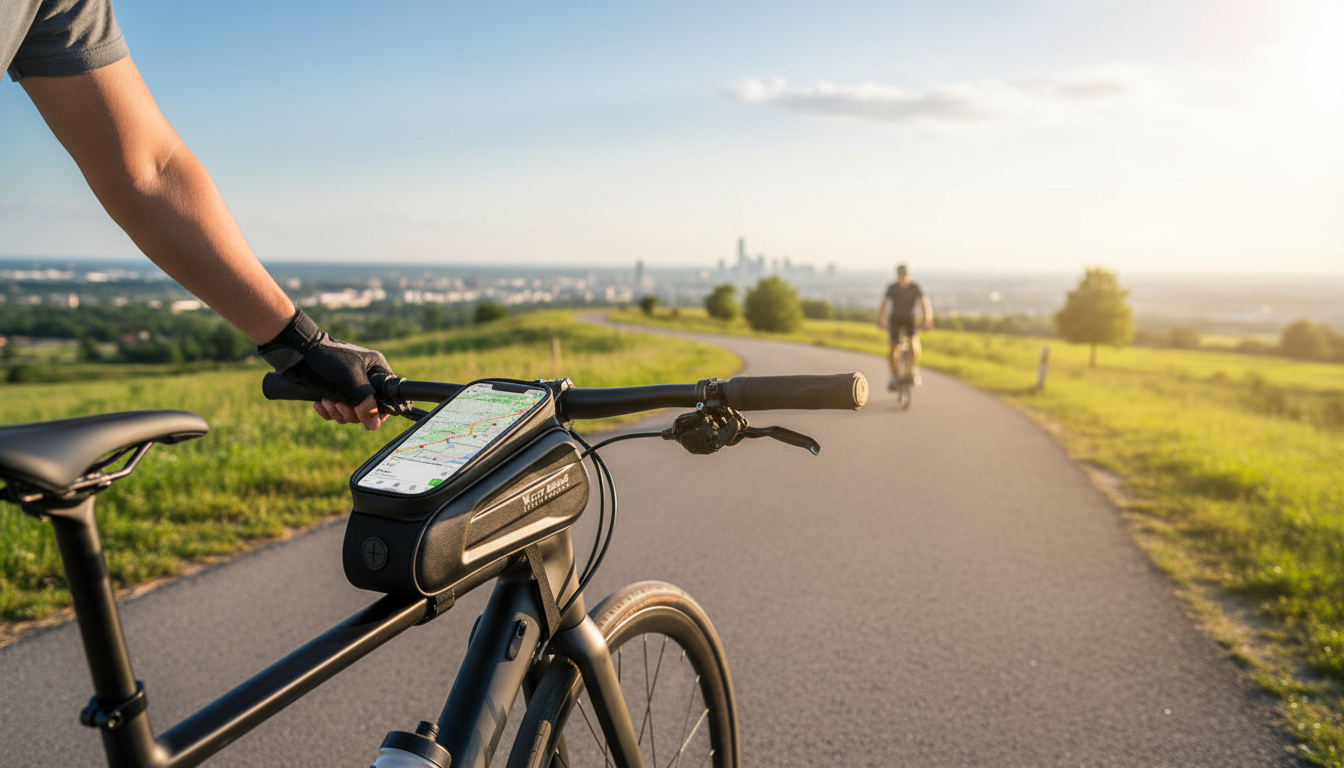
A top tube phone bag keeps essentials centered, stable, and easy to reach—without stuffing pockets or adding a bulky backpack. This waterproof, EVA hard-shell design is built to help protect a phone from spray and road grime while keeping navigation and ride stats visible through a touch-friendly screen.
Top-tube storage is all about convenience without compromising control. By placing a compact bag on the bike’s centerline, it keeps weight balanced and items accessible when you’re rolling through town, stopping at lights, or taking quick breaks on longer routes.
If you want a secure, purpose-built option, see the Waterproof EVA Hard Shell Bike Top Tube Phone Bag with Touch Screen for a clean cockpit setup that still keeps essentials within reach.
This style of bag stands out for two reasons: structure and weather resistance. A semi-rigid shell helps prevent “squish” damage to fragile items, while water-resistant materials reduce the chance that road spray turns into a soaked phone or soggy cards.
| Feature | Why it matters on rides | Quick check before you roll |
|---|---|---|
| EVA hard shell | Helps prevent screen/contents from being crushed by knees, kneesocks, or handlebar bags | Press lightly—bag should spring back without collapsing |
| Water-resistant build | Reduces chance of moisture reaching phone and cards in drizzle/spray | Close zipper fully; avoid leaving a gap at the corners |
| Structured top panel | Stabilizes the touch screen area so taps register more accurately | Confirm the screen window lies flat and isn’t wrinkled |
| Central top-tube placement | Less sway vs. saddle bags; items stay within reach at stops | Check straps are snug and don’t slide on paint/film |
The touch window is designed so you can glance at maps and ride metrics while staying in a natural riding posture. It’s still important to treat any on-bike screen as “quick-look” information, not a constant focus.
For broader riding-safety guidance, review NHTSA bicycle safety tips, and make sure your helmet is adjusted correctly using the CDC helmet fit guide.
A stable top-tube bag should feel like part of the frame—no rocking, no cable interference, and no knee contact. A few minutes of setup prevents most common annoyances.
After mounting, do a short parking-lot test: stand to pedal, steer side-to-side, and confirm the bag stays planted and your knees clear it naturally.
Because the bag sits near the bike’s center of gravity, small packing choices make a noticeable difference. The goal is to reduce bounce, keep the phone readable, and make “grab-and-go” items easy to reach.
Usually yes, but thicker cases or screen protectors can reduce sensitivity. Test taps and swipes before riding, increase screen brightness, and make sure the phone sits flat under the window.
It’s designed to resist splashes and rain, but prolonged heavy rain can seep in through zippers and seams. In extreme conditions, placing cards or cash in a small dry pouch adds extra peace of mind.
Most bikes can use a strap-mounted top tube bag, but fit depends on available top-tube space, cable routing, and knee clearance. Measure your space and do a short test ride to confirm there’s no rubbing or shifting.




Leave a comment
You must be logged in to post a comment.