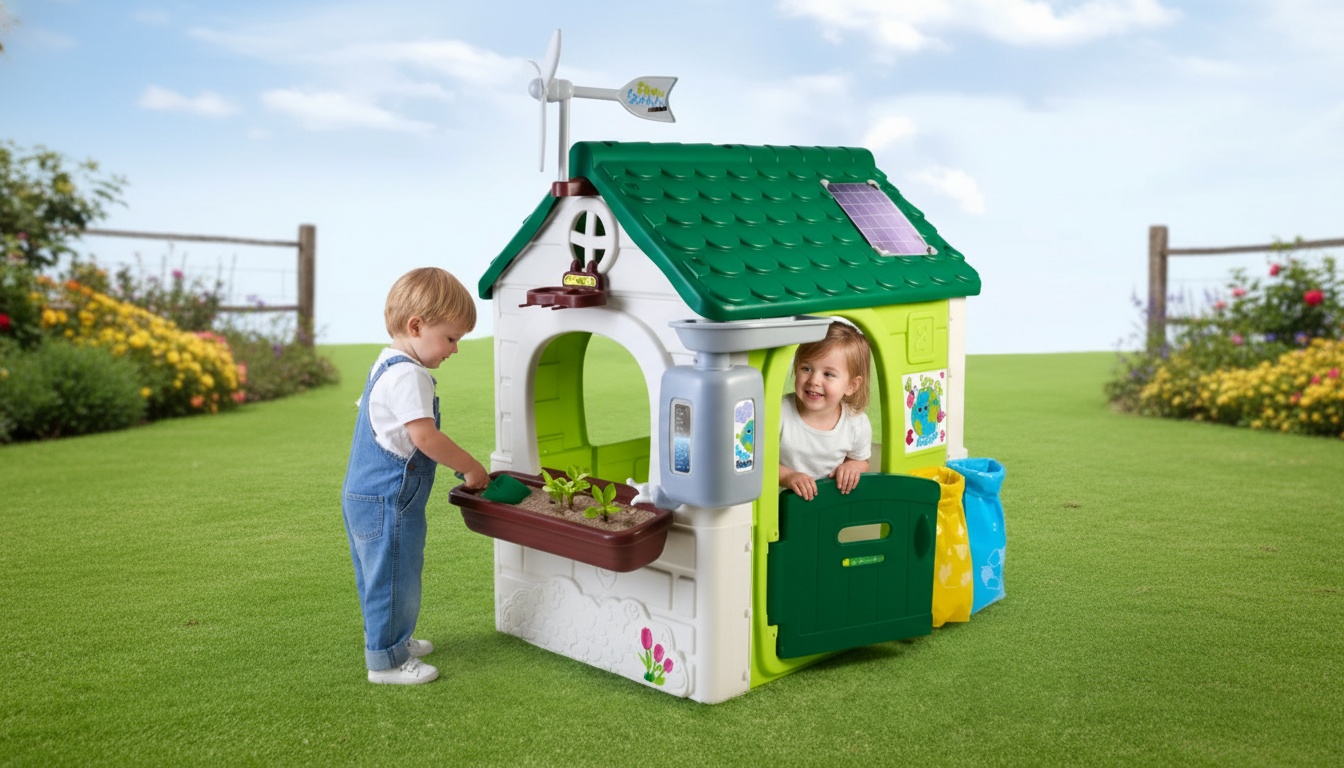
A playhouse that doubles as a mini sustainability lab can turn everyday play into practical life skills. With a few kid-friendly stations—sorting, tool storage, and a small planting area—children get the fun of pretend play while practicing real routines like putting items in the right bin, caring for living things, and cleaning up their space.
Below is what an eco-themed playhouse can teach, what to look for when choosing one, and simple activity ideas that fit busy family schedules without turning outdoor time into a chore.
For families looking to make everyday environmental habits feel normal (not performative), a playhouse setup gives children a consistent place to practice. For more on recycling basics, the US EPA’s Reduce, Reuse, Recycle guidance is a solid reference point for building simple, repeatable routines.
Practical details matter. A bin that’s too tall, a door that pinches, or a “garden shelf” that collects standing water can turn a great concept into something that’s rarely used.
| Area | What to Add | Why It Helps | Kid-Friendly Tip |
|---|---|---|---|
| Sorting corner | 2–3 labeled bins or compartments | Builds consistent habits and reduces confusion | Use pictures (bottle, newspaper, banana peel) instead of text only |
| Garden station | Planter/pots, soil scoop, watering can | Supports responsibility and patience | Pre-fill small pots so kids can start immediately |
| Tool storage | Hooks, small crate, or tool bucket | Prevents lost tools and clutter | Outline tool shapes on a board for easy put-away |
| Clean-up zone | Brush, small towel, optional rinse bottle | Keeps playhouse inviting and hygienic | Make a 2-minute “closing routine” after play |
If kids are new to gardening, keep early goals small and visible. The Royal Horticultural Society’s tips on gardening with children are helpful for keeping expectations age-appropriate and the experience positive.
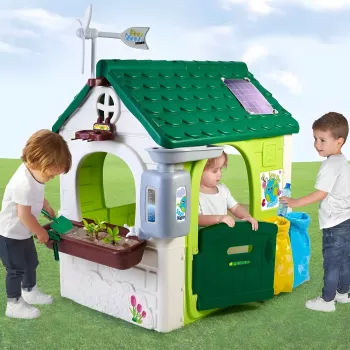
The Children’s Eco Playhouse with Recycling and Gardening Activities is built to combine imaginative play with hands-on learning around sorting, reuse, and plant care. It works well as an outdoor hub for small daily tasks—watering, tool put-away, and simple clean-up routines—so outdoor time stays fun while reinforcing real responsibilities.
To make daily habits even smoother, consider pairing it with a simple visual timer or clock for “garden check” time. The Irregular Beveled Mirror Wall Clock with Roman Numerals – Silent Quartz Movement can help establish predictable routines (like a quick morning water check or a two-minute closing routine) without repeated reminders.
Preschool through early elementary tends to be the sweet spot with supervision. Younger kids can do simple matching and sorting using picture labels, while older kids can handle planting schedules and basic plant care more independently.
Use only rinsed, dry items and avoid glass or sharp metals. Add a quick “rinse/inspect” step, use bins with lids when possible, and set a consistent handwashing rule after play.
Hardy, quick-reward options like herbs, marigolds, lettuce, and radishes are usually great starters (depending on climate). Focus on steady sunlight and consistent watering, and choose pest-safe plants that can handle beginner-level care.

Leave a comment
You must be logged in to post a comment.