HomeBlogBlogPool Cleaning Kit: Skimmer Net, Brush & Pole (Deluxe)

Pool Cleaning Kit: Skimmer Net, Brush & Pole (Deluxe)

Pool Cleaning Kit: Skimmer Net, Brush & Pole (Deluxe)

Deluxe Swimming Pool Cleaning Kit with Skimmer Net, Pool Brush & Pole

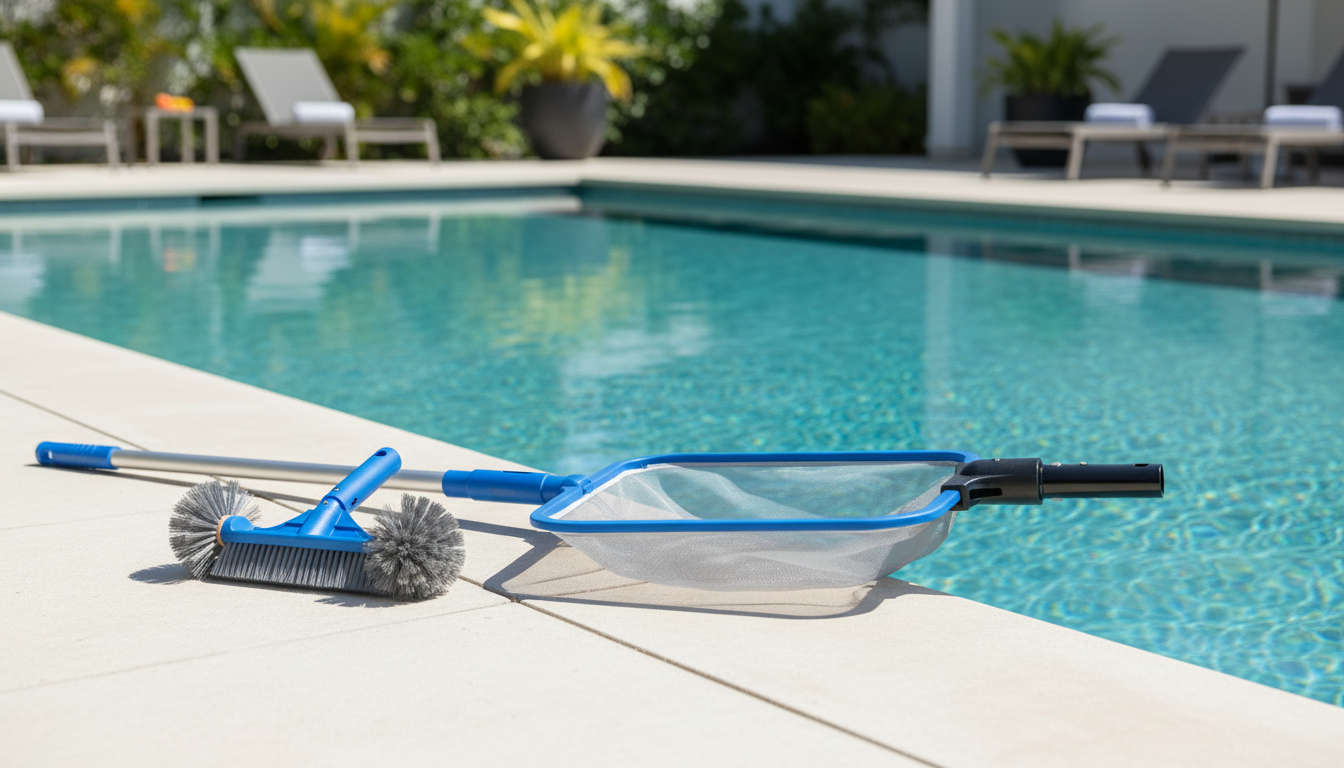
A simple, reliable cleaning routine keeps water clearer, reduces strain on filtration, and makes chemical balancing easier. This kit combines three essentials—skimmer net, pool brush, and pole—so daily debris removal and weekly wall scrubbing can happen quickly without piecing together mismatched tools.

What’s Included and What Each Tool Does

Most pool problems start as simple physical debris: leaves that sink, fine dust that clings to the waterline, and early algae film that grabs onto walls. A three-piece set helps you handle each stage before it turns into a bigger cleanup.

  • Skimmer net: Removes floating leaves, bugs, and surface debris before it sinks and breaks down.
  • Pool brush: Loosens algae film and grime on walls, steps, and floor so the filter can capture it.
  • Pole: Extends reach for corners and deeper areas; swaps between attachments to reduce handling time.
  • Why a set matters: Consistent fit between pole and attachments helps avoid wobble, slipping, and missed spots.

Tool Guide: Best Use Cases and Frequency

Tool Best for Where to use Typical frequency
Skimmer net Leaves, insects, floating debris Water surface, around skimmers, near returns Daily or as needed
Pool brush Algae film, dirt lines, stubborn residue Walls, waterline, steps, corners 1–2× per week (more during heavy use)
Pole Extending reach and reducing bending Deep end, tight corners, behind ladders/rails Each cleaning session

A Fast Cleaning Routine (10–20 Minutes)

When cleaning feels complicated, it gets postponed. A short routine—done consistently—usually beats an occasional marathon scrub, especially during hot weather and peak swim season.

  1. Start with a quick skim: Work from the deep end toward the skimmer to guide debris where it will collect.
  2. Brush next: Begin at the waterline and work downward in overlapping strokes to lift fine particles.
  3. Hit problem zones: Steps, corners, behind ladders, and along seams where circulation is weaker.
  4. Let the system do the rest: Run the pump after brushing so suspended debris moves to the filter.
  5. Finish with a quick visual check: Confirm the waterline is clean and no leaf piles remain on the floor.

If you’ve had lots of swimmers, landscaping debris, or a windy day, repeating a 5-minute skim later can prevent another round of buildup.

Technique Tips for Better Results

Small technique changes can make manual cleaning feel lighter and more effective, especially when fine debris wants to escape or cling.

  • Skimming: Keep the net slightly angled to prevent pushing debris under the surface.
  • Brushing: Use steady pressure; fast scrubbing can cloud water without lifting residue effectively.
  • Corners and coves: Change brush direction (horizontal then vertical) to dislodge buildup.
  • Waterline grime: Short, firm strokes at the tile/liner line reduce oils and sunscreen residue.
  • After storms: Skim first, empty baskets, then brush—large debris can clog circulation if brushed before removal.

For health and safety guidance around pool operation and cleanliness, the CDC’s Healthy Swimming resources are a solid reference point. For chemical handling and disinfectant safety, consult the EPA’s information on disinfectants and pool chemicals.

Matching the Kit to Pool Types and Common Surfaces

Not all pool surfaces respond the same way to brushing, and tailoring pressure and frequency helps prevent wear while keeping surfaces clean.

  • Vinyl liner pools: Prioritize gentle, controlled brushing to avoid unnecessary abrasion; focus on waterline and corners.
  • Fiberglass pools: Light-to-moderate brushing typically handles film; frequent skimming prevents staining from organic debris.
  • Plaster/shotcrete: Brushing is especially important during warm months to disrupt algae adhesion.
  • Above-ground pools: Short perimeter passes with the net and brush keep maintenance manageable; pay attention to the seam line.
  • Saltwater pools: Physical cleaning still matters—salt systems sanitize but do not remove debris or prevent biofilm on their own.

How to Keep Tools Working Longer

A few simple habits can extend the life of your net, brush, and pole while keeping each session efficient.

  • Rinse after use: Fresh water rinse helps remove chlorine residue and grit that wears bristles and net fabric.
  • Dry before storage: Store out of direct sun when possible to reduce UV wear on plastic and mesh.
  • Check connections: Tighten pole joints and inspect attachment points so tools don’t twist during brushing.
  • Replace when performance drops: Frayed net mesh and flattened bristles reduce cleaning efficiency and increase effort.
  • Avoid harsh contact on finishes: Keep the brush moving to prevent concentrated pressure in one spot.

When Physical Cleaning Solves Water Problems (and When It Doesn’t)

Deluxe Cleaning Kit: Quick Overview

The Deluxe Swimming Pool Cleaning Kit with Skimmer Net, Pool Brush & Pole is a straightforward three-piece setup for routine skimming and brushing without needing extra adapters. It’s useful for regular maintenance between deeper cleanings, vacuuming sessions, or service visits, and it supports a repeatable weekly routine that’s easier to stick with.

For poolside convenience and comfort around the patio or pool house, these in-stock options can also complement a tidy outdoor setup: Irregular Beveled Mirror Wall Clock with Roman Numerals – Silent Quartz Movement and 2025 Women’s Suede Lace-Up Loafers – Casual Retro Flats for Spring & Autumn.

Product Snapshot

Item Details
Name Deluxe Swimming Pool Cleaning Kit with Skimmer Net, Pool Brush & Pole
Price 45.67 USD
Availability In stock

FAQ

How often should a pool be skimmed and brushed?

Skim daily or whenever debris collects, especially during windy days or heavy pool use. Brush 1–2 times per week, increasing frequency during hot weather or algae-prone periods.

Should brushing be done before or after vacuuming?

Brush first to lift fine debris and biofilm from surfaces. Then vacuum after particles settle or after a filtration cycle, depending on your pool’s circulation and equipment.

Can brushing make the water look cloudy?

Yes—brushing suspends fine particles, which can temporarily cloud the water. Run the pump and filter afterward so the cloudiness clears as debris is captured.

Was this article helpful?

Yes No
Leave a comment
Top

Shopping cart

×