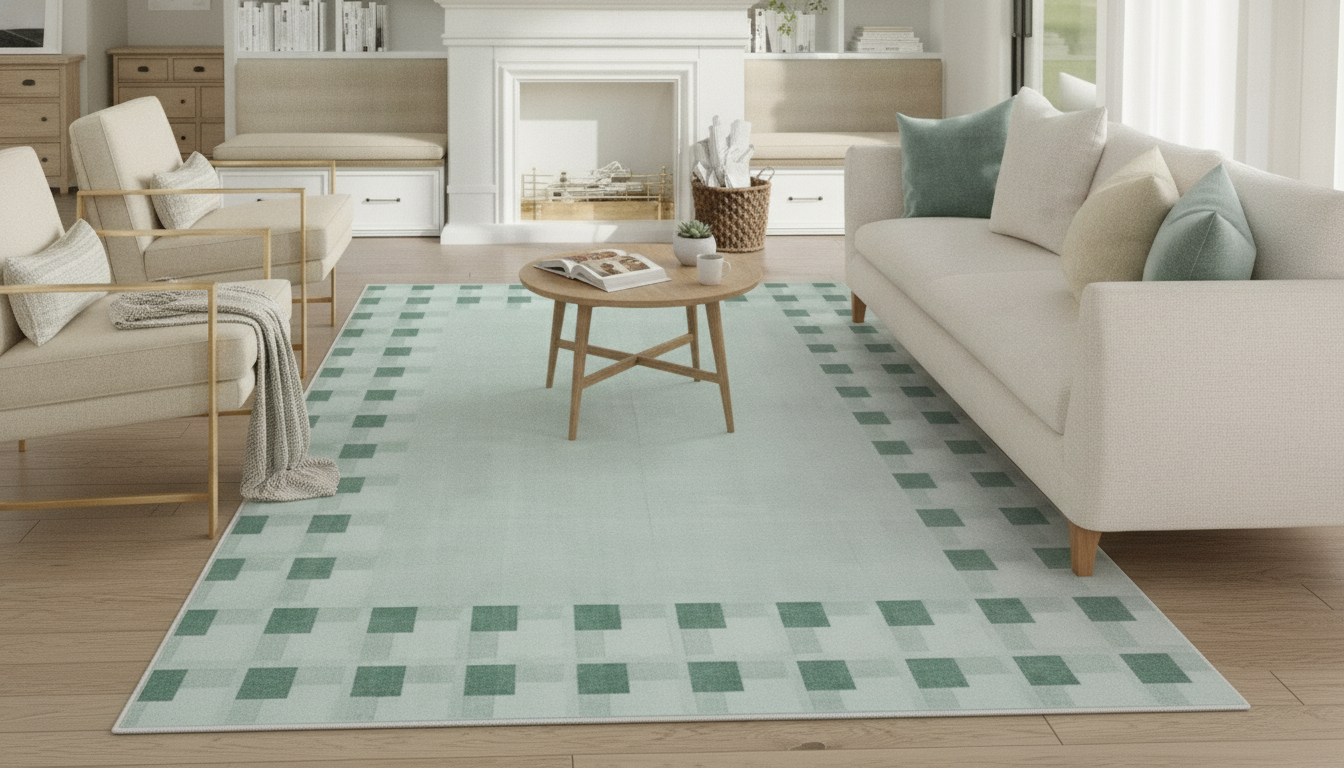
A checkered plush area rug delivers two upgrades at once: a cozy, sink-in feel underfoot and a crisp geometric pattern that gives a room instant structure. Whether you’re softening a seating area, adding a warm landing beside the bed, or defining zones in an open layout, the right plush rug can make the space feel more finished without a full redesign. Below is what to look for in plush comfort, how to size and place a checkered rug, simple styling rules, and practical care tips that fit real daily life.
Texture and pattern do heavy lifting in a space, and a plush checkered rug is a strong example of both working together.
If you want a quick, low-commitment refresh, a checkered plush rug is one of the fastest ways to shift the mood: warmer, calmer, and more designed.
“Plush” isn’t one specific texture—comfort depends on how the rug is built and how it will be used.
For deeper guidance on routine upkeep that helps rugs last, the Carpet and Rug Institute (CRI) offers maintenance resources that are helpful for day-to-day care habits.
Great styling starts with proportion. Before buying, measure furniture footprints and consider taping the outline on the floor to preview scale.
| Space | Common Rug Placement Goal | Practical Tip |
|---|---|---|
| Living room | Anchor seating area with rug extending under front legs | Keep the rug centered on the main seating, not the room |
| Bedroom | Soft landing on both sides of the bed | Ensure at least 18–24 in of rug shows beyond the bed sides if placed under |
| Home office | Comfort under desk area | If using a rolling chair, consider a smoother/shorter pile or chair mat |
| Nursery/Play area | Cushioned play zone | Add a rug pad for stability and extra comfort |
| Entryway | Welcoming pattern and dirt-catching surface | Confirm door clearance so the rug doesn’t catch |
If you want a complementary wall piece that leans modern and reflective, the Irregular Beveled Mirror Wall Clock with Roman Numerals – Silent Quartz Movement pairs nicely with geometric rugs by reinforcing crisp lines while adding shine and dimension.
For general best practices around keeping dust lower indoors, the U.S. EPA indoor air quality guidance is a useful reference point when planning vacuuming routines and reducing buildup.
Care labels can vary by textile and construction; the FTC’s care labeling resource explains how care instructions are communicated and what they mean in practical use.
They can, especially in high-traffic paths, but density plays a big role in how quickly matting shows. Rotating the rug, using a rug pad, and adjusting vacuum settings to avoid pulling fibers can help the pile recover and wear more evenly.
A non-slip pad matched to your floor type is usually the best starting point, with added cushioning if you want a softer feel. For thicker plush, also consider door clearance so the rug-and-pad combination won’t catch.
Keep one dominant pattern (the checks) and let other patterns stay small-scale or texture-based, like subtle stripes or woven solids. Coordinate colors across accents rather than stacking multiple bold prints in the same zone.

Leave a comment
You must be logged in to post a comment.