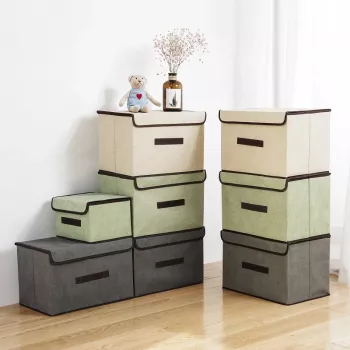
A foldable clothes storage box with a lid can turn messy closets, crowded shelves, and under-bed dead space into a clean, easy-to-maintain system. With the right setup, clothing and home essentials stay protected from dust, easy to spot at a glance, and simple to rotate as the seasons change. For more guidance, see Cotton Clothes Storage Box, Foldable Wardrobe Organizer with ….
If you want a ready-to-use option, start with the Multi-Purpose Clothes Storage Box with Lid – Foldable Organizer for Home Essentials, then expand into a matching set as your categories grow. For further reading, see Household Essentials Hanging Shoe Organizer, Natural Canvas ….
Loose piles and “temporary” stacks tend to spread—especially in closets and bedrooms where storage is already tight. A lidded organizer creates structure without forcing a full room makeover.
Not all fabric bins behave the same once they’re full. A few small design choices make the difference between a tidy system and a saggy box you stop using.
These boxes work best where you want a “contained category” rather than a free-for-all basket. Think of them as removable drawers you can label and relocate.
For entryways and laundry zones, pairing “organized storage” with easy time cues can keep routines smoother—like adding a statement wall piece such as the Irregular Beveled Mirror Wall Clock with Roman Numerals – Silent Quartz Movement near the door or folding area.
The fastest way to keep a storage system working is to set it up so you don’t have to “re-decide” where items belong every week. A repeatable routine makes the box do the work.
For more practical room-by-room habits that support long-term organization, browse guidance like Good Housekeeping – Home Organizing Tips to refine your routines.
| Option | Best for | Pros | Trade-offs |
|---|---|---|---|
| Foldable storage box with lid | Closets, shelves, under-bed | Dust protection, collapsible, tidy categories | Not ideal for very wet/humid storage areas |
| Rigid plastic bin with lid | Basements, garages, long-term storage | Durable, moisture-resistant, stackable | Bulky; harder to fit in tight closet layouts |
| Vacuum storage bag | Comforters, bulky coats, long-term | Major space savings | Less convenient access; compression can crease items |
| Drawer organizers/dividers | Daily-use items | Fast retrieval, neat separation | Limited capacity; doesn’t solve overflow |
To get started, keep your core categories simple (everyday tops, lounge wear, socks/undergarments, and seasonal extras) and build from there with the Multi-Purpose Clothes Storage Box with Lid – Foldable Organizer for Home Essentials.
Yes—stack with heavier boxes on the bottom, avoid overfilling so the lid sits flat, and keep stacks to a stable height that fits your shelf spacing. If a box bows at the sides, reduce weight or split the category into two boxes.
A lid is better for off-season items because it blocks dust and makes shelves look calmer, especially in open closets. Open baskets are convenient for daily grab-and-go categories, but they don’t protect fabrics as well.
Store only fully dry clothing, keep the storage area as dry as possible, and air out boxes during seasonal swaps. If you use cedar or sachets, place them so they don’t touch delicate fabrics directly.




Leave a comment
You must be logged in to post a comment.