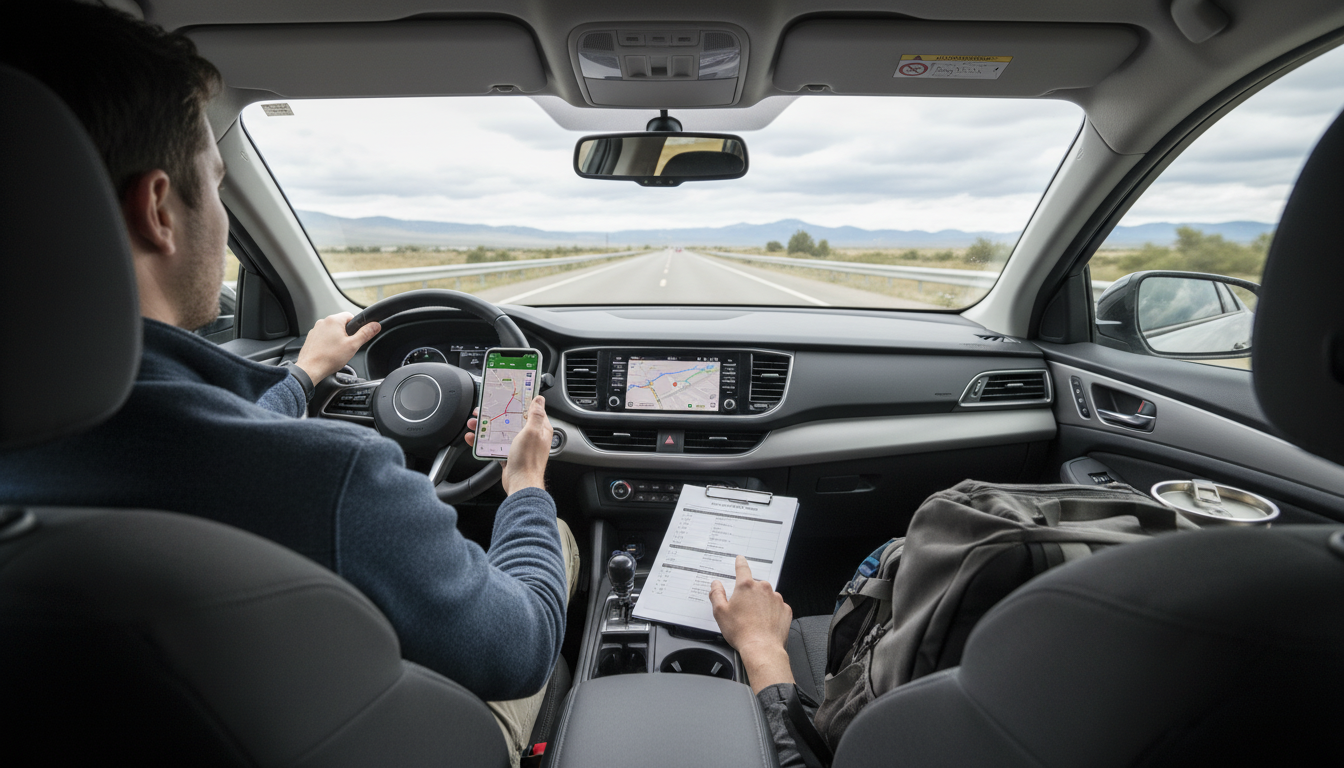
Good road trip prep comes down to three things: a reliable vehicle, a realistic plan, and a few comfort-and-safety essentials that keep small issues from turning into big delays. Start a few days early so you’re not rushing the night before.
Check tire pressure (including the spare), tread, and that your jack and lug wrench are present. Top off windshield washer fluid and confirm your oil-change and brake status. Test headlights, brake lights, and turn signals. If you’re due for maintenance soon, schedule it before you leave—breakdowns cost far more than a quick service visit.
Save offline maps in case cell service drops and identify a couple of alternate routes. Plan fuel stops in rural stretches, especially at night. Add buffer time for traffic, construction, and meal breaks so you’re not tempted to speed or drive tired.
Bring a small emergency kit (first aid supplies, flashlight, basic tools, jumper cables or a jump pack) plus a phone charger and power bank. Keep water and easy snacks within reach. Toss in wipes, hand sanitizer, paper towels, and a small trash bag to keep the cabin manageable on long days.
Confirm you have your driver’s license, registration, and insurance card (paper or digital). Download entertainment for offline use, and keep toll payment methods ready. If you’re crossing state lines, check any special rules for toll roads or parking.
Before you pull out, do a quick walk-around: look for low tires, leaks, or anything loose on the roof rack. Make sure heavier bags are secured and visibility isn’t blocked.
For a more complete checklist and extra tips, visit https://elevatdlife.com/what-to-do-to-prep-for-a-road-trip/.
Pack by access: keep daily essentials (water, snacks, chargers, meds) in a small bag up front, and store bulk items in the trunk. Use soft-sided bags to maximize space and place heavier items low so they don’t shift.




Leave a comment
You must be logged in to post a comment.