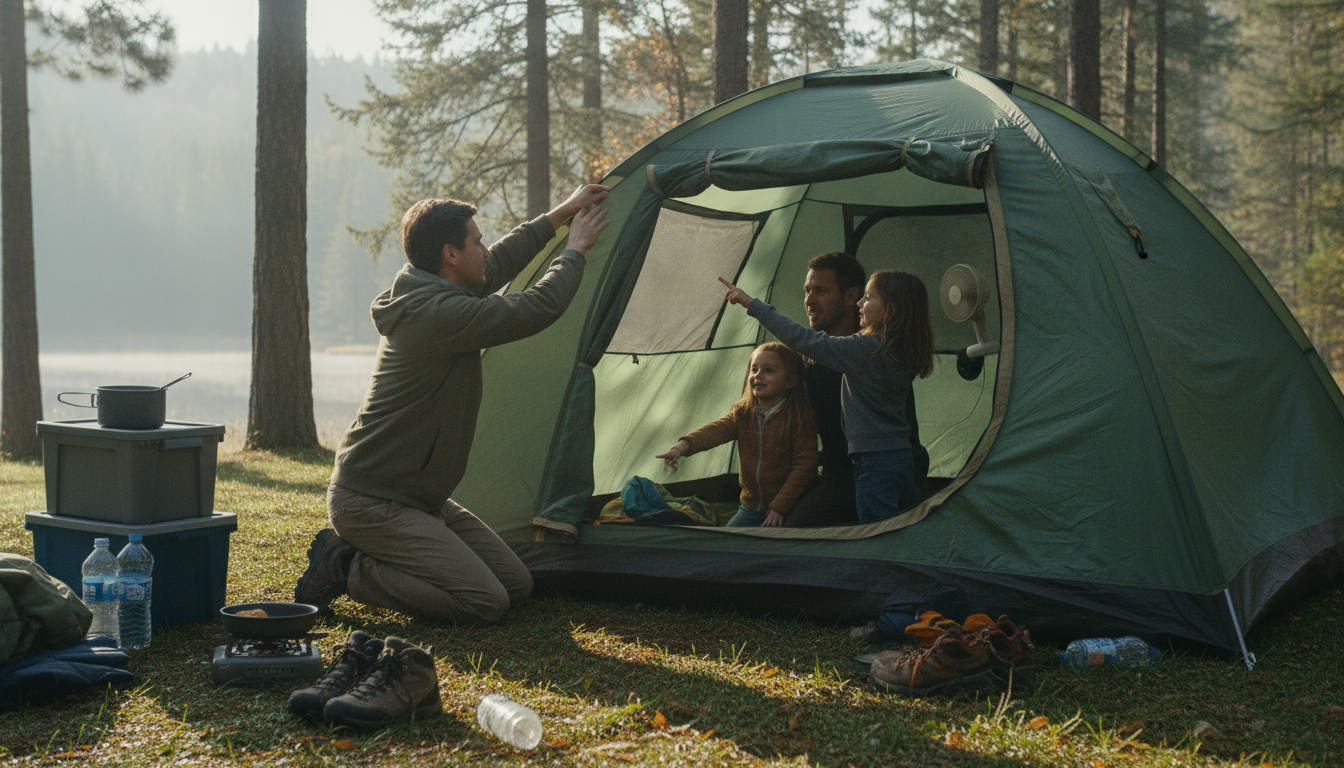
Better tent ventilation comes down to creating steady airflow while keeping rain and bugs out. Start by using every vent your tent already has, then improve circulation with smart campsite setup and a few simple add-ons.
Open high vents, peak vents, and any mesh panels whenever conditions allow. Warm, moist air rises, so top vents are the most effective for pushing humidity out. If your rainfly has adjustable kickstands or vent hoods, prop them open to keep air moving even during light rain.
For dry weather, consider removing the rainfly or loosening it to increase the gap between the fly and the tent body. In damp weather, keep the fly on but ensure it’s properly tensioned so it doesn’t sag onto the mesh, which blocks airflow and traps moisture.
Position the tent so a door or vent faces the prevailing breeze, then crack the opposite side vent or door to form a cross-breeze. Even a small opening on the downwind side can dramatically reduce condensation. If bugs are an issue, rely on mesh doors rather than sealing everything shut.
Avoid pitching in low spots near water where cold air settles and humidity lingers. If possible, camp on slightly higher, drier ground with some exposure to wind. Also, keep wet clothing and shoes outside under a vestibule, and avoid boiling water inside the tent—steam quickly overwhelms ventilation.
On calm nights, a small battery-powered fan can keep air circulating and help dry interior moisture. Place it near a vent or aimed toward the ceiling so it pushes humid air upward and out.
For more practical options and detailed tips, see the full guide here: How to increase ventilation in a tent.
Ventilate from the top and create a cross-breeze, even if it means cracking vents in light rain. Keep wet gear outside the sleeping area and avoid cooking inside to limit moisture buildup.



Leave a comment
You must be logged in to post a comment.