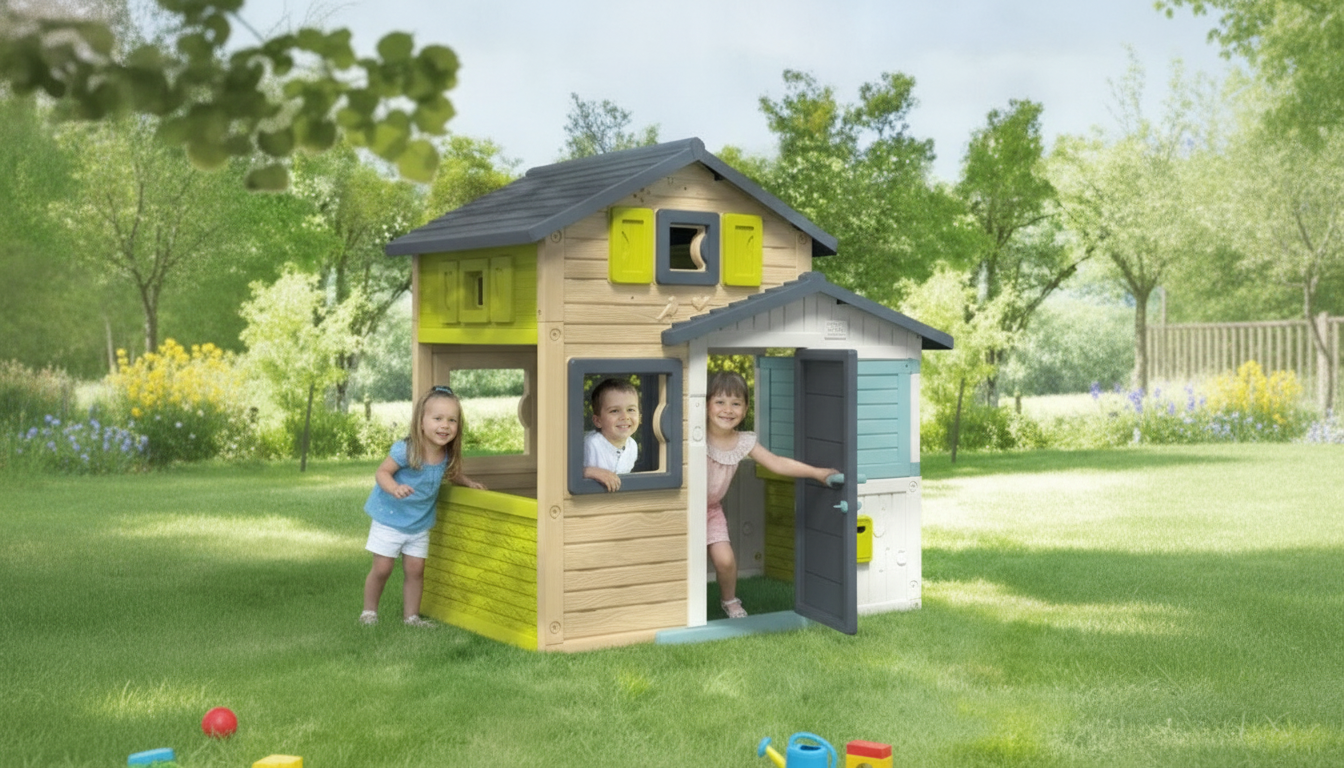
A garden playhouse becomes even more magnetic when it includes story starters built right in—like a post box for messages and a secret passage for hide-and-seek. The Children’s Garden Playhouse with Post Box and Secret Passage is designed to feel like a real “kid headquarters,” where mail arrives, missions begin, and surprise entrances turn ordinary afternoons into ongoing adventures.
A post box instantly invites role-play: mail carrier, pen pal, package delivery missions, and “important letters” for family members. It also makes it natural for kids to practice writing, drawing, and sharing notes—without it feeling like homework.
A hidden route adds a satisfying element of discovery. It supports classic hide-and-seek, “spy base” scenarios, and collaborative storytelling where one child becomes the messenger and another guards the entrance.
A kid-sized space encourages independent play, quiet time, and social play without constant indoor reset. When kids have a consistent “home base,” pretend play tends to last longer and requires fewer grown-up cues.
Instead of negotiating to get outside, the playhouse becomes the reason. A familiar destination often makes it easier for kids to head outdoors for longer stretches—especially when you rotate simple activities through it.
This playhouse is best used as a backyard “home base” for rotating themes—mail day, scavenger hunts, secret club meetings, and pretend shop games. It pairs well with low-effort props like notepads, kid-safe stamps, pretend parcels, flashlights, and a small basket for deliveries.
| Item | Details |
|---|---|
| Product | Children’s Garden Playhouse with Post Box and Secret Passage |
| Price | $699.49 (USD) |
| Availability | In stock |
| Ideal placement | Flat, well-drained area with clear sightlines from the home |
| Play highlights | Post box for messages; secret passage for discovery and games |
Place the playhouse on level ground to reduce wobble and door misalignment. Many families use patio pavers, compacted gravel, or a designated play-area surface to help keep the entryway cleaner after rain.
Kids run laps around playhouses—plan for it. Leave space on all sides for door swing, running paths, and easy adult access. Keep extra distance from fences, thorny shrubs, grills, fire pits, and any hard landscaping edges.
Partial shade can keep the interior more comfortable on hot days. Avoid placing it directly under branches that drop sap, pods, or heavy debris, which can make clean-up constant and slippery.
If your area gets strong winds, consider anchoring or positioning to reduce rocking. If possible, avoid aiming the main entry directly into prevailing rain to help keep the inside drier.
Every so often, inspect for loose fittings, sharp edges, and wear points—especially around openings and the secret passage. For broader outdoor play safety guidance, review the CPSC playground safety resources and the American Academy of Pediatrics outdoor play and safety guidance.
Create a “delivery route” with envelopes for family members. Add a simple hand-drawn map and stickers as stamps. For younger kids, blank postcards or drawing prompts keep it fun and low-pressure.
Run timed “spy training” drills: crawl through, whisper a clue, deliver it via the post box, then tag the next player. Set expectations upfront—taking turns, no pushing, and no blocking the entrance.
Set a small table nearby as a sorting station with baskets labeled “incoming” and “outgoing.” Kids can “process” mail, stamp it, and deliver it through the post box slot.
Leave a note that begins a story: “A mysterious package arrived…” Each day, a new page goes into the post box, and the story grows. It’s a simple way to keep play fresh without buying more toys.
A small weather-resistant bin nearby keeps notepads, pretend parcels, and “stamps” from turning into soggy messes. If you want a fun finishing touch for timed games or “mail pickup” schedules, the Irregular Beveled Mirror Wall Clock with Roman Numerals – Silent Quartz Movement can add a clubhouse-style “official time” element in a covered patio area adjacent to play.
Most garden playhouses shine during the imaginative-play years—commonly ages 3–8—though older kids may still enjoy them as a clubhouse. Always check the product page for any manufacturer age guidance, and supervise younger children, especially around passage openings.
Leave clearance on all sides for safe running paths, door swing, and easy maintenance access. Keep it comfortably away from fences, grills, fire pits, thorny plants, and hard edges so active play doesn’t turn into avoidable bumps and scrapes.
Try a daily “mail time” with drawing prompts, simple address practice, kindness notes, or scavenger-hunt clues. Keeping it playful and predictable helps kids build writing and organization habits without pressure.

Leave a comment
You must be logged in to post a comment.