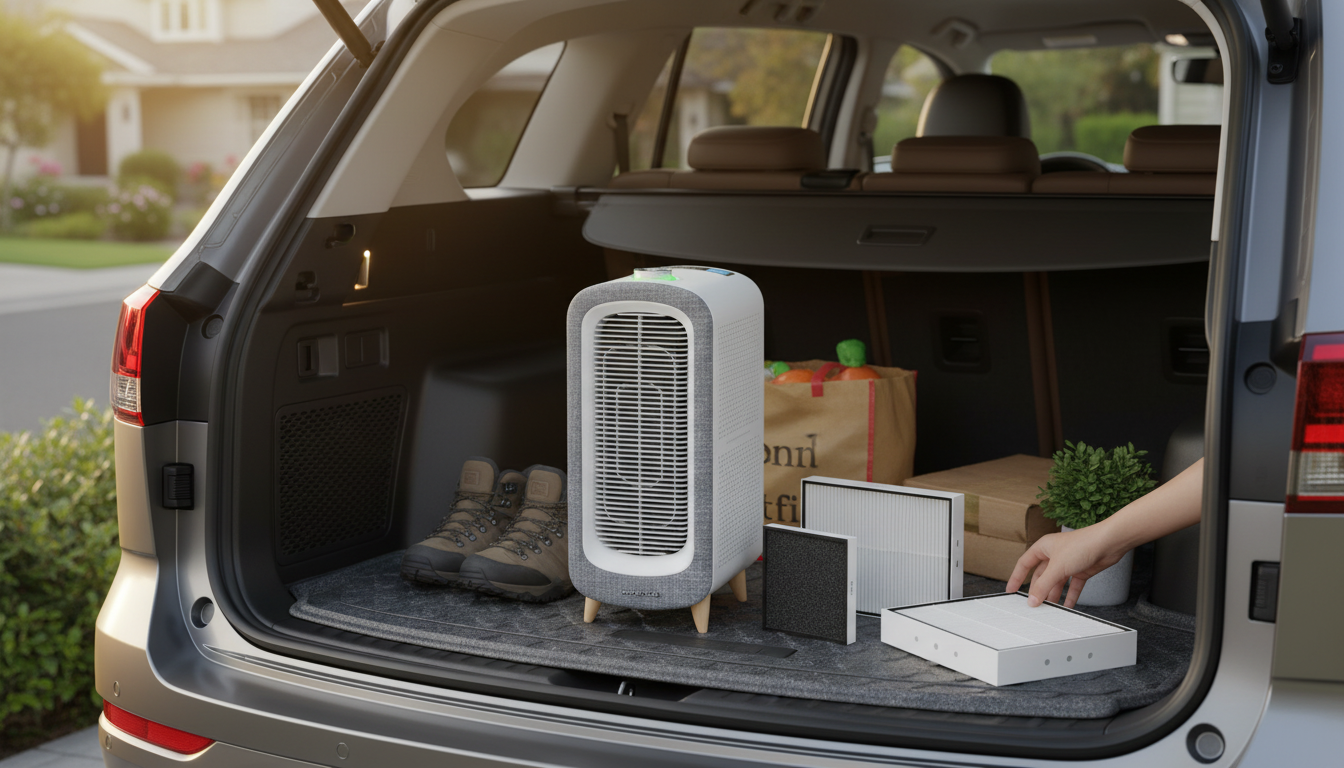
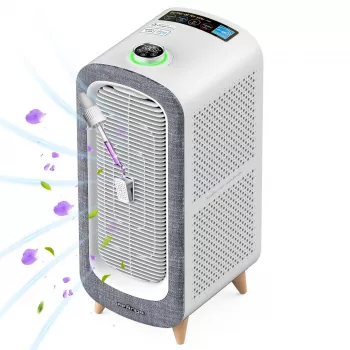
An air purifier that combines a true HEPA filter with an activated carbon (or charcoal) filter is designed to tackle two common indoor air problems at once: particles and odors. True HEPA is built to capture fine airborne particles such as dust, pollen, pet dander, and smoke particulates, while activated carbon targets gases and smells like cooking odors, VOCs from household products, and lingering smoke odors.
Many brands advertise “HEPA-like” or “HEPA-style,” but those aren’t the same as true HEPA. Look for wording such as “True HEPA” (or “HEPA H13” on some models). For carbon, check whether the unit uses a substantial activated carbon filter or pellet-based carbon. A thin carbon sheet can help with light odors, but heavier odor or VOC conditions often benefit from more carbon material.
Most mid-range to premium air purifiers designed for bedrooms, living rooms, and allergy support include both a HEPA layer and a carbon layer in a single replaceable filter cartridge. You’ll also see this combo in smoke-focused models, pet-focused models, and some larger-capacity units meant for open floor plans. If odor control is a priority, consider a purifier that emphasizes carbon capacity or offers an optional enhanced carbon filter.
The fastest way is to read the replacement filter description—if it lists “True HEPA” and “Activated Carbon” (or “Charcoal”), the purifier supports both. Also confirm availability and cost of replacement filters, since performance depends on regular changes. If you have smoke or strong odors, carbon saturation can happen sooner than the HEPA needs replacing.
For specific examples and a deeper breakdown of what to choose, see the main guide here: https://elevatdlife.com/which-air-purifier-has-a-hepa-and-carbon-filter/.
No. Activated carbon filters help reduce many odors and some VOCs, but they are not a reliable solution for carbon monoxide. Use a certified CO detector for carbon monoxide safety.

Leave a comment
You must be logged in to post a comment.