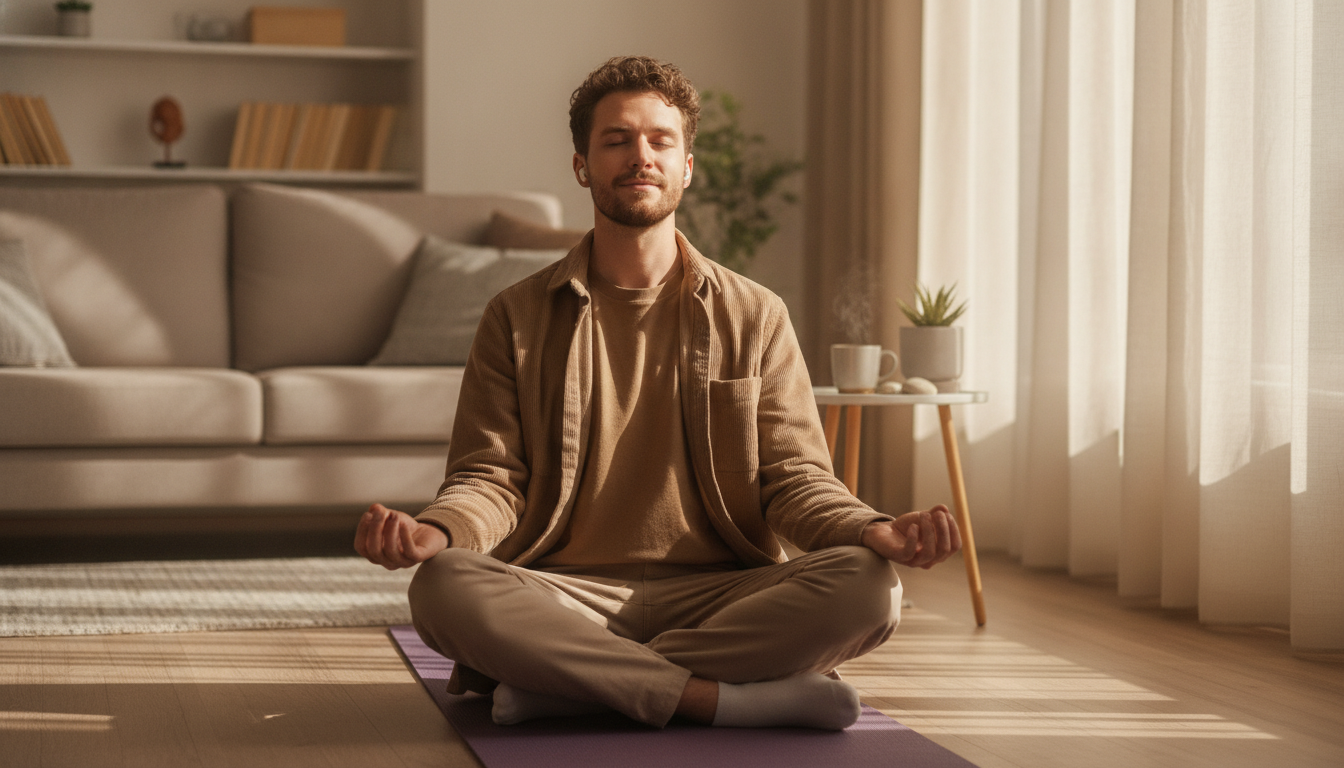
A steady meditation routine can make anxious moments feel less overwhelming by training attention, easing physical tension, and building a calmer response to stress. This guided audio series is designed for real-life use—short sessions, clear instructions, and a supportive pace that helps the mind settle without pressure to “do it perfectly.”
When anxiety runs high, it’s common to search for a “fix” that works instantly. Meditation tends to work differently: it builds familiarity with calm and steadiness through repetition. Over time, the nervous system learns the signals of downshifting—slower breathing, softer muscles, and a more spacious relationship with thoughts.
Guided meditation is especially helpful on the days when quiet feels impossible. Instead of trying to force the mind to “go blank,” the practice gives you one small job at a time: feel the inhale, notice the shoulders, return to sound, release the jaw. That gentle repetition can interrupt the momentum of anxious thinking.
For a research-informed overview of mindfulness and stress, see the American Psychological Association. For safety considerations and what to expect, the NCCIH (NIH) provides a clear summary.
| Available time | Best moment to use it | Suggested focus | What to notice after |
|---|---|---|---|
| 5 minutes | Before a meeting, after scrolling, midday stress | Breath counting + shoulder release | Softer jaw, slower thoughts, steadier attention |
| 10 minutes | Morning start or lunch reset | Body scan + grounding cues | Less chest tightness, clearer priorities |
| 15–20 minutes | Evening wind-down | Longer relaxation + gentle visualization | Easier transition into rest, less rumination |
If you’re prone to stopping when you miss a day, try a “never two in a row” approach. It keeps the routine flexible without letting it disappear. And if a session feels too long, it’s completely valid to scale down—five minutes of steady practice can be more supportive than twenty minutes of wrestling with yourself.
One small upgrade that often helps: choose a single “anchor” you return to every time you notice you’ve drifted. Some days that anchor is the breath; other days it’s the weight of your feet on the floor or the sound of the guide’s voice. Keeping it simple prevents the practice from turning into another performance task.
Calm Your Mind: Guided Meditation Series | Audio Course | Anxiety Relief Meditation is an audio-based set of guided sessions designed to support anxiety relief and mental clarity. The sessions are built for repeat listening so your mind learns the cues—breathing pace, grounding reminders, and body release—making it easier to settle more quickly over time.
Most days is a practical goal, even if it’s only 5–10 minutes. Consistency tends to matter more than duration, and a short “reset” session can be especially useful during acute stress.
Racing thoughts are common—wandering doesn’t mean you’re doing it wrong. Gently return to one anchor (breath, body sensations, or the guide’s voice) and consider using simple labels like “thinking” or “worrying”; shorter sessions can also help at first.
Yes, it can support sleep by cueing the body to relax and helping attention disengage from rumination. An evening session paired with a consistent wind-down routine (dim lights, quieter inputs) often makes it easier to transition into rest.



Leave a comment
You must be logged in to post a comment.