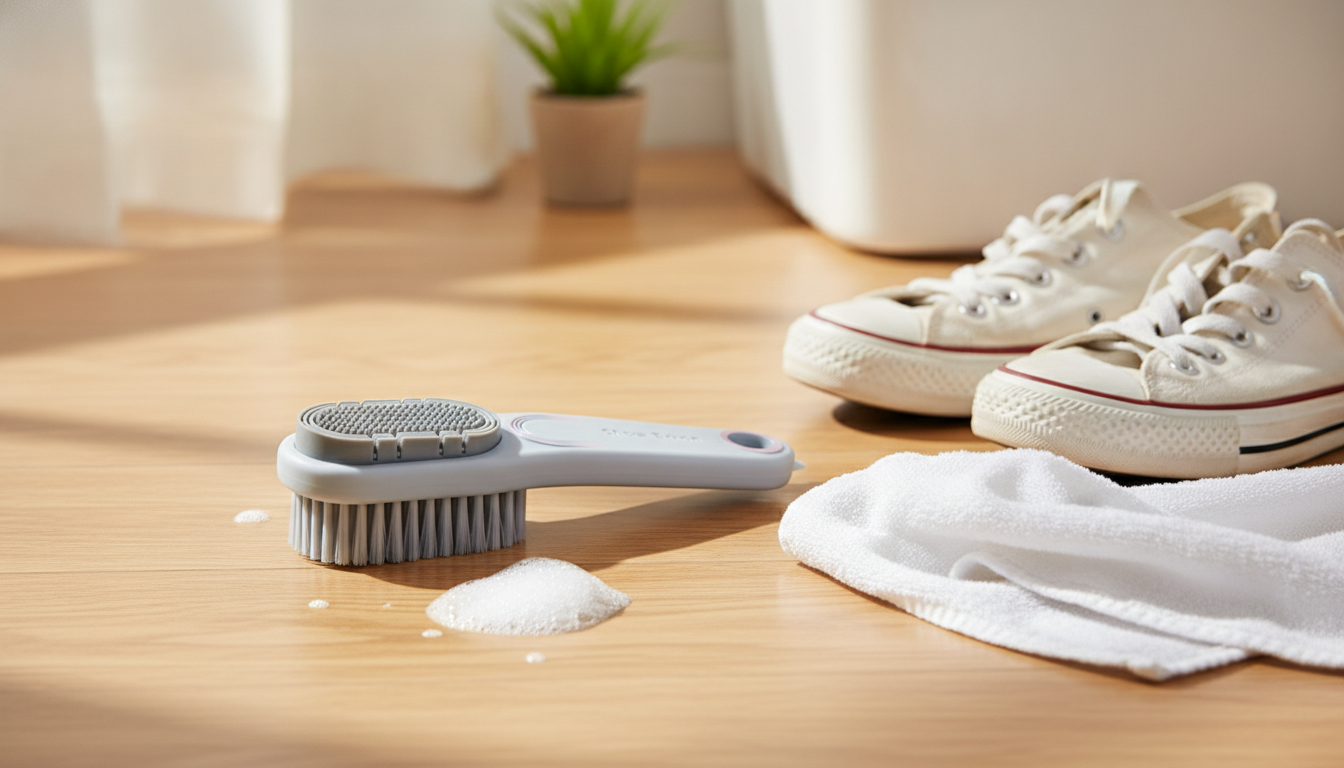
Keeping shoes looking fresh is easier when a brush can both lift dust and tackle stubborn debris without roughing up delicate materials. A double-sided rubber shoe brush with soft bristles is designed for quick daily touch-ups and careful deeper cleans on textures like suede and nubuck, while still being handy for canvas and knit uppers. If you rotate through a few pairs during the week, this is the kind of small tool that helps them stay uniform, tidy, and ready to wear—without relying on heavy cleaners every time.
A two-surface brush simplifies routine care because it lets you switch techniques in seconds. One side is typically rubber (for gripping dust and lifting debris from texture), while the other side uses soft bristles (for sweeping away loosened particles and smoothing the finish).
Rubber is especially helpful on materials that “hold onto” grit—think suede nap, knit fibers, or stitching channels—because it creates friction without needing aggressive pressure. Then the soft-bristle side finishes the job by evening out the surface so shoes don’t look patchy or brushed-in circles.
Different uppers respond best to slightly different techniques. The good news: a double-sided rubber-and-bristle brush covers most daily-wear scenarios as long as you keep pressure controlled and start dry whenever possible.
| Material | Best approach | Pressure | Finish step |
|---|---|---|---|
| Suede | Short strokes in one direction, then lightly back-and-forth to lift nap | Light | Sweep with soft bristles; let dry fully |
| Nubuck | Gentle, even passes; avoid aggressive scrubbing | Light | Brush to blend the surface |
| Canvas | Dry brush first; follow with damp cleaning if needed | Medium | Air dry; brush again to soften |
| Knit/Mesh | Quick passes on high-contact areas (toe box, collar) | Very light | Wipe with damp microfiber |
| Rubber edges/midsoles | Target creases and textured patterns | Medium | Wipe with a cloth |
For most pairs, a fast dry brush is the difference between “worn” and “well-kept.” This mini routine works well before heading out the door or right after you take shoes off.
Keeping shoes clean and dry also supports overall foot hygiene. For general guidance, see the American Academy of Dermatology Association’s foot-care recommendations and the CDC’s prevention guidance on fungal concerns, which emphasize cleanliness and avoiding prolonged dampness.
A brush stays effective when the rubber side can “grab” debris and the bristles stay free of compacted dust. A little maintenance prevents transferring dirt back onto your shoes.
Yes, when used dry with light pressure. Use short strokes, avoid soaking the material, and finish by brushing in one direction to blend the nap.
For frequent-wear shoes, a quick dry brush after a few wears helps prevent dirt from embedding. Suede and nubuck usually look best with gentle, regular maintenance instead of heavy scrubbing.
Let the mud dry first, tap off what you can, then rinse the rubber side with lukewarm water if needed. Allow the brush to air dry completely before storing.



Leave a comment
You must be logged in to post a comment.