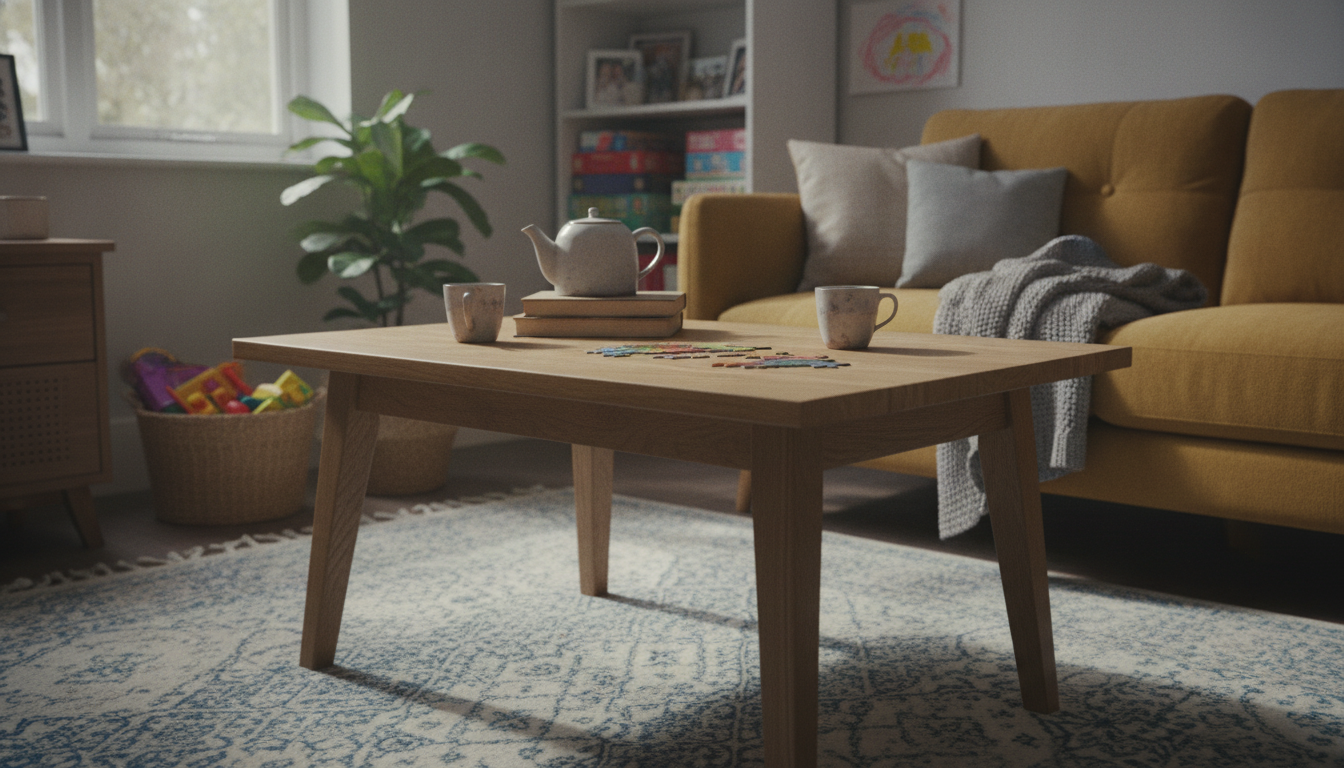
The right tea table size for a small living room comes down to three things: clear walking space, comfortable reach from seating, and a tabletop that fits your daily use without visually crowding the room.
Plan for about 18 inches between the tea table and the front edge of your sofa or chairs so knees and legs have room. Keep main walkways around the table close to 24–36 inches when possible; if your room is very tight, prioritize the primary traffic path (like the route from the entry to the seating area) and keep it as open as you can.
A tea table is easiest to use when it sits at about the same height as your sofa seat cushion, or up to 1–2 inches lower. This keeps drinks and remotes within a natural reach and helps the table feel integrated rather than awkwardly tall.
As a rule of thumb, aim for a tea table that’s around one-half to two-thirds the length of your sofa. In a small living room, leaning closer to the half-length side usually looks lighter and leaves more room for side tables or floor lamps.
Round or oval tea tables often make tight spaces feel easier to move through because there are no sharp corners in the path. Rectangular tables can work well in narrow rooms if they align with the sofa and leave a consistent clearance gap on all sides you need to access.
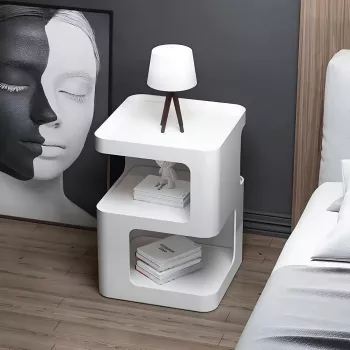
Even when dimensions are compact, the wrong design can feel bulky. Slim legs, open bases, and airy geometric forms generally read lighter than solid blocky shapes. For more design guidance geared toward minimal spaces, see this guide to Nordic geometric small tea tables.
Round tables are usually easier in tight rooms because the curved edge improves flow and reduces bumped corners. Rectangular tables can be better for narrow layouts when you need more surface area along the sofa line.


Leave a comment
You must be logged in to post a comment.