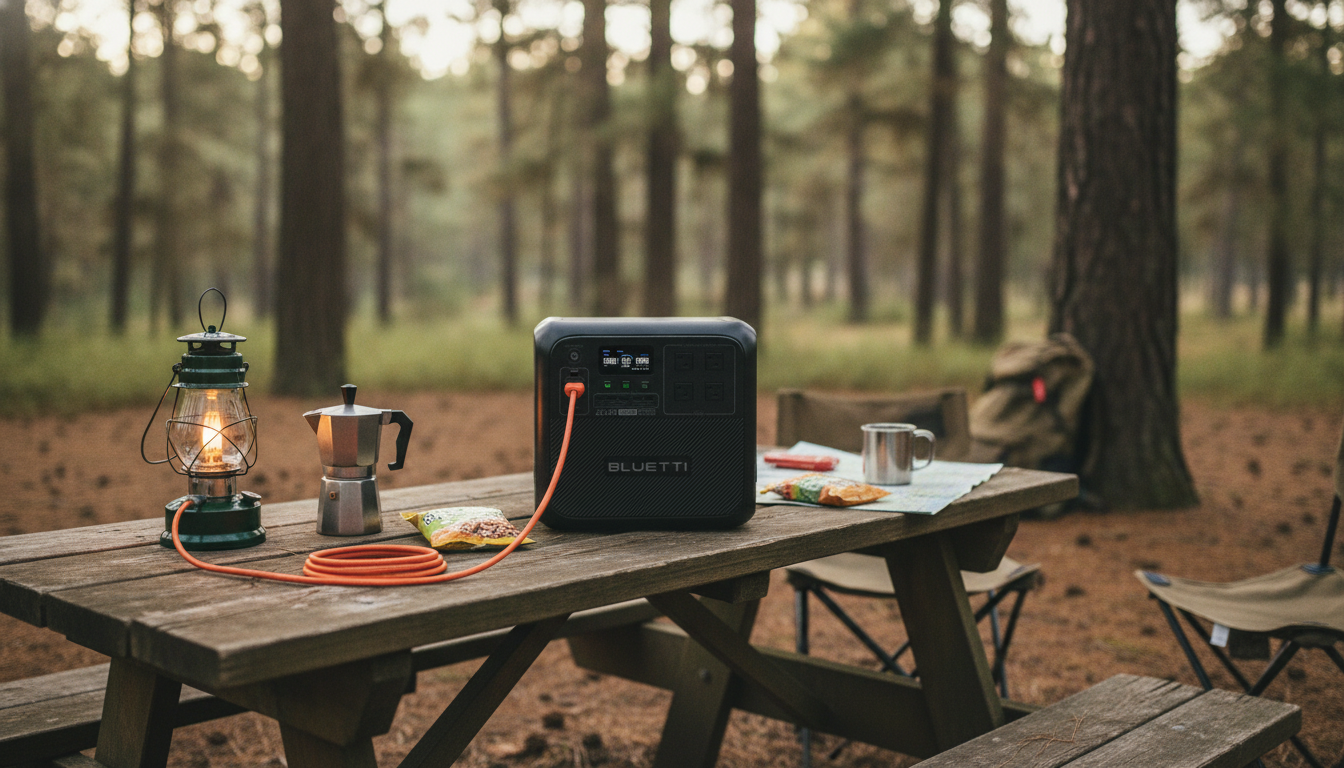
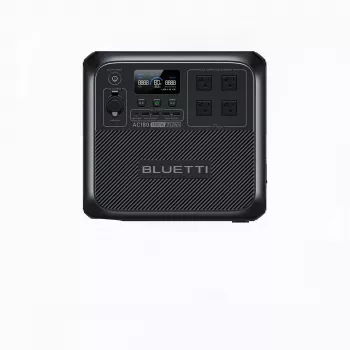
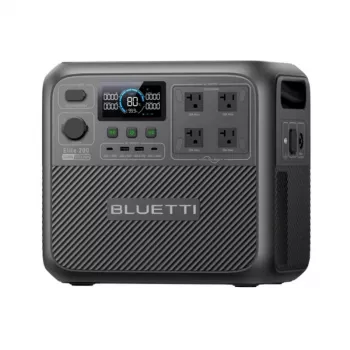
A mid-capacity power station can bridge the gap between lightweight phone chargers and noisy fuel generators. With 1152Wh of stored energy and up to 1800W output, this class of unit is designed to run essentials like small appliances, lights, and medical devices while staying portable enough for car camping, trailhead staging, or home outage readiness.
In real-world use, this size is often the “sweet spot” for people who want more than a battery bank but don’t want the fuel, noise, or storage hassle of a traditional generator—especially when paired with a clear plan for recharging.
| Spec | What it controls | Practical takeaway |
|---|---|---|
| 1152Wh capacity | Total runtime | Best for a weekend of mixed small loads, or a night or two of heavier use with recharging |
| Up to 1800W output | What can be powered | Supports many kitchen and comfort devices; avoid exceeding continuous limits |
| Recharge method | How fast you recover | Plan around wall, vehicle, or solar recharge based on trip/outage length |
| Device | Typical draw | Rough runtime from 1152Wh (planning range) |
|---|---|---|
| Smartphone charging | 10–15W average while charging | Dozens of charges (varies by phone battery size and charging losses) |
| Laptop | 45–90W | ~10–20 hours depending on usage and charger efficiency |
| LED camp lights | 5–20W | ~45–200 hours depending on brightness and quantity |
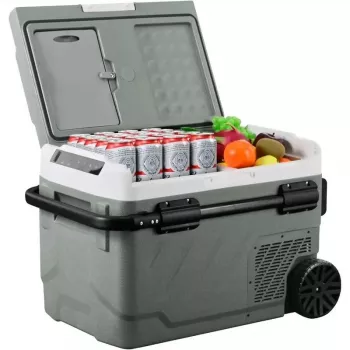
| 12V compressor cooler | 40–60W average (cycling) | ~15–25 hours depending on ambient temp and settings |
| CPAP (no heated humidifier) | 30–60W | ~15–30 hours depending on model and pressure |
| Small electric kettle / hot plate | 800–1500W | Short bursts only; plan on minutes per boil and limited total runs before recharge |
For emergency readiness, a simple routine helps: keep the unit topped up, keep your charging cables in the same tote, and know which outlets/ports you’ll use first when the lights go out. For broader preparedness checklists, FEMA’s guidance on building an emergency supply kit is a practical reference: https://www.ready.gov/kit.
For campsite best practices and general safety reminders, the National Park Service camping safety resources are a solid baseline: https://www.nps.gov/subjects/camping/safety.htm.
When batteries are involved, safe handling and charging habits matter. UL’s overview of lithium-ion battery safety is worth skimming for storage and charging do’s and don’ts: https://ul.org/resources/lithium-ion-battery-safety.
Yes for many 12V compressor coolers and some efficient mini fridges, but runtime depends heavily on average wattage, room temperature, and door openings. Use planning estimates based on average draw (not peak) and assume some conversion loss.
Many coffee makers and kettles fall under 1800W, but microwaves and other heat appliances can exceed it or draw high startup surges. Check the appliance label wattage and keep the total simultaneous load below the continuous rating.
Store it in a cool, dry place, avoid leaving it at 0% for extended periods, and top it up periodically. Avoid long exposure to high heat or freezing temperatures.

Leave a comment
You must be logged in to post a comment.