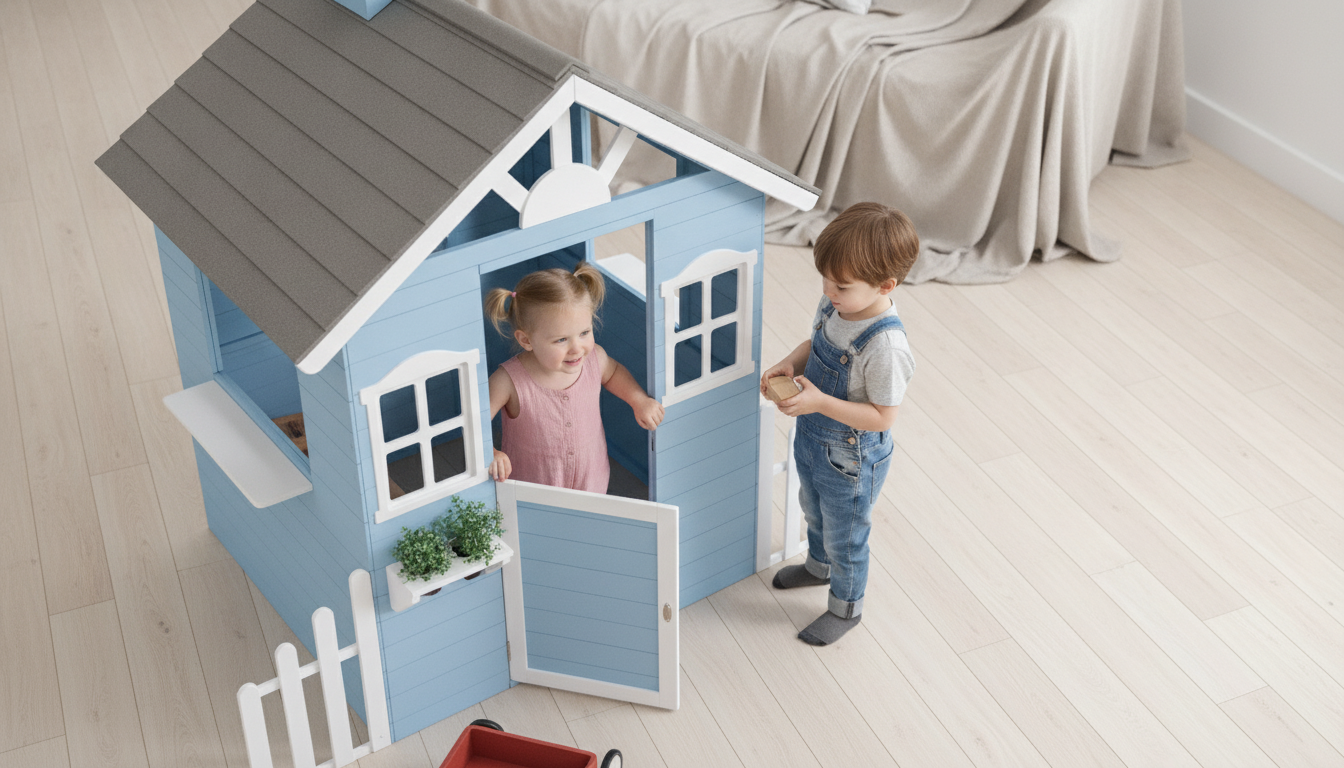
A country style wooden playhouse is typically best for kids ages 3 to 8, with the “sweet spot” landing around preschool through early elementary. At these ages, children are tall enough to step in and out safely, coordinated enough to use doors and windows, and imaginative enough to turn a small house into a store, café, garden shed, or clubhouse for hours at a time.
For younger kids, a wooden playhouse works well when the design is simple and close to the ground, with wide door openings and easy-to-grip handles. Adult supervision is still important, especially if the model includes planter boxes, small accessories, or any raised threshold. This age group tends to enjoy “home” play—cooking, hosting, and copying everyday routines.
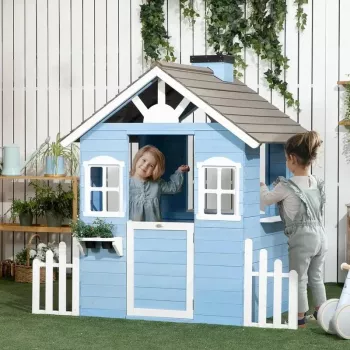
Kindergarten and early grade-school kids usually get the longest daily use out of a country style playhouse. They’re more independent, can coordinate group games, and often love the realistic details—windows, mail slots, working doors, and especially planter pots that make the playhouse feel like a “real” little cottage. If you’re choosing size, this is the range where slightly more interior room pays off.
Older kids can absolutely enjoy a playhouse, particularly if it’s roomy enough to sit inside comfortably and has “hangout” value—benches, a counter, or a little porch. At this stage, the playhouse may shift from constant pretend play to a quieter clubhouse for reading, crafts, or playing with siblings.
By around 9–10, many kids start to outgrow smaller models or prefer larger backyard structures. If you want longer use, prioritize higher door clearance, sturdier hardware, and enough floor space for two kids to sit without feeling cramped.
For a deeper look at features, sizing considerations, and setup tips, see the full guide here: country style wooden playhouse with planter pots guide.
Measure the footprint plus extra clearance for the door swing and walking space, then compare it to your available area. Also consider interior height—kids use a playhouse longer when they can sit and move around without bumping their head.

Leave a comment
You must be logged in to post a comment.