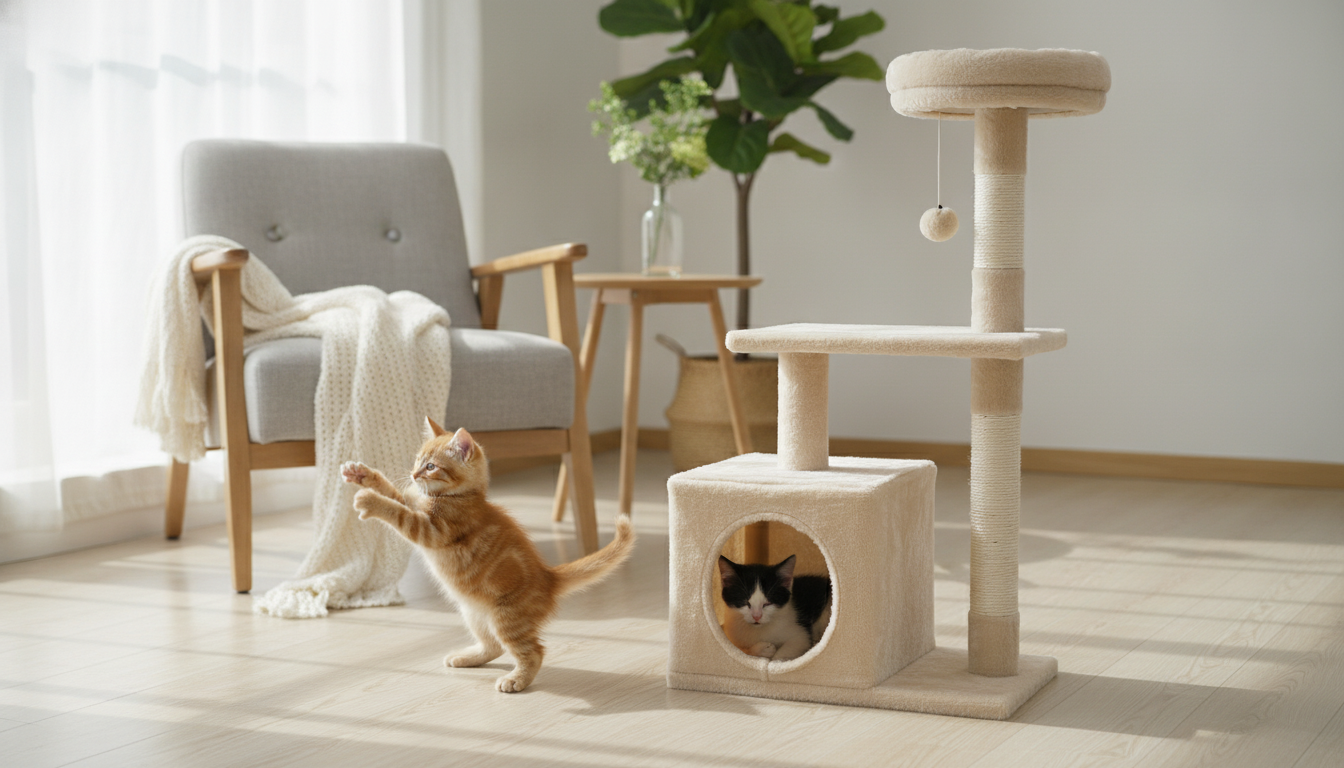
A compact cat tree can give kittens and small cats a dedicated place to scratch, climb, and perch—without taking over the room. A sisal-wrapped scratching post adds the texture most cats prefer, helping redirect claws away from furniture while supporting healthy stretching and play. For more guidance, see DIY Scratching Post Guide – Wisconsin Humane Society.
If you’re setting up a first “cat zone,” a thoughtfully designed Small Cat Tree with Sisal Scratching Post for Kittens and Small Cats can become the daily spot for zoomies, quick climbs, and post-nap stretches—especially when it’s placed where your cat already likes to hang out. For further reading, see 54in Cat Tree Tower Grey Condo Furniture Scratch Post for Kittens ….
Kittens don’t need towering height to get the benefits of vertical territory. A smaller footprint setup can still deliver the behaviors cats crave, while feeling safer and easier to navigate.
Not all “small” cat trees feel secure, and not all sisal posts hold up to daily use. A few details determine whether your cat uses it enthusiastically—or ignores it.
For additional behavior guidance, both the Humane Society and Cornell’s Feline Health Center emphasize that scratching is a normal behavior and redirection works best when you provide attractive scratching options and reinforce use (Humane Society – How to stop destructive scratching; Cornell Feline Health Center – Scratching).
| Feature | Why it matters | Quick test before buying/assembling |
|---|---|---|
| Stable base | Prevents tipping and reduces hesitation to use the tree | Press down on the perch area and gently rock; it should feel solid |
| Tightly wrapped sisal | Holds up longer and stays satisfying to scratch | Look for minimal gaps and consistent rope tension |
| Post height | Allows natural stretching and better claw maintenance | Your cat should be able to reach up without hunching |
| Platform padding | Improves comfort so the tree becomes a resting spot | Check for supportive, not overly thin, fabric on steps/perch |
| Hardware quality | Reduces loosening, wobble, and squeaks over time | After assembly, re-tighten once and confirm all joints sit flush |
| Floor grip | Keeps the base from sliding during play or scratching | Place on a rug/mat if the base shifts on hardwood or tile |
If you want extra floor comfort around the tree (and another layer of grip), a plush rug can create a soft landing zone—consider the Soft Velvet Plush Blue Rug for Living Room & Bedroom – Modern Fluffy Carpet for cozy rooms where cats like to lounge.
Yes—sisal is widely favored because it’s grippy, durable, and satisfies the “hook and pull” scratching motion. Choose tightly wrapped sisal and remove loose strands, then reinforce the habit with treats or play when your kitten uses it.
Place it in a spot your cat already uses, such as near a window, next to a favorite chair, or close to a current scratching target like a sofa corner. Keep it on a stable surface, and use a rug or mat if the base can slide on hardwood or tile.
Re-tighten all hardware after assembly and again after a few days of use, since bolts can settle. Make sure the base sits level, add grip under the base (rug/mat), and avoid encouraging large jumps if the tree is designed for small cats.


Leave a comment
You must be logged in to post a comment.