Comfort, Fit, and a Cleaner Belt Line with Adjustable Shoulder Strap Clips
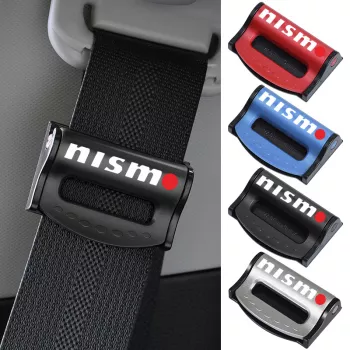
Seat belts work best when they sit correctly across the body—but plenty of drivers and passengers deal with shoulder belt rubbing, neck contact, or an awkward angle caused by seat height, posture, or vehicle geometry. Adjustable shoulder strap clips offer a simple way to guide the belt into a more comfortable position while helping the belt stay flat and untwisted. This 2-piece set adds a subtle Nismo-branded look while focusing on everyday comfort for commutes, road trips, and frequent stop-and-go driving.
What These Adjustable Clips Do
- Guides the shoulder portion of the seat belt to sit lower or more centered across the chest, reducing neck and collarbone irritation.
- Helps keep the belt webbing flat and aligned, limiting twisting that can feel abrasive and look messy.
- Provides an adjustable stop point so the shoulder belt’s path feels more consistent between drives.
- Adds a sporty accent with a Nismo-style logo for drivers who like subtle interior details.
For general belt-fit guidance and safe belt use reminders, refer to trusted resources like NHTSA’s seat belt information and the CDC’s seat belt safety page.
Best-Fit Use Cases
- Shorter drivers or passengers who feel the shoulder belt rides too high near the neck.
- Drivers who frequently change seating position (shared vehicle, valet, family car) and want a quick comfort reset.
- Daily commuters who notice belt rubbing during repeated steering/shoulder movement.
- Passengers in the front seat who sit more upright and feel the belt line is too close to the face.
- Anyone wanting a small interior accessory that doesn’t change the vehicle permanently.
Key Features at a Glance
- Set includes 2 clips for driver and passenger placement.
- Adjustable design to fine-tune where the shoulder belt rests.
- Designed for use with common seat belt webbing styles in many vehicles.
- Nismo logo styling for a performance-inspired interior detail.
Quick Reference: Clip Benefits and Setup Checks
| Item |
What to Look For |
Why It Matters |
| Adjustment range |
Ability to slide and hold position without slipping |
Helps maintain a consistent belt path between trips |
| Belt lay-flat fit |
Belt webbing sits flat through the clip |
Reduces twisting and improves comfort against clothing |
| Placement |
Clip positioned so the belt crosses mid-shoulder and center chest |
Comfort improves when the belt avoids neck contact |
| Two-piece set |
One for driver, one for front passenger (or two seats) |
Keeps comfort consistent across common seating positions |
| Style detail |
Nismo logo visible but not distracting |
Adds subtle customization without major interior changes |
How to Position the Clip for Comfort
- Start with the seat adjusted normally (seat height, backrest angle, steering wheel reach) before setting clip position.
- Attach the clip so the belt runs straight through it and remains untwisted; a flat belt generally feels smoother and more stable.
- Slide the clip until the shoulder belt sits away from the neck while still crossing the chest in a natural line.
- Do a quick movement check: turn your head left/right, reach for the wheel, and simulate looking over your shoulder—then fine-tune position.
- Re-check after a short drive; small changes (even 1–2 cm) can noticeably improve comfort.
A good day-to-day target is a shoulder belt that crosses the mid-shoulder and center chest without contacting the neck. If a position causes the belt to slip off the shoulder, sit too close to the face, or stop retracting smoothly, reset the clip and re-check belt routing.
Compatibility Notes for Nissan, Toyota, and Hyundai Interiors
- Works best with standard seat belt webbing where the shoulder belt runs freely and is not unusually thick or heavily padded.
- If the vehicle already has an adjustable upper anchor on the B-pillar, clips can still help refine comfort—especially for passengers—but try the factory height adjustment first.
- Avoid using on belts that are damaged, frayed, or stiff; comfort accessories are not a substitute for belt replacement when wear is present.
- If the belt has built-in specialty features (integrated airbag belts in some models), consult the vehicle manual before adding any accessory.
Care, Longevity, and Daily Use Tips
- Wipe occasionally to keep dust and skin oils from building up—especially if the clip sits near the shoulder and contacts clothing frequently.
- If the clip shifts over time, re-seat it and ensure the belt webbing remains flat; twisting can increase sliding.
- In shared vehicles, consider marking a preferred placement point so each driver can quickly reset it.
- If discomfort persists, reassess seat posture and belt routing; comfort issues sometimes come from seat angle rather than belt position alone.
Product Options (In Stock)
If the goal is a simple, low-cost comfort tweak with a performance-inspired accent, these items are currently available:
FAQ
Do adjustable seat belt clips affect safety?
They should not prevent the belt from lying flat, retracting normally, or fitting properly across the shoulder and chest. Follow your vehicle manual, and discontinue use if the clip introduces slack, causes poor positioning, or interferes with normal belt function.
Where should the shoulder belt sit after adjusting the clip?
The shoulder belt should cross the mid-shoulder and center chest without touching your neck and without slipping off the shoulder. After adjusting, do a quick comfort check with normal driving movements (turning your head and reaching the wheel).
Will these fit most Nissan, Toyota, and Hyundai seat belts?
Many vehicles use similar seat belt webbing sizes, but fit depends on belt thickness and design. Confirm the belt slides smoothly through the clip, stays flat, and retracts normally after installation.
Recommended for you


Leave a comment
You must be logged in to post a comment.