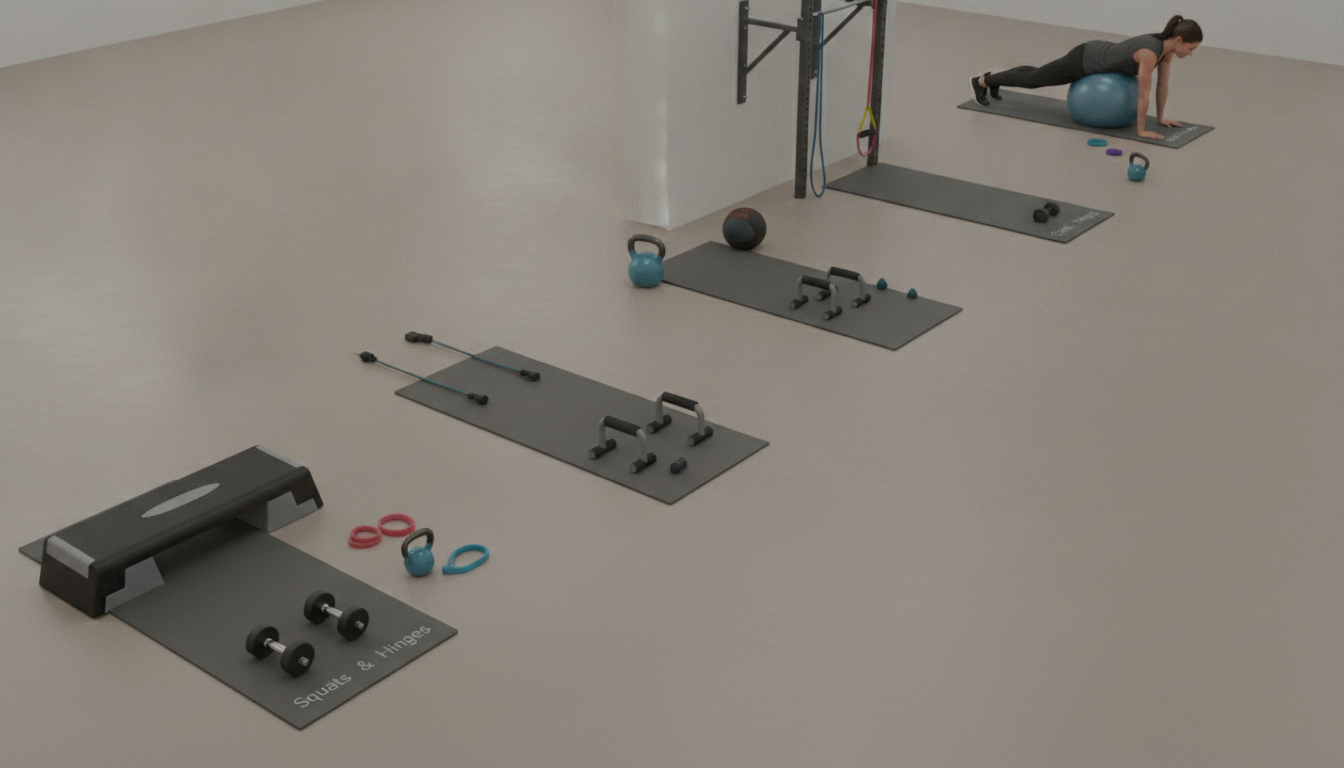
The five basic strength exercises are movement patterns that train most major muscles efficiently, whether you’re lifting weights or starting with bodyweight. A simple way to think about them is: squat, hinge, push, pull, and core/bracing. Build these five consistently and you’ll cover the foundation for stronger legs, hips, back, chest, shoulders, and midsection.
Squats train your quads, glutes, and core while improving everyday actions like standing up and climbing stairs. Beginners can start with bodyweight squats to a chair, focusing on knees tracking over toes, a tall chest, and controlled depth.
The hinge targets the glutes, hamstrings, and lower back by moving at the hips more than the knees. If you’re training at home, glute bridges or hip hinges (hands on hips, push hips back, neutral spine) are approachable options that teach powerful posterior-chain mechanics.
Pushing movements build your chest, shoulders, and triceps. Push-ups are the classic baseline: start with an incline (hands on a bench or counter) if needed, keep your body in a straight line, and lower with control before pressing back up.
Pulling strengthens the upper back, lats, and biceps—key for posture and shoulder health. At home, you can use doorframe rows, towel rows, or sturdy table/inverted rows; focus on pulling your elbows back and squeezing your shoulder blades together.
Core strength is less about endless crunches and more about resisting unwanted motion so you can transfer force safely. Planks, side planks, and dead-bug variations teach full-body tension and help support your spine during squats, hinges, pushes, and pulls.
To see how these patterns fit into an easy, beginner-friendly home plan (with progressions and simple structure), visit this beginner home strength guide.
Most beginners do well with 2–3 full-body sessions per week, leaving at least one rest day between workouts. This frequency builds consistency while allowing enough recovery to get stronger.




Leave a comment
You must be logged in to post a comment.