
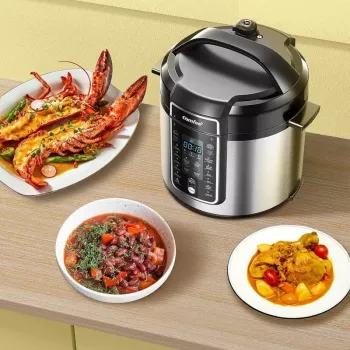
A 6-quart multi-functional pressure cooker can replace several countertop appliances while keeping weeknight meals fast and hands-off. With one-pot cooking, preset programs, and slow-cook capability, it’s built for family-size portions, batch cooking, and simple cleanup—without sacrificing texture and flavor.
If you’re ready to streamline dinner and reduce dishes, the 6 Quart Multi-Functional Pressure Cooker with 12 Presets, Slow Cooker & More offers a practical middle ground: roomy enough for real meals, compact enough for everyday countertop use.
The 6-quart capacity is the “sweet spot” for many households because it supports generous portions without feeling bulky. It’s a comfortable size for weeknight staples and weekend batch cooking, and it helps avoid the common issue of outgrowing a smaller cooker.
Presets are designed to reduce the “dial guessing game.” Instead of starting from scratch each time, a preset typically pairs heat level, pressure behavior, and time ranges that match common foods—helpful when you’re juggling dinner and everything else at home.
| Preset style | Good for | Practical tip |
|---|---|---|
| Pressure cook (manual) | Stews, tough cuts, dried beans | Add enough liquid; use natural release for soups/beans to reduce splatter. |
| Rice/Grains | White/brown rice, quinoa, oatmeal | Rinse grains to reduce foaming; allow a short rest after cooking. |
| Poultry/Meat | Chicken thighs, pork shoulder, pot roast | Brown first using sauté for deeper flavor. |
| Soup/Chili | Brothy soups, chili, lentil soup | Keep below the max fill line; use natural release to prevent boiling over. |
| Slow cook | All-day braises, pulled meats, sauces | Preheat with sauté if needed; stir and check liquid levels for long cooks. |
Having both methods in one pot makes meal planning easier because you can choose speed or low-and-slow texture depending on the day.
Example: pulled pork can be pressure-cooked for a faster finish or slow-cooked for a longer, gentler breakdown. For broth-based soups, pressure cooking followed by a natural release helps keep simmering under control and reduces splatter at the valve.
A repeatable routine is where a multi-cooker shines. The goal is to build flavor quickly, then let the cooker take over while you reset the kitchen (or simply breathe).
If you’re new to pressure cooking, it’s worth reviewing established safety guidance for heating and holding foods. Resources like the CDC’s food safety guidance and the USDA’s slow cooker and food safety page provide helpful baselines for safe handling, especially when switching between cook modes and keep-warm functions.
The best everyday experience comes from clear indicators and consistent habits. A few simple checks help prevent messy releases, stubborn odors, and performance issues.
For a broader overview of safety considerations and standards, you can also reference organizations like UL.
| Item | Value |
|---|---|
| Product | 6 Quart Multi-Functional Pressure Cooker with 12 Presets, Slow Cooker & More |
| Price | 127.01 USD |
| Availability | In stock |
Yes—6 quarts typically covers family dinners like soups, stews, shredded meats, rice, and meal-prep batches. Just remember to stay under the max fill line and leave extra headspace for foamy foods like beans and grains.
Use natural release for soups, beans, grains, and other starchy or brothy dishes to reduce spurting and help textures settle. Quick release is better for delicate vegetables or when you need to stop cooking promptly to prevent overcooking.
Pressure cooking is significantly faster and excels at tenderizing beans and tougher cuts, while slow cooking is gentler and better for all-day braises and sauces. For example, pulled pork works with either method, but a broth-based soup often benefits from pressure cooking followed by natural release.


Leave a comment
You must be logged in to post a comment.