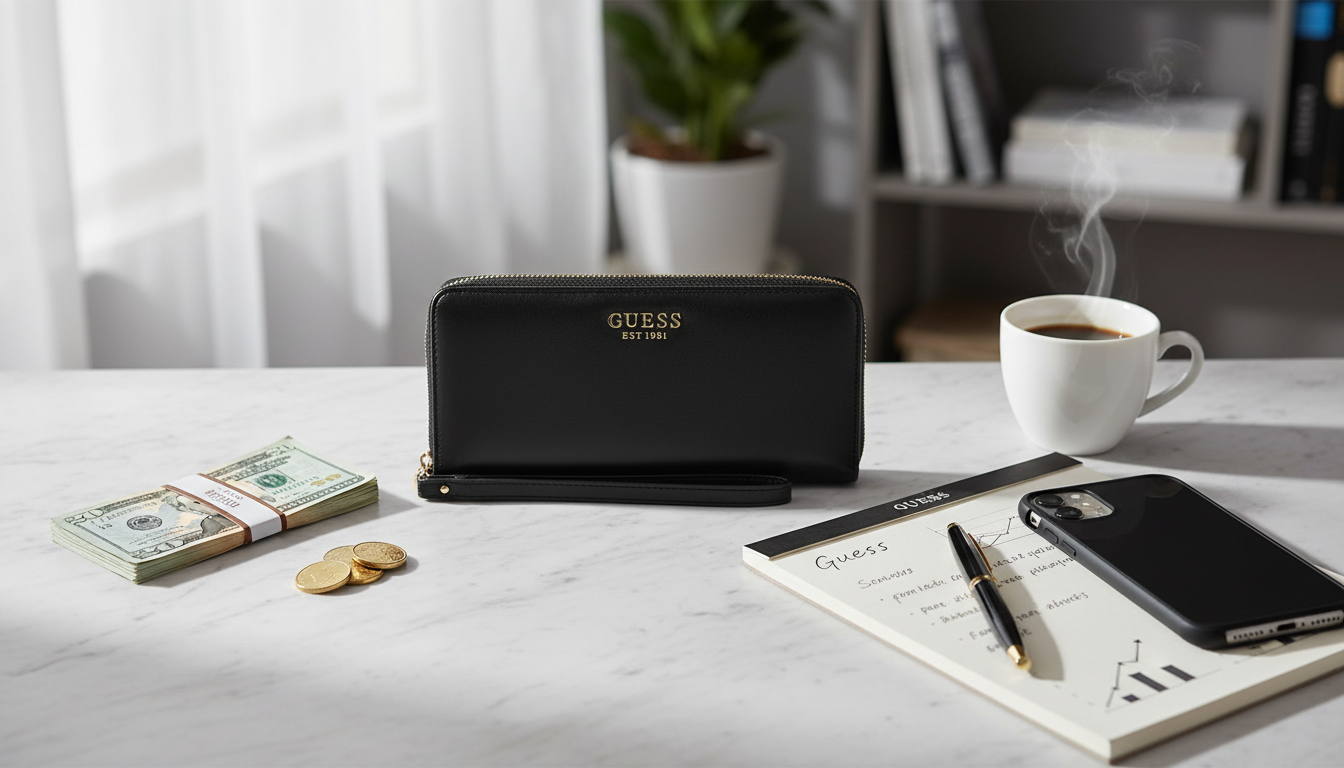
A real Guess wallet typically stands out through consistent branding details, clean construction, and packaging that matches the brand’s usual presentation. Counterfeits often look close at first glance, but small mismatches—like uneven stitching, off-center logos, or flimsy hardware—tend to show up quickly with a careful check.
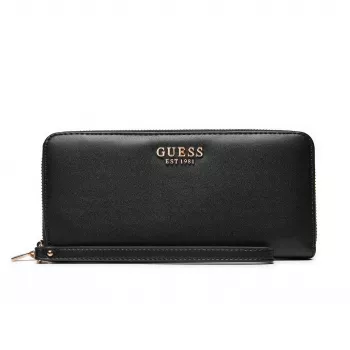
Start with the front logo plaque or emblem. On an authentic Guess wallet, lettering is sharp, evenly spaced, and firmly attached—no wobbling, glue residue, or rough edges. Look for consistent font style across any interior stamps, metal branding, and zipper pulls. If the logo looks slightly “off,” too thick, or poorly aligned, treat it as a red flag.
Authentic Guess wallets generally use materials that feel structured and finished, with edge paint or sealed edges that don’t look messy. Stitching should be straight and uniform, without loose threads or skipped stitches. Pay attention to corners and fold points; fakes often show puckering, uneven seams, or peeling edges early.
Hardware is one of the quickest tells. Zippers should glide smoothly and feel solid, not lightweight or gritty. Metal tone should look consistent across all parts (zipper, logo, snaps), without obvious discoloration. If a zip-around wallet catches, separates, or feels flimsy, it may not be authentic.
Inside, card slots should be evenly cut, and the lining should sit flat without bunching. Any brand stamp should be clean, centered, and legible. Sloppy glue lines, crooked pockets, or mismatched lining patterns are common counterfeit clues.
Compare details—like zipper placement, pocket count, and logo location—against a reliable product listing. For a grounded reference and a closer look at a zip-around style, visit this guide to a Guess women’s zip-closure wallet.
Some may include branded tags or packaging, but an “authenticity card” is not always standard. Rely more on build quality, consistent branding, and matching the wallet to verified product photos and specs.

Leave a comment
You must be logged in to post a comment.