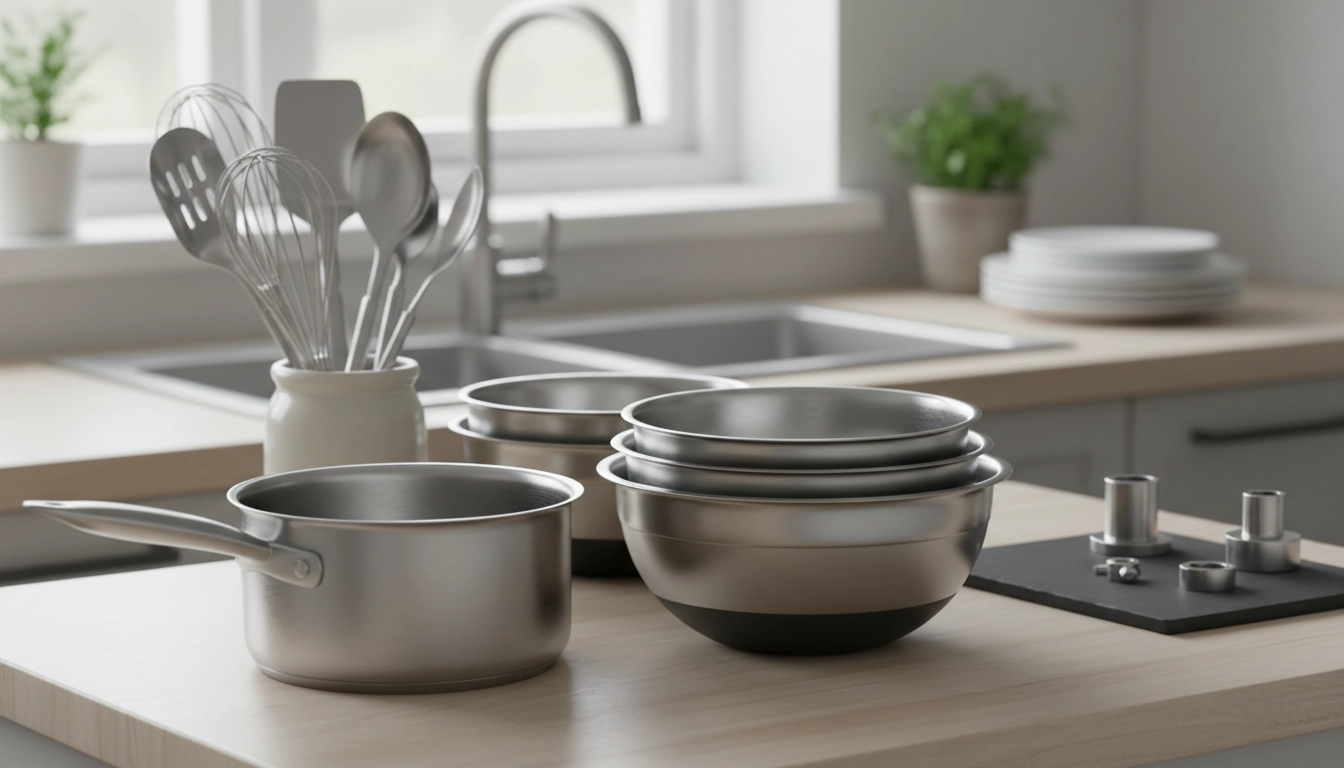
No single company is “best” for every stainless-steel need. The right pick depends on what you’re buying (sheet, tube, hardware, cookware, or décor), the grade you need (like 304 or 316), and the finish quality you expect. Instead of chasing a single brand name, shop by measurable standards: certified material, consistent thickness, clean welds, and a finish that matches how the product will be used and cleaned.
Grade transparency: Reputable sellers clearly state whether the product is 304 (great for most interiors) or 316 (better for coastal or harsher environments). If the listing just says “stainless steel” with no grade, quality can be a gamble.
Finish consistency: The best makers control polish and brushing so the surface looks even in changing light. This matters a lot for reflective pieces like mirrors and wall accents where small waves, pits, or swirl marks show up immediately.
Build details: Check edges, backing, and mounting hardware. A “good stainless” product can still feel cheap if the frame is thin, the corners are rough, or the mounting system is flimsy.
If you’re buying a finished item, prioritize clear specs, close-up photos, and straightforward return policies. If you’re buying raw stainless for a project, prioritize mill test reports (MTRs), cut-to-size accuracy, and customer support that can confirm temper, gauge, and tolerance.
In stainless steel wall mirrors—especially concave/convex styles—surface uniformity and edge finishing are the difference between a crisp, modern look and a distracting, uneven reflection. For a practical buying checklist, see the guide here: concave/convex stainless steel wall mirror guide.
For most indoor décor, 304 is an excellent choice and typically costs less. Choose 316 if the item will be exposed to salty air, harsh cleaners, or high humidity where extra corrosion resistance helps.



Leave a comment
You must be logged in to post a comment.