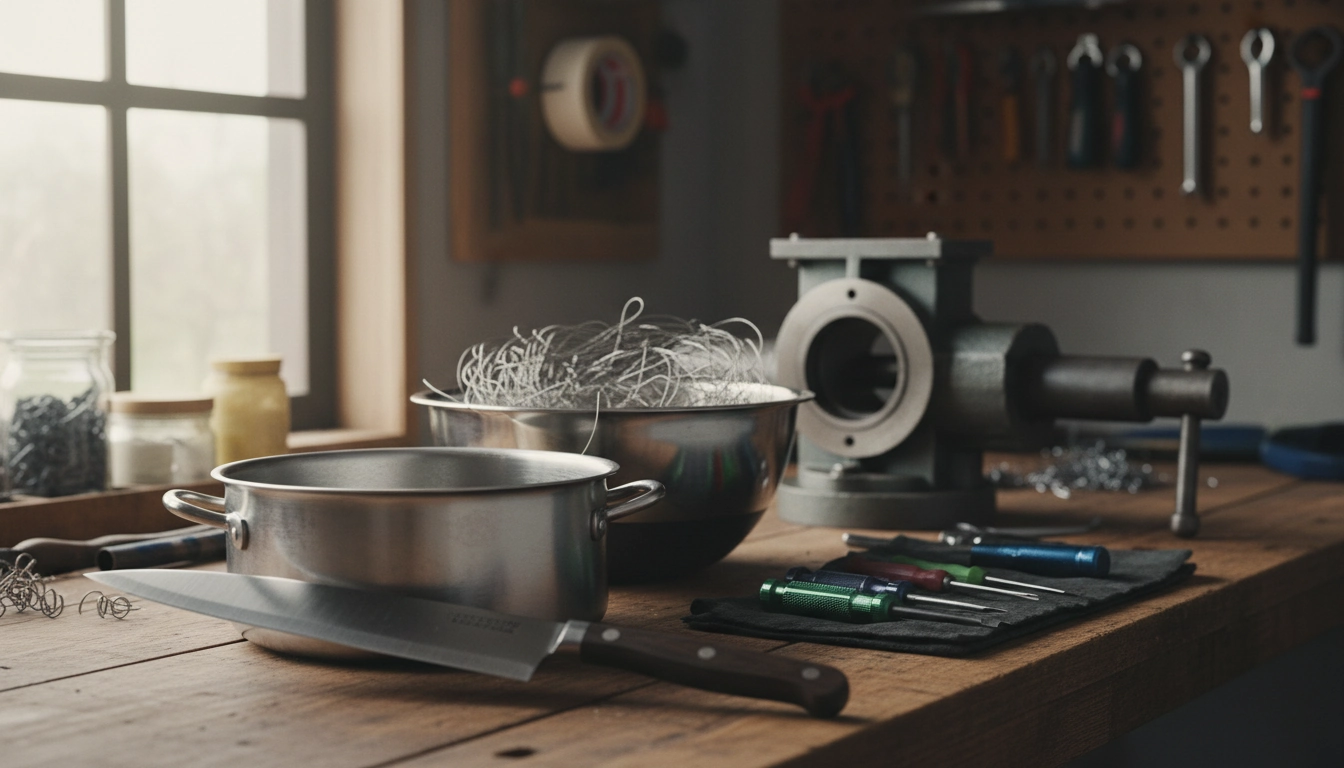
Stainless steel is commonly grouped into five main categories (also called “families”) based on their internal crystal structure and how they’re alloyed. Knowing the family helps predict corrosion resistance, magnetic behavior, strength, and how well it can be formed or welded.
Austenitic grades are the most widely used. They’re known for excellent corrosion resistance, easy forming, and strong performance in everyday environments. Most are non-magnetic (though cold-working can add slight magnetism). Popular examples include 304 and 316, with 316 offering better resistance to chlorides and humidity.
Ferritic stainless steels are typically magnetic, generally less expensive than many austenitic grades, and offer good resistance to stress corrosion cracking. They’re often used in indoor applications and appliances; common examples include 430 and 409.
Martensitic grades can be heat-treated to achieve higher hardness and strength, which makes them useful for blades, tools, and wear-resistant parts. They’re magnetic and usually have lower corrosion resistance than austenitic types. Common examples include 410 and 420.
Duplex stainless steels blend austenitic and ferritic structures, delivering higher strength and improved resistance to chloride-related corrosion compared with many standard austenitic grades. They’re often chosen for demanding marine or industrial environments (for example, 2205).
PH stainless steels are engineered for high strength through a heat-treatment process that forms strengthening particles within the metal. They balance strong mechanical properties with good corrosion resistance, and are common in aerospace and precision components (such as 17-4 PH).
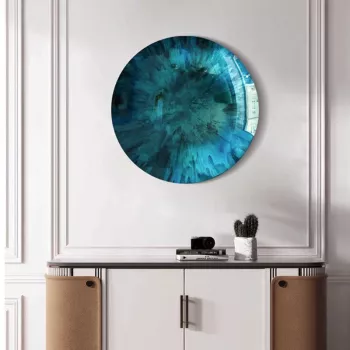
If you’re selecting stainless steel for décor or metal-framed accents, details like finish, magnetism, and moisture exposure matter as much as the family. For a practical look at stainless-steel design considerations in home décor, see this guide to concave and convex stainless steel wall mirrors.
For humid bathrooms, 316 stainless steel is often preferred because it resists corrosion from moisture and cleaning chemicals better than 304. If exposure is mild and the finish is well maintained, 304 can still be a solid choice.

Leave a comment
You must be logged in to post a comment.