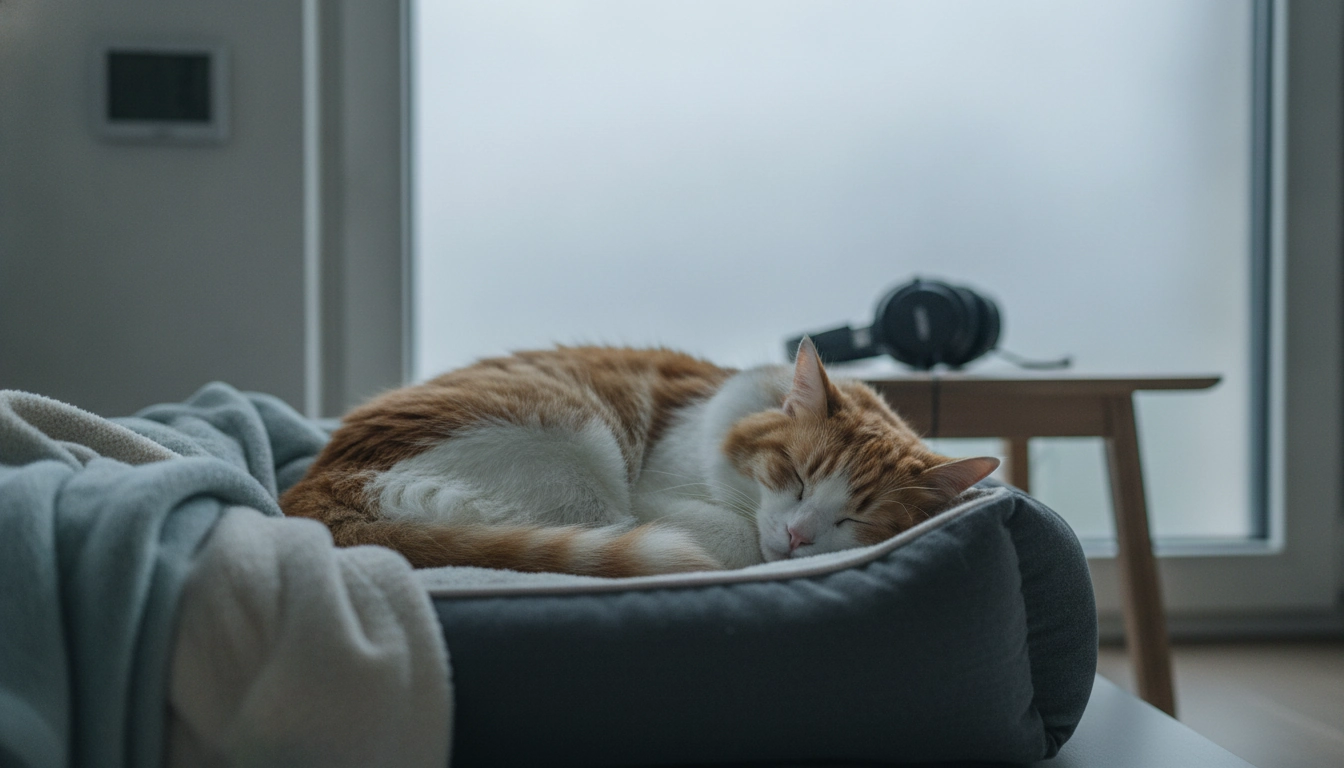
Most pets sleep best in a space that feels quietly “night-like”: comfortably cool, dim, and steady. The goal is to remove environmental triggers that keep their brains on alert, especially for light sleepers or anxious pets.
A slightly cool room supports deeper rest for many dogs and cats. Aim for a stable indoor range around 65–72°F, adjusting for your pet’s coat, age, and health. Short-nosed breeds, seniors, and pets with breathing or heart issues may do better toward the cooler end, while very small or thin-coated pets may prefer a touch warmer. Avoid big overnight swings—rapid changes can cause restlessness and frequent waking.
Dim lighting signals bedtime. Turn off bright overheads and keep the sleep area as dark as practical, especially if your pet startles easily. If you need visibility for nighttime potty trips or navigating the hallway, use a warm, low-intensity night light rather than blue-white LEDs. Cover or reposition small “pinpoint” light sources (chargers, routers, TV standby lights) that can flicker or glow at eye level.
Quieter is better, but consistency matters most. Sudden sounds—door slams, late-night TV spikes, barking from outside—are more disruptive than a steady low hum. Keep the sleep area away from appliances and street-facing windows when possible. If your home can’t be silent, consider soft, continuous sound (like a fan) to mask sharp interruptions and help pets settle.
When temperature, light, and noise are predictable, pets learn that the space is safe and boring—perfect for sleep. For more ways to build calm evening habits, follow this guide: how to help dogs and cats sleep better with calm routines.
Frequent waking, pacing, panting, staring at lights, reacting to small sounds, or repeatedly changing sleep spots can signal overstimulation. Try dimmer lighting, fewer sudden noises, and a more consistent nighttime setup for a few days and watch for longer, quieter sleep stretches.




Leave a comment
You must be logged in to post a comment.