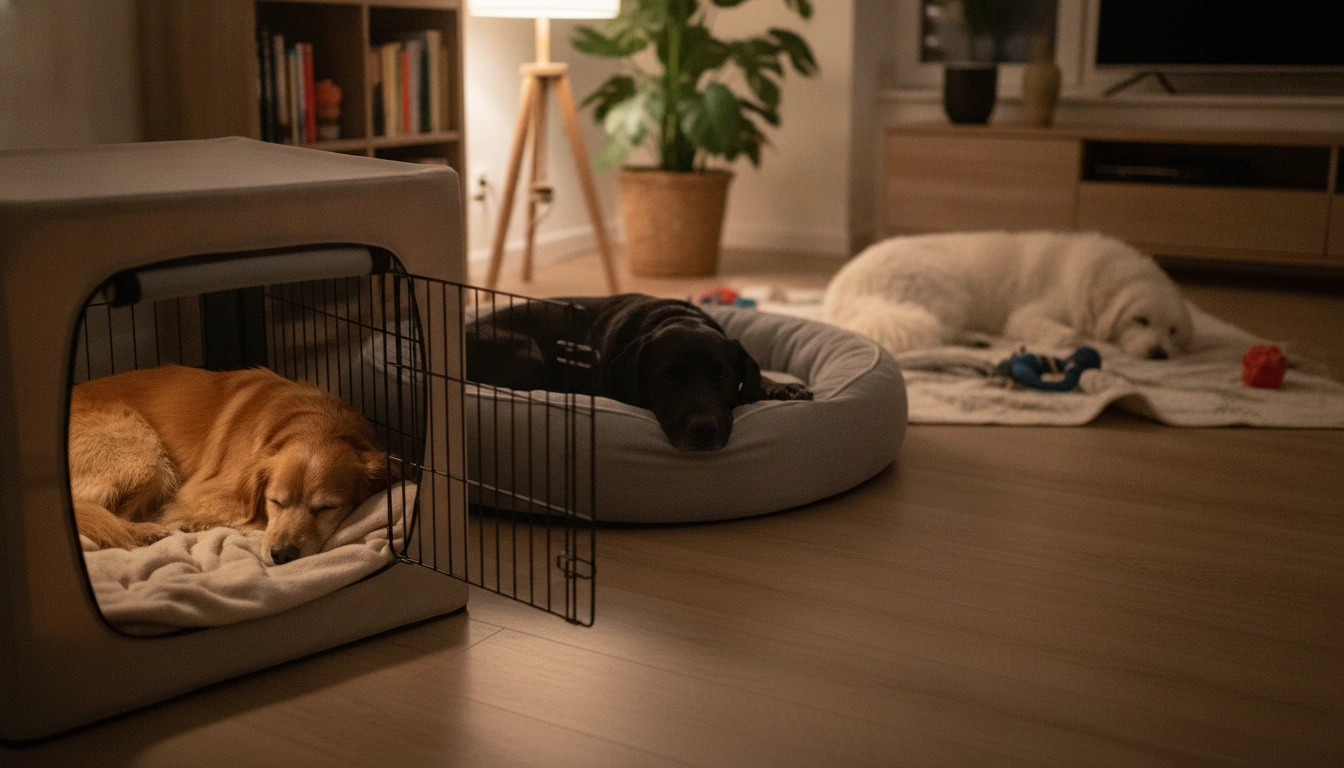
There isn’t one “best” option—your dog’s age, training, health, and nighttime habits should decide whether a crate, a dog bed, or free-roam sleep is safest and most restful. The right choice is the one that helps your dog settle quickly, stay calm, and avoid unsafe behaviors while everyone sleeps.
A crate can be ideal for puppies, newly adopted dogs, dogs still house-training, or dogs who get into trouble at night (chewing cords, raiding trash, or pacing). For many dogs, a properly introduced crate becomes a cozy, predictable sleep cue. Choose a size that allows standing and turning, keep it in a quiet spot (often near the bedroom at first), and avoid using the crate as punishment.
A bed in the bedroom or a designated sleeping area works well for dogs who are reliably house-trained and can settle without roaming. This option can reduce confinement stress and lets your dog stretch out. Keep the sleep space consistent, dim, and away from late-night foot traffic so it stays associated with winding down.
Free-roaming can be a great fit for calm, trustworthy adult dogs who don’t guard resources, don’t have nighttime anxiety, and won’t rehearse unwanted behaviors when unsupervised. If you choose this, start by limiting access to dog-proofed areas with gates, remove tempting hazards, and confirm your dog sleeps rather than patrols.
Pick the least-restrictive option that still protects your dog and home. If nighttime accidents, restlessness, or mischief show up, step back to a more structured setup (often a crate or gated area) while you reinforce a steady evening routine. For more tips on calming bedtime habits, see this guide to helping pets sleep better with calm routines.
Keep nights predictable: a final potty break, a short wind-down period, and lights/noise lowered at the same time each evening. Reward calm behavior and avoid high-energy play right before sleep.




Leave a comment
You must be logged in to post a comment.