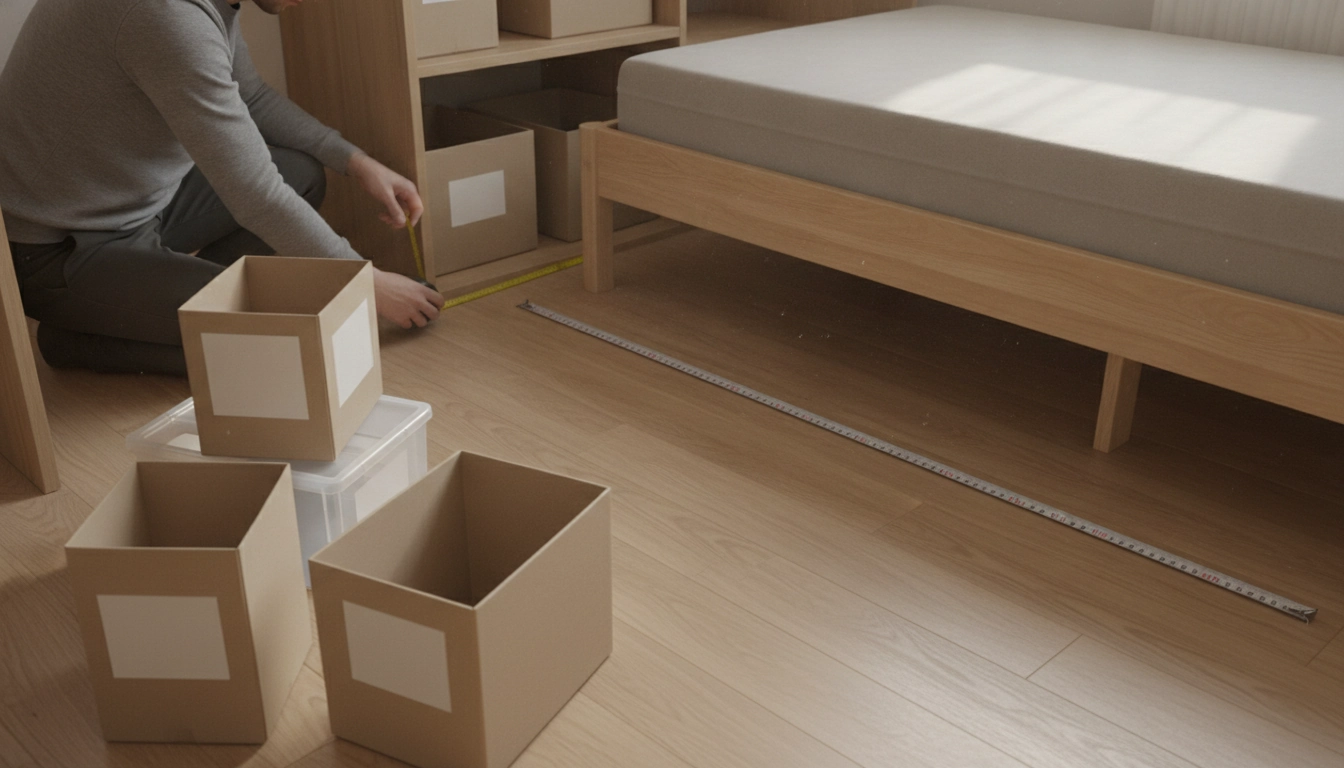
Start by deciding exactly where the box will live—on a closet shelf, on the floor, or under the bed—because each spot has different “tight points” that can block a box even when the space looks large. Grab a tape measure, a notepad, and (for under-bed) a flashlight.
Closet shelves: Measure the inside width from wall to wall (or from side panel to side panel). Then measure shelf depth from the back wall to the front edge. For height, measure from the shelf surface to the shelf above (or to the closet rod if it hangs low). Write all three numbers down.
Under-bed space: Measure the clearance height from the floor to the lowest point of the bed frame (often a center rail), not just the mattress edge. Then measure the width and depth of the area you’ll slide a box through, factoring in bed legs and support bars that narrow the opening.
Reduce each measurement slightly to avoid frustrating jams. A simple rule: subtract about 1 inch from width and depth for shelves, and 1–2 inches from under-bed width/depth (depending on how tight the entry is). For height, subtract at least 1 inch so lids can open and boxes can be lifted out without scraping.
If you’ll stack boxes, confirm the total stacked height stays below the shelf opening. If you’ll pull boxes out frequently, prioritize a little extra clearance on width and depth for smoother handling. For more tips on choosing foldable, lidded boxes that fit neatly in closets, see this closet storage box guide.
Soft fabric boxes are lighter and compress slightly in tight spots, while rigid bins hold their shape better for stacking and heavy items. Choose fabric for flexible fit and frequent access; choose rigid for maximum structure and stability.




Leave a comment
You must be logged in to post a comment.