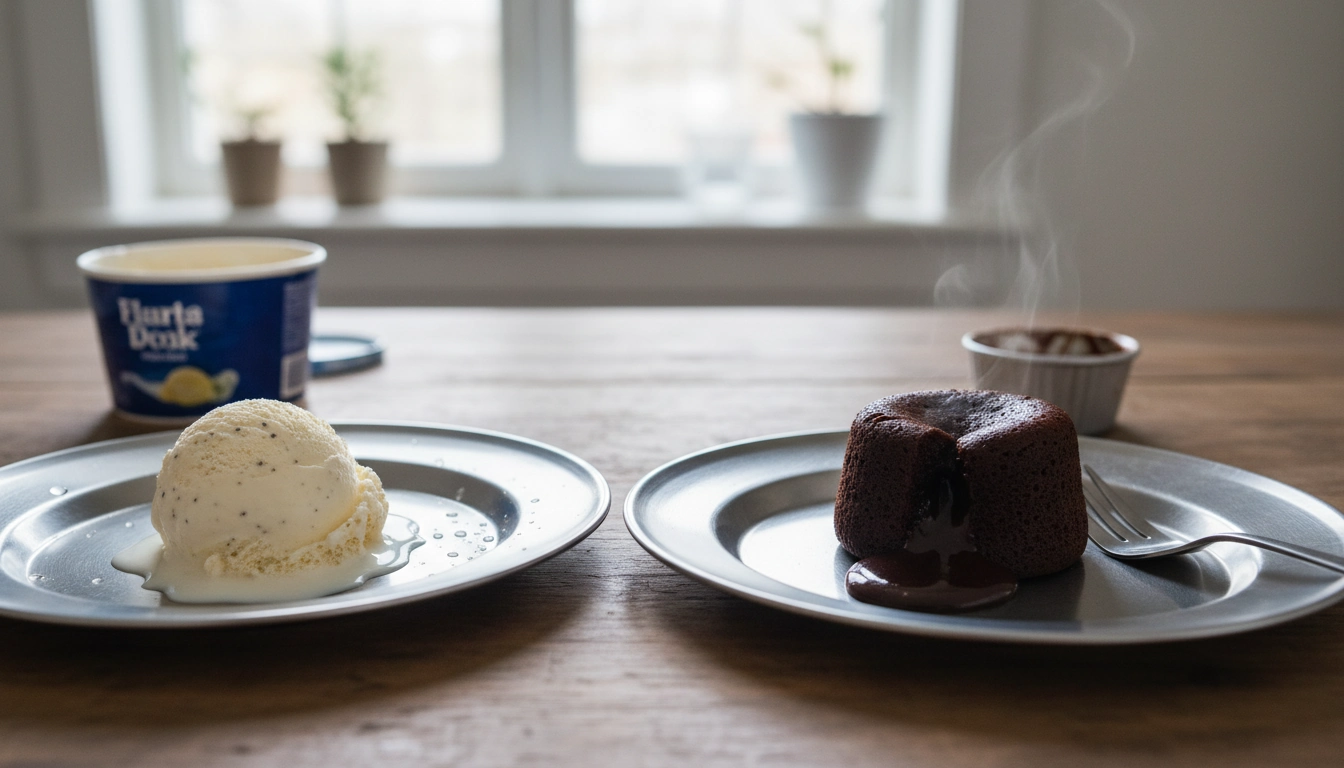
Yes—stainless steel dessert plates change temperature relatively quickly compared with ceramic or glass. Stainless steel conducts heat better than most common dinnerware materials, so it will pull cold from the freezer (or warmth from hot water) and then exchange that temperature with your dessert fast once food hits the surface.
For ice cream, a room-temperature stainless plate can speed up melting because the metal transfers its heat into the scoop more efficiently. If the plate has been chilled first, the opposite happens: the cold metal helps slow melting and can keep swirls, quenelles, or plated sundaes looking sharp longer—especially under bright dining lights.
For warm desserts, stainless steel can cool them faster than you might expect. A hot brownie, lava cake, or warm fruit tart placed on a cool stainless plate will lose heat into the metal quickly, which may dull that “just-baked” warmth sooner. If you warm the plate first, stainless steel can help maintain serving temperature nicely and keep sauces like chocolate ganache or caramel more fluid for longer.
If you want a deeper dive into how mirror-polished stainless steel plates behave on the table—plus plating ideas and care notes—see the full guide here: https://elevatdlife.com/guide-mirror-polished-stainless-steel-dessert-plate-modern-plating/.
Make sure the plate is clean and fully dry, then match plate temperature to the dessert (chill for ice cream, warm for hot desserts). For sticky sauces, a thin “base” swipe of sauce can reduce direct contact and help clean release.


Leave a comment
You must be logged in to post a comment.