Affiliate disclosure: ElevatdLife may earn a commission if you purchase through provider links on the linked store page, at no additional cost to you.
A pantry inventory can be as simple as one sheet of paper with three columns: what you have, roughly how much remains, and what you could make with it. You do not need to count every grain of rice or buy matching containers. The useful result is a shopping list based on the food already in your kitchen. This practical routine is designed for the moment before you plan your next grocery trip.
Choose one shelf, the refrigerator, and the part of the freezer you can easily reach. Write down familiar ingredients first. A detailed inventory of foods nobody wants to eat will not help you plan dinner. Keep uncertain items separate so you can check their condition and storage instructions before including them in a meal. An inventory is an organizational tool, not a food-safety test.
Write “rice: enough for two dinners” or “pasta: half a box” instead of weighing everything. For packaged items, keep the original labels available. Give opened packages a visible place where you can find them again. If two people shop for the household, use one shared note rather than separate lists that can drift apart.
Suppose you already have rice, canned beans, tortillas, and frozen vegetables. Your three ideas could be rice bowls, bean wraps, and a vegetable skillet with a side of rice. These are examples, not a required menu. Adapt them to allergies, preferences, and how much time you have. Then identify only the missing ingredients. Buying one topping that works across two meals may be more useful than shopping for three unrelated recipes.
Put meal ingredients on one part of the list and household items on another. Otherwise, a grocery total that includes detergent and toiletries can make the meal plan look more expensive than it was. Before adding a backup package, check whether you already have one. A bargain on something you did not need is still an extra purchase today.
After shopping, update the few ingredients that changed. During the week, cross out items as they run out. Do not restart the entire inventory every evening. If tracking every shelf becomes a chore, narrow the system to foods you frequently buy twice. The right inventory is the smallest one that helps you make a better shopping decision.
Choose five ingredients, suggest three meals, and list the gaps. After the trip, ask whether you avoided any repeat purchases and whether the planned meals were realistic. Record actual receipts rather than assigning an imaginary savings number. For broader ideas, read our monthly money-saving guide.
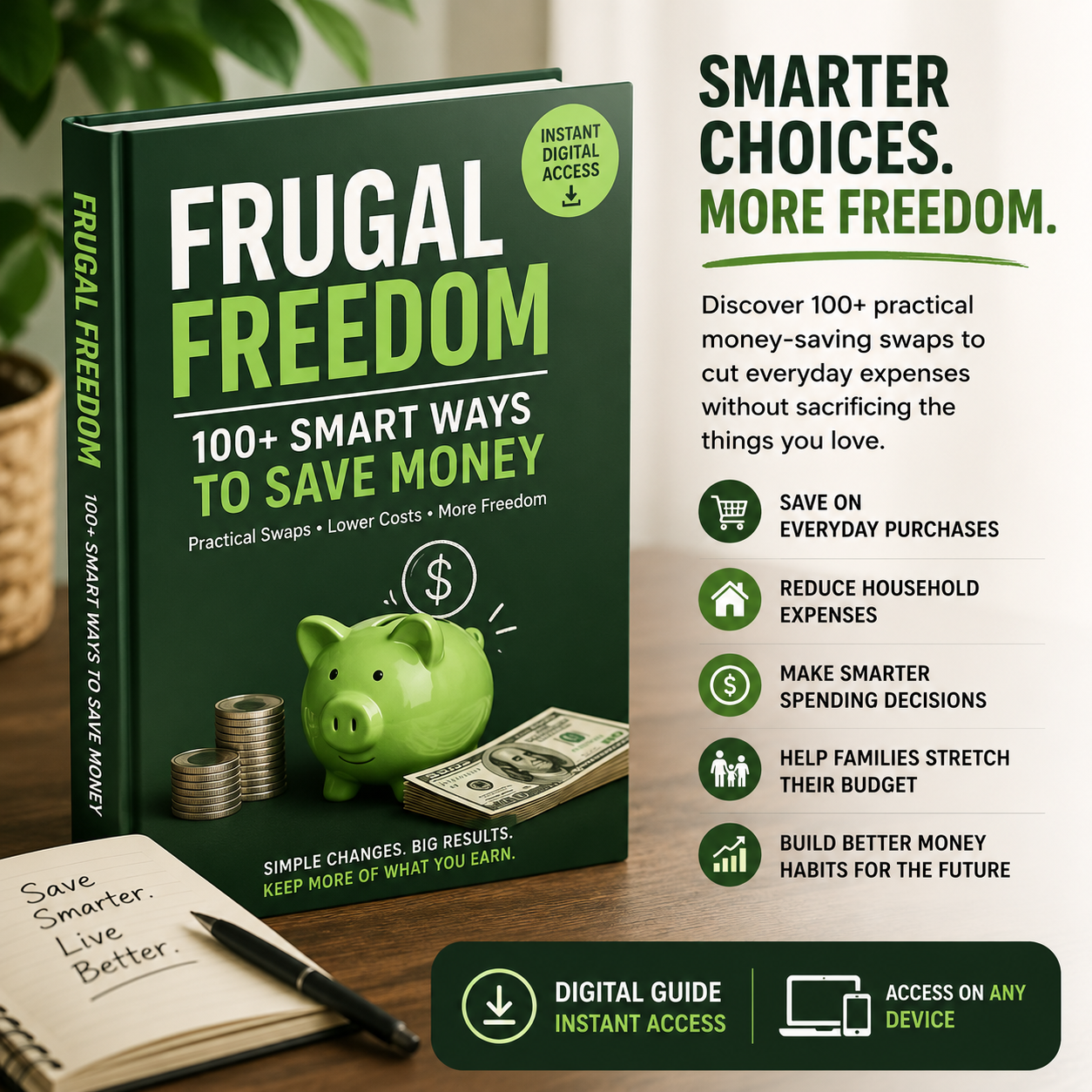
For more everyday spending ideas, explore the Frugal Freedom digital guide in our store. Its listing describes 100+ money-saving ideas. Check the provider’s current offer and delivery details before purchasing.

Leave a comment
You must be logged in to post a comment.