Affiliate disclosure: ElevatdLife may earn a commission if you purchase through provider links on the linked store page, at no additional cost to you.
A purchase waiting list is a place to record nonessential things you want before buying them. It creates a second decision point after the first burst of interest. This is an optional shopping exercise, not a rule for delaying essentials, needed repairs, or urgent purchases. You choose a review period that fits the item and your circumstances.
Start with the problem you want to solve. “The entryway needs a place for school papers” is more useful than “buy the storage set from the ad.” Naming the need gives you room to compare options, including something you already own. Add the date and a short description so the list stays understandable after you forget the advertisement.
Include the item price, delivery, required accessories, and recurring fees if any apply. A low advertised starting price may not represent the whole purchase. Record only amounts you can verify from the offer, and mark unknown costs as unknown. For comparisons, keep screenshots or links rather than trying to remember the numbers later.
You might revisit a small decorative purchase in two days and a larger optional purchase after a week. Those are suggested intervals, not a proven formula. The useful feature is that you decide the interval in advance. If a sale ends before the review, ask whether the purchase was already planned and genuinely needed. An expiring offer does not answer that question for you.
Try this example: Need: organize school papers. Item: wall organizer. Total: $28 including delivery, hypothetical. Review: next Sunday. Alternative: reuse a folder and a basket. At the review, ask whether the alternative worked. If it did, remove the purchase. If it did not, you now have a clearer reason to buy and a better idea of which features matter.
The list does not need to turn every treat into a debate. You can decide in advance that some discretionary spending is for enjoyment and use the list for purchases above a chosen amount. Make shared rules fair to everyone in the household. A system that polices one person’s interests while ignoring another’s is unlikely to feel useful.
Mark items bought, postponed, or no longer wanted. Do not label the full price of every rejected item as money saved; you may never have bought some of them. Instead, compare your actual spending with your own plan. For more everyday changes, explore our guide to saving money each month.
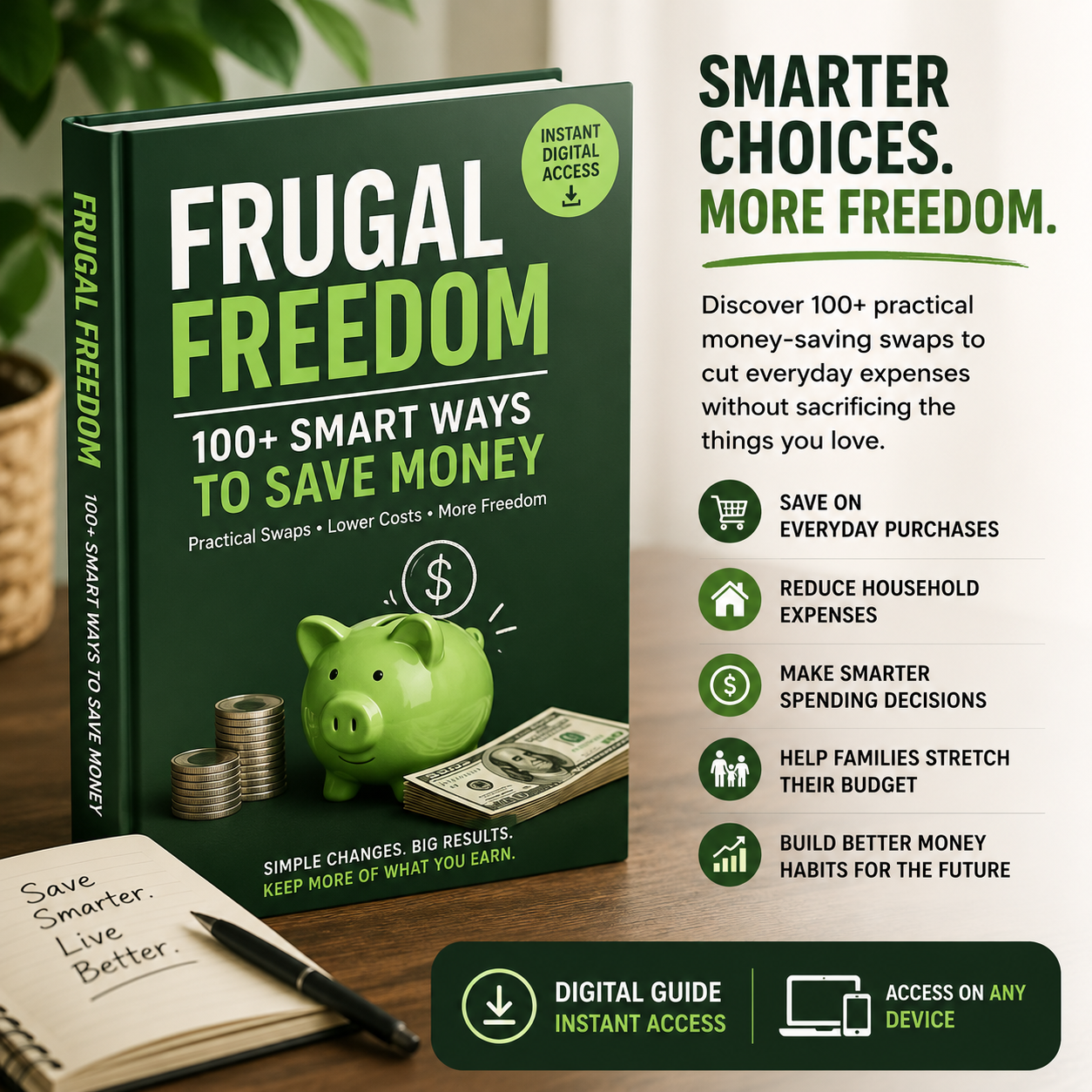
For more everyday spending ideas, explore the Frugal Freedom digital guide in our store. Its listing describes 100+ money-saving ideas. Check the provider’s current offer and delivery details before purchasing.

Leave a comment
You must be logged in to post a comment.