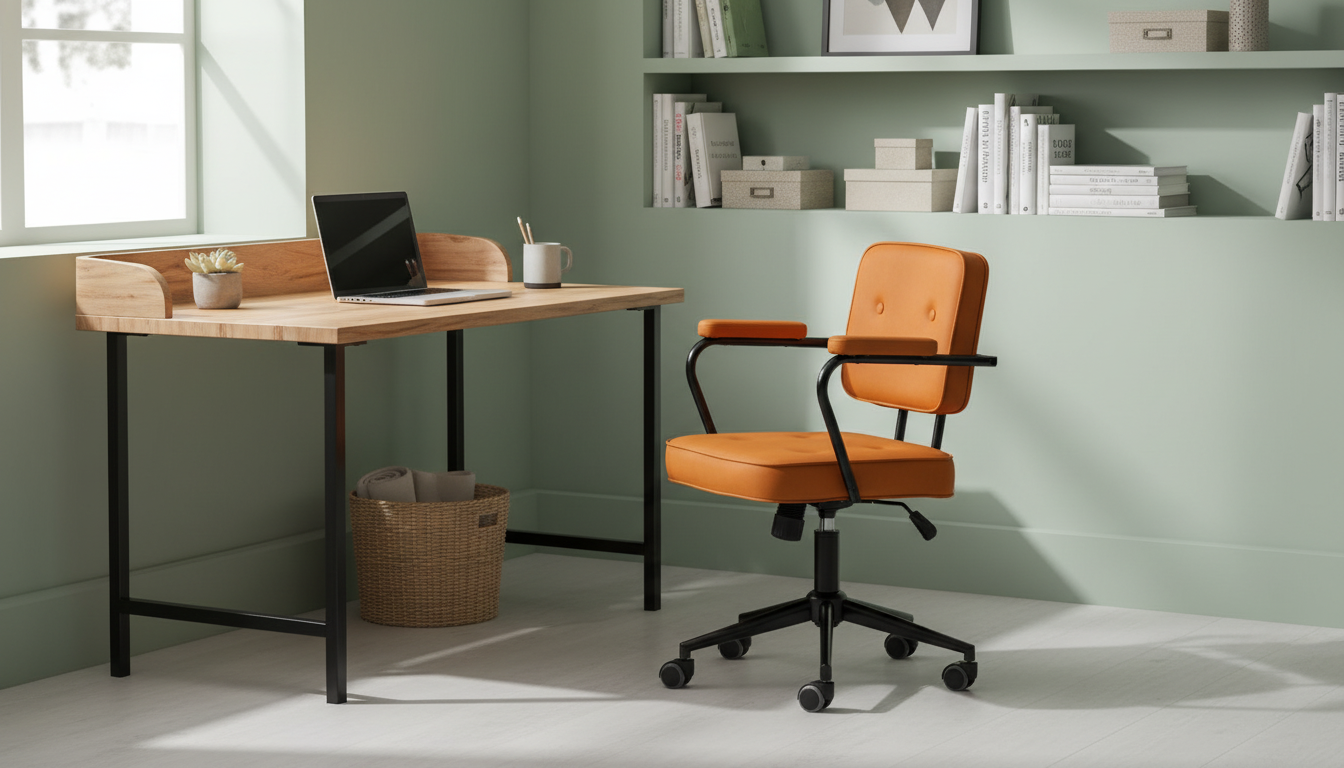
A compact swivel chair with armrests can make a small office, bedroom desk, or studio workstation feel more comfortable without overwhelming the room. The right pick balances a smaller footprint with everyday essentials like stable rolling, smooth 360° turning, supportive armrests, and a seat height range that matches common desk setups. Below is a practical breakdown of what matters, how this chair fits into tight spaces, and how to set it up for better comfort during long sessions.
In tight layouts, a chair earns its spot by doing more with less space. A compact task chair that still swivels and rolls smoothly can reduce the “shuffle” of constantly standing up, while armrests help take the edge off long typing or mousing sessions when they’re positioned correctly.
| Feature | Why it matters | What to confirm |
|---|---|---|
| Seat height adjustment | Helps align elbows and knees for comfort | Height range fits your desk and legs |
| Armrest height/position | Supports forearms to reduce shoulder tension | Armrests fit under the desk or at least don’t block it |
| Swivel and casters | Improves movement in tight layouts | Casters match your floor type (hard floor vs. carpet) |
| Back support | Encourages upright posture | Backrest shape feels supportive at mid-back/lower-back area |
| Base stability | Prevents tipping and wobble | Wide, sturdy base and smooth rolling |
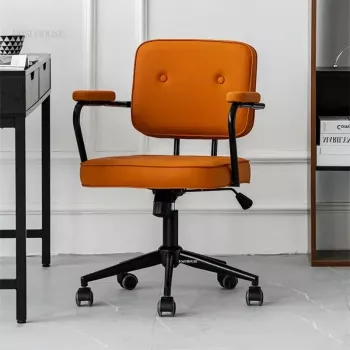
A practical small-space chair doesn’t try to be an oversized executive seat—it focuses on the features that matter day to day. The Compact Swivel Office Chair with Armrests is designed for apartments, dorm rooms, and home offices where clearance is limited but comfort still matters.
To finish a small workstation without adding visual clutter, consider a simple wall focal point like the Irregular Beveled Mirror Wall Clock with Roman Numerals – Silent Quartz Movement, which adds function while keeping surfaces clear.
| Room/Setup | Why it fits | Tip for best comfort |
|---|---|---|
| Bedroom desk corner | Keeps the area open and less cluttered | Add a small lumbar cushion if needed |
| Studio apartment workstation | Swivels without requiring extra clearance | Use a floor mat to protect hard floors |
| Dorm/compact study nook | Armrests add comfort for long sessions | Adjust seat height so elbows stay near desk level |
| Craft/sewing desk | Easy turning between tools and work surface | Choose casters that roll smoothly without snagging |
Measuring is the difference between a chair that slides in neatly and one that constantly bumps a cabinet. Start with your desk and the “chair zone” around it, then verify that armrests and base legs won’t create surprise clearance issues.
| What to measure | How to measure | Comfort goal |
|---|---|---|
| Desk height | Floor to top of desktop | Seat height allows relaxed shoulders while typing |
| Under-desk clearance | Floor to underside of desk/apron | Armrests don’t jam or force you too far back |
| Chair area | Width/depth of the space where the chair sits | Enough room to swivel without bumping furniture |
| Pull-back room | Distance behind chair at desk | Allows rolling back for standing up easily |
For more workstation fundamentals, see guidance from OSHA’s Computer Workstations eTool and ergonomics resources from NIOSH.
| Option | Best for | Trade-off |
|---|---|---|
| Compact swivel chair with armrests | Small workspaces, everyday desk use | May offer fewer premium features than larger chairs |
| Armless task chair | Tight clearance, minimalist setups | Less arm support for long typing sessions |
| Executive chair | Spacious offices, plush comfort | Bulky footprint and harder to tuck away |
| Stool | Short tasks, high surfaces | Limited back/arm support |
It’s strongly recommended, because under-desk clearance lets you pull in close enough to keep elbows near your sides. If armrests hit the desk apron, the chair often sits too far back, which can lead to reaching and shoulder tension.
Yes—compact size doesn’t automatically mean less comfort. Long-day comfort depends more on seat height range, supportive back shape, and armrests that let your shoulders stay relaxed, plus brief micro-breaks and good screen/keyboard placement.
Use a chair mat matched to your floor type or choose floor-friendly casters designed to reduce scuffing and noise. Keeping grit off the floor and cleaning debris from casters also helps prevent scratches.



Leave a comment
You must be logged in to post a comment.