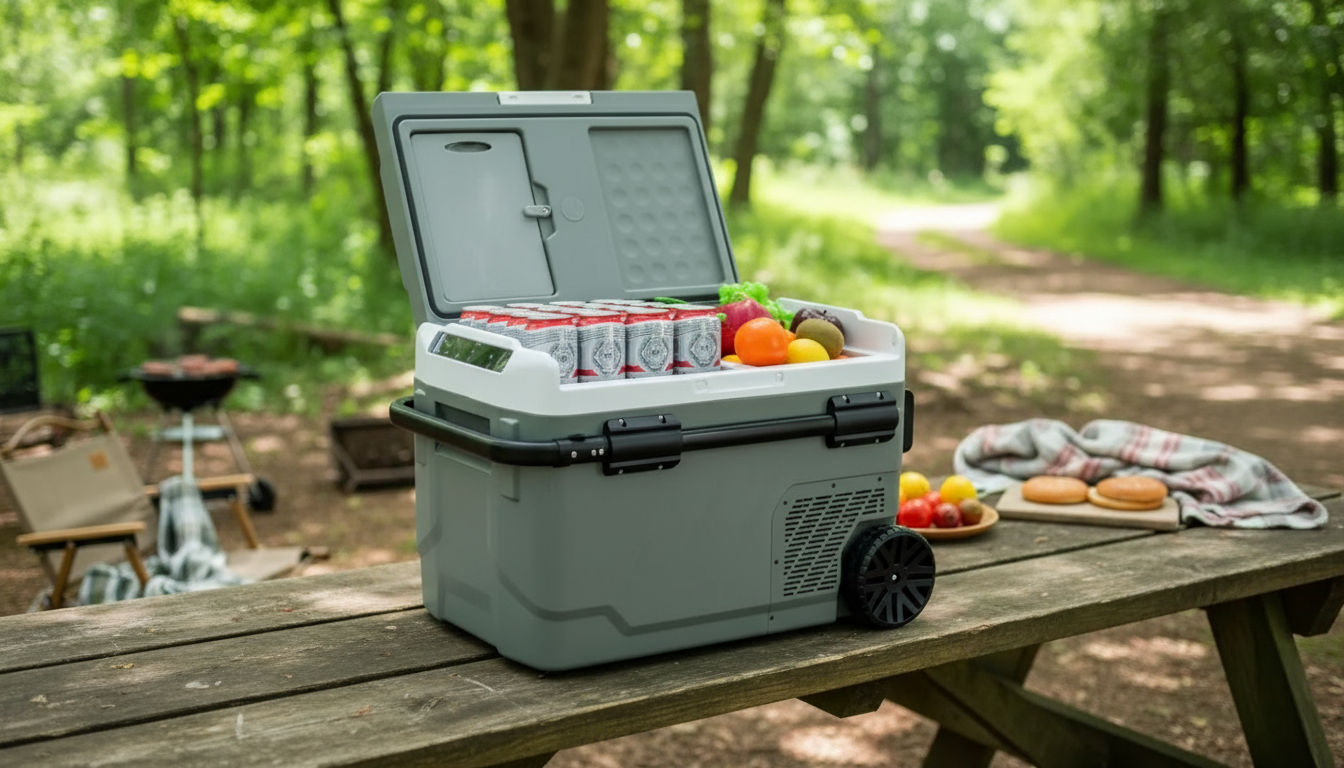
A dual-zone 12V car refrigerator makes it easier to keep drinks cold while keeping frozen items solid—without juggling ice, meltwater, and cooler space. A quart-class dual-zone unit is a practical fit for everyday driving, weekend camping, and long road trips in popular vehicles like Subaru, Jeep, and Lexus, especially when you want predictable temperatures and fewer stops. Below are the key benefits, vehicle fit notes, and real-world setup tips that help prevent spoilage and keep your cargo area organized.
The biggest advantage of dual-zone cooling is separation: one compartment can focus on freezing while the other stays at a safer “fridge cold” range for daily foods and drinks. That means groceries, meal prep, and snacks can travel together without compromises like semi-frozen produce or thawing meats.
Unlike passive coolers, a compressor fridge avoids melted ice and soggy packaging, and it can reduce restocking stops on long drives—especially when cabin and cargo temps spike during summer. It’s also ideal for mixed needs: beverages and fruit in one zone, with ice cream, proteins, or frozen meals in the other. When the temperature is controlled rather than “best effort,” items tend to hold their texture and taste better over multi-hour drives.
Most compact dual-zone fridges fit well behind the second row, but “fits” and “travels well” aren’t always the same—stability and ventilation matter just as much as footprint.
These typically work well in cargo areas with tie-down points. A non-slip mat reduces shifting during braking, and a simple strap setup helps keep the lid easy to open without the unit sliding forward.
Off-road vibration changes everything. Prioritize secure mounting with straps and keep clearance for tailgate swing. If you’re running trails, avoid stacking heavy gear against the fridge vents.
A flatter cargo floor is fridge-friendly, but protect interior trim from scuffs when loading. Also ensure there’s air circulation around the compressor side so heat can dissipate efficiently.
For basic battery background and why capacity and chemistry matter, the U.S. Department of Energy overview is a helpful reference: https://www.energy.gov/eere/vehicles/batteries.
For safe cold holding guidance, review the FDA’s refrigeration safety notes (https://www.fda.gov/food/buy-store-serve-safe-food/refrigeration-and-food-safety) and the USDA cold storage chart (https://www.fsis.usda.gov/food-safety/safe-food-handling-and-preparation/food-safety-basics/cold-food-storage-charts).
| Trip type | Cold zone target | Chill zone target | What to pack |
|---|---|---|---|
| Grocery run (summer) | 28–32°F (-2–0°C) | 35–40°F (2–4°C) | Frozen foods; dairy; deli; drinks |
| Weekend camping | 10–20°F (-12–-6°C) | 34–38°F (1–3°C) | Ice packs; meats; eggs; produce; beverages |
| Road trip snacks | 25–32°F (-4–0°C) | 36–42°F (2–6°C) | Ice cream; bars; water; fruit; sandwiches |
| Overlanding/off-road | 0–15°F (-18–-9°C) | 34–40°F (1–4°C) | Frozen meals; proteins; condiments; recovery-day drinks |
Yes—dual-zone designs are built so each compartment can be set to a different target temperature. Real-world stability still depends on how full each side is and how hot the vehicle interior gets, so pre-chilling and minimizing lid openings helps both zones hold steady.
It can if it runs from the starter battery for many hours, especially in warm conditions or with frequent lid openings. Using low-voltage protection reduces the risk, and for overnight parked use, a dedicated portable power station is often the safer option.
Keep the chilled zone in a refrigerator-safe range for perishables, and use a thermometer if you want to verify performance in hot weather. Consistent temps matter, so avoid repeated openings and load foods already cold whenever possible.



Leave a comment
You must be logged in to post a comment.