A Calm Corner for Books and Play
A well-designed kids bookcase can do more than hold stories—it can shape daily routines. When books are visible and a cozy seat is built in, reading feels like an easy choice instead of another task. Add toy storage in the same footprint, and you get a “one-stop” station for quiet time and playtime that helps reduce scattered piles around the room.
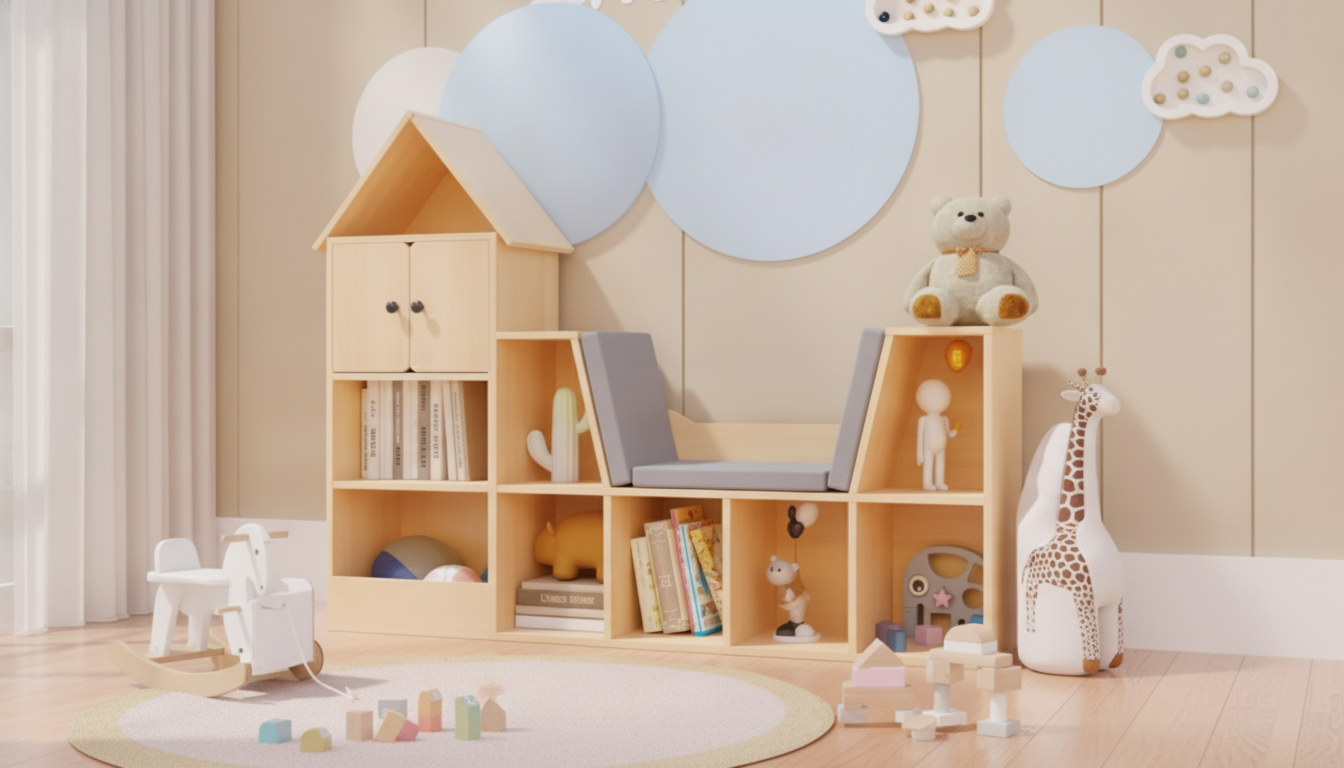
The 56.9″ Wooden Kids Bookshelf with Reading Nook & Toy Storage is a tall wooden unit designed to combine forward-facing book display, a dedicated reading nook, and storage for toys—ideal for bedrooms, playrooms, and shared family spaces that need structure without feeling crowded.
What This Bookshelf Setup Adds to a Room
- A reading nook within the same footprint so books feel like an activity, not a chore—kids can sit down immediately after choosing a title.
- Mixed storage for real-life play: forward-facing display for favorites plus stash-away space for toys that otherwise wander across the floor.
- Vertical organization that saves square footage by using wall height while keeping kid-access zones comfortably low.
- A single “home base” for both quiet time and playtime, which makes reset routines faster (and less negotiable).
Key Features to Look For in a Bookshelf with Nook and Toy Storage
- Forward-facing book ledges so younger kids can spot covers quickly and choose independently—even before they can read spines.
- A comfortable nook depth that fits a child without blocking walkways; the goal is cozy, not cramped.
- Toy storage that matches how kids play: open cubbies or quick drop-in spaces for daily-use items like blocks, cars, or plush toys.
- Kid-friendly finishes and construction with smooth edges, stable panels, and a design that supports wall anchoring.
- Easy-clean surfaces for fingerprints, crayon smudges, and snack-time surprises that show up exactly where you least expect them.
At-a-Glance Details
If the goal is to keep books visible, toys contained, and a seated reading spot ready at all times, this style of unit checks multiple boxes without adding extra furniture.
Quick specs and buying notes
| Item |
Details |
| Product name |
56.9″ Wooden Kids Bookshelf with Reading Nook & Toy Storage |
| Height |
56.9 inches |
| Primary functions |
Book display + reading nook + toy storage |
| Price |
$203.01 (USD) |
| Availability |
In stock |
| Where it fits best |
Playroom wall, bedroom corner, or a quiet nook away from TV/high traffic |
Layout Ideas: Making the Nook Feel Inviting (and Keep the Room Tidy)
- Pick a low-traffic spot. Place the unit against a wall in a corner so the nook feels protected rather than exposed. A calmer location also reduces “drive-by” toy dumping.
- Keep the covers doing the work. Put the most-loved books on the forward-facing ledges and rotate the selection weekly to keep interest high without buying more books.
- Assign one toy zone per storage area. For example: one section for building toys, one for pretend-play, one for puzzles, and one for art supplies. Broad categories are easier for kids than micro-sorting.
- Use simple labels. Picture labels for pre-readers (blocks, dolls, cars) make clean-up more independent and reduce “Where does this go?” moments.
- Define the reading zone with a rug. A soft, washable rug helps visually “frame” the nook and can soften sound during play. Consider the Botanical Floral Non-Slip Area Rug – Soft, Modern & Machine Washable for easy maintenance, or the Soft Velvet Plush Blue Rug for Living Room & Bedroom – Modern Fluffy Carpet for a cozy feel in a bedroom reading corner.
Safety and Stability Checklist for Kids’ Bookcases
- Anchor tall furniture to the wall. Use hardware appropriate for your wall type (stud, drywall, masonry). Tip-over prevention is widely recommended for homes with children; see the CPSC tip-over prevention guidance.
- Keep climbable items away. Avoid placing stools, toy chests, or stackable bins directly next to the unit where they invite climbing.
- Put heavier items on lower levels. This reduces tipping risk and makes it easier for kids to put things away without lifting overhead.
- Re-check fasteners after the first week. As furniture “settles” and kids interact with it, tightening hardware helps maintain stability.
- Maintain a clear path in and out of the nook. Especially in shared rooms, keep the entry area open so the nook stays usable (and safe) even when play gets busy.
For additional family home-safety reminders, the American Academy of Pediatrics’ resource on home safety tips is a helpful reference.
Simple Setup and Ongoing Care
FAQ
Is a tall kids bookshelf safe for a bedroom or playroom?
It can be safe when it’s anchored to the wall and used as intended. Keep heavier items on lower shelves, avoid placing climbable furniture beside it, and follow tip-over prevention recommendations from consumer safety organizations.
How do you keep a reading nook inviting for kids who prefer toys?
Keep a small, rotating set of cover-facing books available, make the nook comfortable with a rug or small pillow, and build it into the day with a short routine or timer. Storing a couple quiet “bridge” items (like puzzles or fidgets) nearby can also help kids transition into reading.
What’s the best way to organize toy storage so clean-up actually happens?
Use broad categories, open bins or cubbies, and picture labels so kids can match items to a spot quickly. Limit overflow by rotating toys and keep the most-used items at kid height so clean-up feels doable.
Recommended for you


Leave a comment
You must be logged in to post a comment.