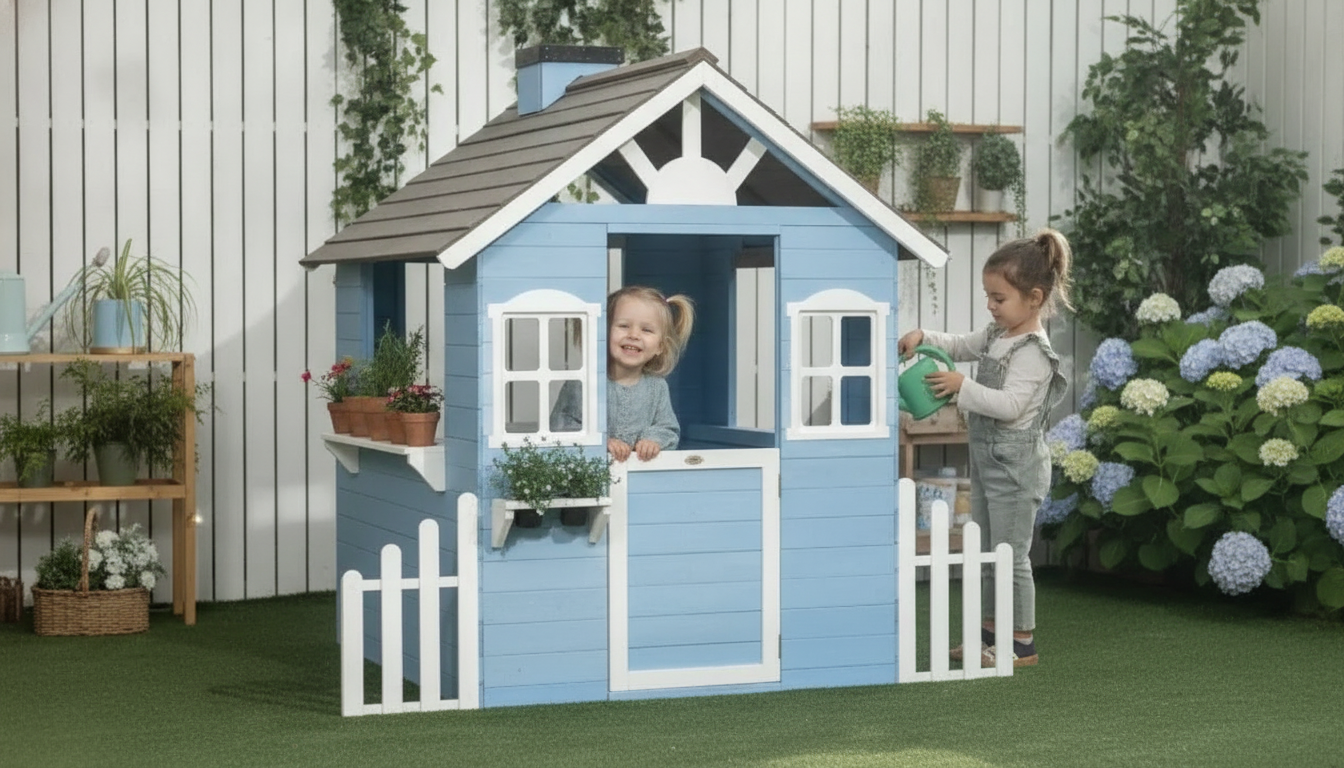
A country-style wooden playhouse has a way of turning “go outside” into something kids actually want to do. Instead of roaming from one corner of the yard to another, children get a dedicated little home base for make-believe, quiet breaks, and playdates that feel more like a real routine than a quick burst of energy.
The cottage-inspired look also matters more than most families expect. Warm wood tones and classic lines tend to blend naturally with gardens, patios, and traditional landscaping, so the play area feels like a charming extension of the yard instead of an eyesore. And because wood often feels more like a “real house” than many plastic options, kids are more likely to treat it as their own space—decorating it, naming it, and coming back to it day after day.
The built-in planter pots are the detail that makes this style especially engaging. They invite role-play (shopkeeper, gardener, café owner), while also creating a simple reason to step outside for a quick check-in: “Did the flowers bloom?” or “Do the herbs need water?”
Planter pots turn a playhouse into a tiny, kid-sized “property” to care for—without expanding garden mess across the entire yard. Even a small plant introduces gentle responsibility: watering on schedule, noticing sunlight patterns, and observing changes from week to week. Those short routines are often easier for children to stick with than a big garden bed.
For fast, encouraging results, choose easy growers that can handle beginner mistakes. Marigolds, basil, and mint (kept in its own pot) are approachable and rewarding. Over time, the planters can also become a seasonal tradition: spring blooms, summer herbs, and autumn mums that make the playhouse feel refreshed without any major changes.
Another perk is containment. When kids want to “dig” or “plant,” the planters keep the activity focused in one spot—less mud tracked across decks and fewer surprise holes in the lawn.
| Item to check | Why it matters | Quick tip |
|---|---|---|
| Sun and shade | Comfort and plant health | Aim for morning sun with afternoon shade when possible |
| Ground level | Reduces wobble and door misalignment | Use a long level or straight board to test the surface |
| Drainage | Prevents puddles and slippery spots | Avoid low points; add a thin gravel layer under the footprint |
| Wind exposure | Stability and long-term wear | Place near a fence/hedge but keep airflow to reduce dampness |
| Sightline from home | Easier supervision | Position where a main window can see the play area |
Finally, consider stability. If your yard is windy, anchoring options (when supported by the manufacturer) or a well-built base can help the playhouse stay secure. For broader outdoor safety guidance, the U.S. Consumer Product Safety Commission’s playground resources are a helpful reference for families setting up play spaces (CPSC — Playground Safety).
If gardening is part of the plan, keep plant care kid-safe by avoiding unnecessary pesticide exposure and using simple hygiene habits like washing hands after soil play (EPA — Protect Children from Pesticide Exposure).
If you’re looking for a backyard piece that encourages imaginative play while adding cottage charm, the Country Style Wooden Playhouse for Kids, Outdoor Fun with Planter Pots offers a warm, homey look plus built-in planters for easy, kid-friendly gardening. It works well as a focal point for playdates, quiet time, and seasonal decorating—especially in yards where you want play gear to complement the overall aesthetic.
To make the interior feel cozier for reading and pretend “home” moments, consider adding a soft, easy-care rug nearby (on a covered porch area or dry surface) like the Botanical Floral Non-Slip Area Rug – Soft, Modern & Machine Washable. For a plush feel in an adjacent lounge spot, the Soft Velvet Plush Blue Rug for Living Room & Bedroom – Modern Fluffy Carpet can help create a designated “story time” zone right outside the playhouse door.
Hardy, low-maintenance choices like marigolds, nasturtiums, basil, and dwarf sunflowers tend to do well with beginner care. Keep mint in its own pot since it spreads quickly, and use fresh potting mix with simple labels so kids can remember what each plant needs.
A level base helps stability and keeps doors and windows aligned over time. Compacted gravel, pavers, or a flat lawn area can work well, and good drainage matters so the wood isn’t sitting in standing water after rain.
Place it in a sheltered spot when possible, keep walking areas clear of slick mud, and check hardware regularly for loosening after storms. If the manufacturer supports anchoring, use the recommended method or a stable base approach to reduce movement in high winds.


Leave a comment
You must be logged in to post a comment.