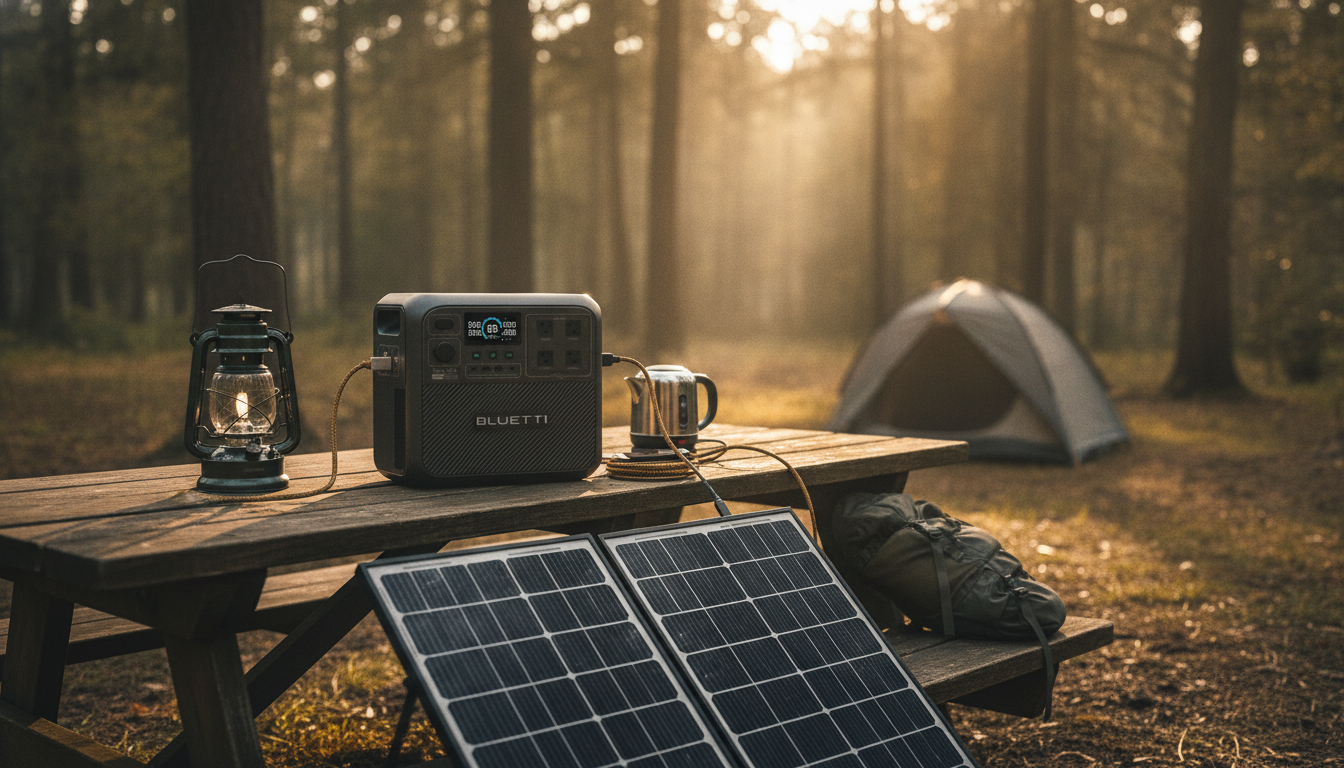
A 2000W, 2073Wh LiFePO4 portable power station can cover common off-grid needs—charging phones and laptops, running small appliances, and keeping critical devices powered during outages. The key is understanding what the watt rating allows you to run at once, how battery capacity translates into hours, and how real-world losses affect runtime so you can plan confidently for camping, tailgates, and emergency readiness.
Think of watts (W) as “how fast” electricity is used, and watt-hours (Wh) as “how long” a battery can keep supplying it. A 100W laptop charger draws power “faster” than a 10W phone charger; a 2073Wh battery can run the 10W load for far longer than the 100W load.
The 2000W continuous output matters when you want to run higher-demand appliances (or multiple devices at the same time). It’s especially relevant for anything with a heating element (kettle, coffee maker), or a motor/compressor (mini fridge, small air pump). Some motor-driven devices also have a brief startup surge; staying under the unit’s surge rating and keeping total simultaneous loads reasonable helps prevent shutdowns.
With 2073Wh capacity, practical scenarios include charging devices overnight, keeping a router/modem online through a blackout, supporting a CPAP setup (especially without heat), or cycling a small fridge intermittently to hold temperature.
LiFePO4 chemistry is popular for preparedness because it’s known for strong thermal stability and long cycle life compared with older battery types, making it better suited to frequent charging and regular use.
Finally, plan for efficiency losses. Inverter conversion, cable losses, and device power supplies typically mean 10–20% of capacity won’t turn into usable AC runtime. That’s normal—just budget for it.
| Device/Use Case | Typical Draw (W) | Estimated Runtime (hrs) | Notes |
|---|---|---|---|
| Phone charging (multi-device) | 10–20 | 80–160 | Varies by number of devices and charging speed |
| Laptop (USB-C/AC) | 50–100 | 16–32 | Higher draw during gaming or video rendering |
| Wi‑Fi router + modem | 15–30 | 50–100 | Useful for staying connected during outages |
| CPAP (no heated humidifier) | 30–60 | 26–52 | Heated humidifier can dramatically increase draw |
| Mini fridge (intermittent compressor) | 60–120 avg | 14–28 | Compressor cycles; startup surge may be higher |
| Electric kettle / space heater | 1000–1500 | 1.1–1.7 | High-watt loads shorten runtime quickly |
For camp kitchens and tailgates, a 2000W class power station shines when you build a plan around efficient loads: LED lights, small fans, a coffee grinder, phone/laptop charging, and short bursts on higher-watt appliances. Instead of running everything at once, stagger usage—brew coffee first, then switch to device charging and lighting.
They’re also excellent for medical and safety gear: CPAP machines, air pumps for mattresses, handheld radios, GPS devices, and emergency lighting. For temperature extremes, keep the unit protected but ventilated; batteries can lose performance in cold weather, and heat can reduce efficiency and longevity. Follow general hot/cold safety guidance from NOAA: https://www.weather.gov/safety/.
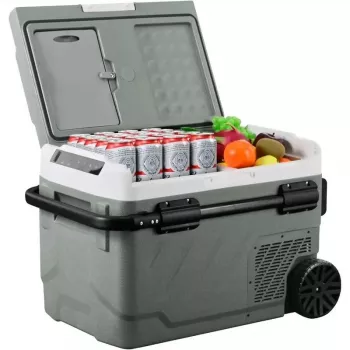
For fridge/freezer strategy, don’t try to power everything continuously. Run the fridge intermittently to maintain temperature, keep doors closed, and consider adding a fridge thermometer so you can time “top-up” runs more efficiently. This is a good moment to revisit basic household energy-saving practices from the U.S. Department of Energy: https://www.energy.gov/energysaver.
Battery power stations don’t emit exhaust, so they’re generally safer indoors than fuel generators—still, keep them away from heat sources and give vents breathing room. Use properly rated cords, avoid daisy-chaining power strips, and keep outlets/connectors dry. For broader household electrical safety practices, NFPA guidance is a strong reference: https://www.nfpa.org/education-and-research/home-fire-safety/electrical.
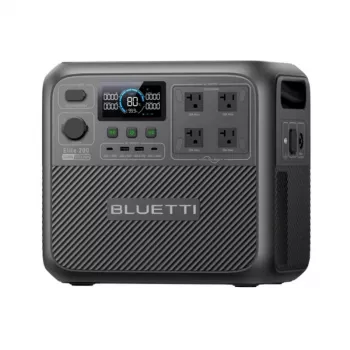
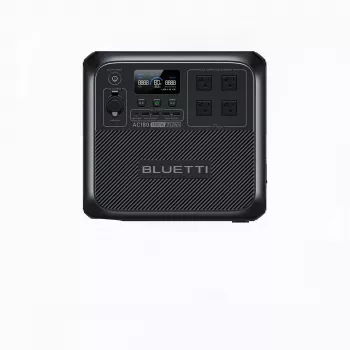
If you want a balanced mix of strong inverter headroom and meaningful battery capacity for real-world essentials, the 2000W Portable Power Station, 2073Wh LiFePO4 Solar Generator for Camping & Emergencies is a practical fit for multi-day trips with electronics, outage readiness for critical loads, and solar-assisted off-grid use.
For home comfort and safer footing around extension cords during an outage, a low-profile, stable floor covering can help reduce slips in high-traffic areas; consider the Botanical Floral Non-Slip Area Rug – Soft, Modern & Machine Washable for entryways or living spaces where you’re staging lights and charging devices.
Most fridges cycle on and off, so the average draw is often far lower than the startup surge; a common real-world range is roughly 14–28 hours depending on fridge size, room temperature, and how often the door opens. For the most accurate estimate, measure your fridge’s actual average watts over several hours with a plug-in watt meter.
Often yes, as long as the appliance’s running watts are under 2000W and you aren’t running other heavy loads at the same time. Check the appliance label (and remember some devices surge briefly at startup), then treat it as short-burst use to preserve battery capacity.
A simple planning method is battery Wh ÷ (peak sun hours × real-world efficiency), where efficiency accounts for heat, angle, and conversion losses. In many locations, 400–800W+ of panels is a realistic range to make a full-day recharge plausible, with higher wattage needed in winter, haze, or partial shade.

Leave a comment
You must be logged in to post a comment.