
“Moissanite” describes the gemstone, not the metal it’s set in—so the real question is whether the jewelry’s metal finish (often gold color) is plated over a base metal like sterling silver or stainless steel. Here are practical ways to tell if your moissanite piece is plated.
Look for markings on the clasp or inner surface. Common plating clues include “GP” (gold plated), “GEP” (gold electroplated), “HGE” (heavy gold electroplate), “Vermeil,” or “925” (sterling silver base). “14K” or “18K” alone can indicate solid gold, but it’s not foolproof—some items are mis-stamped or hard to read. If you bought online, match the stamp to the listing’s metal description.
Plating is a thin surface layer, so it tends to fade first where friction is highest: edges of links, underside of a bracelet, clasp tongues, and areas that rub against skin or other jewelry. If you see a different color peeking through (silvery, gray, or darker), that’s a strong sign the piece is plated.
Plated jewelry can have a very uniform “painted-on” sheen, and the color may look slightly different in recessed areas versus high points. Uneven warmth (yellow/rose) or a brighter flash in some spots can hint at plating thickness variations or wear.
Use a loupe or smartphone macro lens to examine corners and prong tips. Avoid scratch tests or harsh chemicals—those can permanently damage plating. A jeweler can also use non-destructive tools (like XRF metal analysis) to identify what’s beneath the surface.
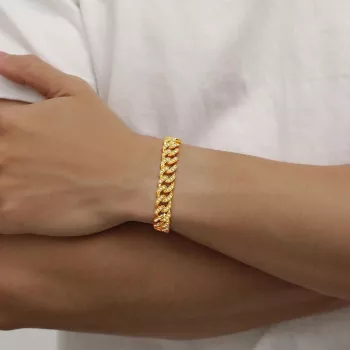
If the piece is an 18K gold plated moissanite bracelet or similar, the clearest confirmation is the manufacturer’s specs. For a deeper breakdown of plated construction and what to expect from an 18K gold plated moissanite Cuban link bracelet, visit this detailed guide.
Yes. Plating can thin over time, especially on high-friction areas like clasps and link edges, causing the base metal color to show through sooner than the moissanite will change.

Leave a comment
You must be logged in to post a comment.