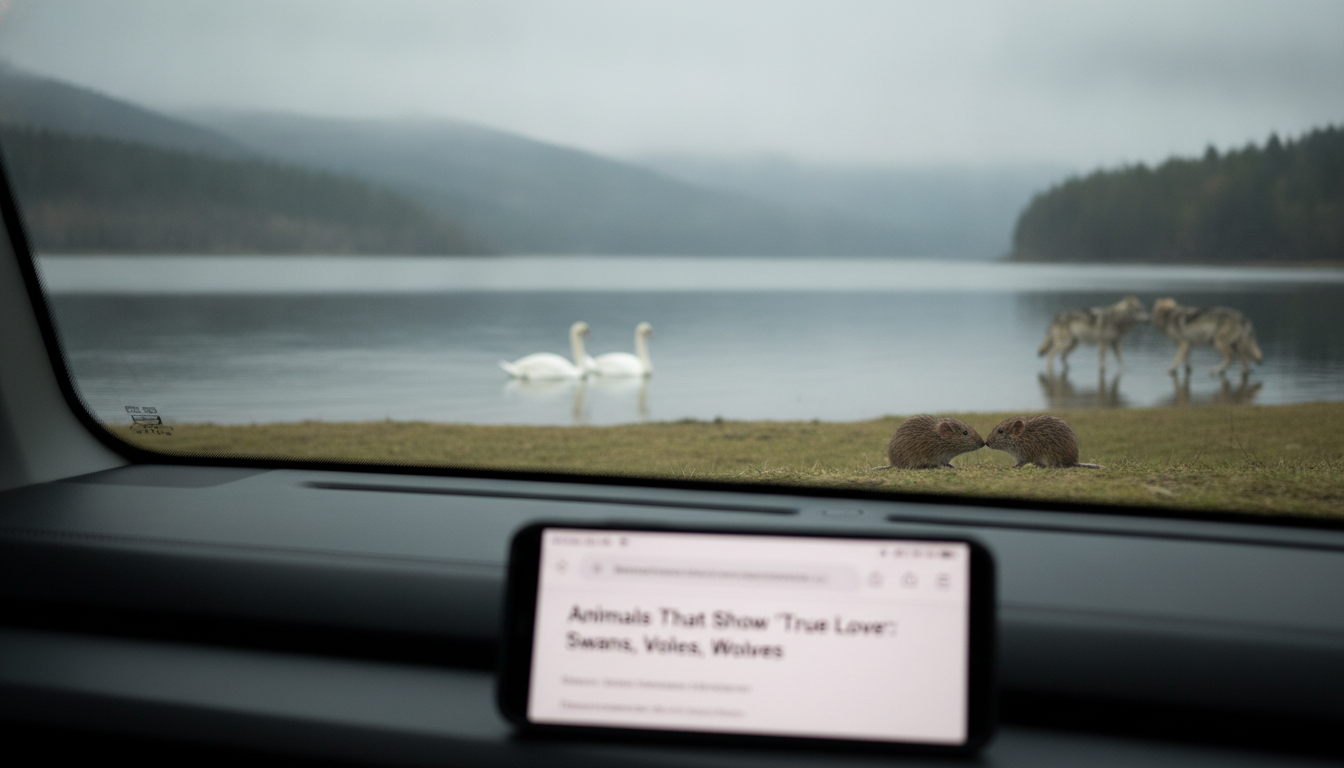
“True love” isn’t owned by a single species. In animals, the closest match is a mix of long-term bonding, loyalty, caregiving, and choosing the same partner again and again. Several animals show strong signs of this kind of attachment, but it looks different depending on their biology and social structure.
Swans are famous for forming long-term pair bonds, often staying with one mate across multiple breeding seasons. Partners cooperate to build nests, protect territory, and raise young. While not every pair stays together forever, their repeated partnership and shared parenting are why swans are commonly associated with lifelong love.
Prairie voles are a classic example of a monogamous mammal. Many form lasting pair bonds and show behaviors that resemble devotion: preferring a partner’s company, sharing nests, and displaying distress when separated. Their bonding is tied to brain chemistry that reinforces social attachment.
Wolf packs often revolve around a breeding pair that maintains a long-term partnership. Their bond is reinforced through cooperation—hunting, defending territory, and raising pups with help from the pack. The “love” here is deeply practical: survival depends on trust and teamwork.
Many albatross species form bonds that can last decades. Because they invest heavily in a single chick and spend long periods at sea, returning to the same partner is a reliable strategy. Their reunions and synchronized behaviors have made them another symbol of enduring devotion.
For companion animals, love often shows up as attachment and comfort-seeking: following favorite people, relaxing when close, greeting rituals, and choosing proximity over novelty. If the goal is a pet that’s naturally affectionate and socially tuned in, it helps to match personality, lifestyle, and handling preferences—not just species stereotypes.
For a practical way to find a great fit, visit this affectionate pet match guide to compare compatibility factors and choose a companion that bonds well in your day-to-day life.
Many people find dogs, well-socialized cats, and some small mammals like guinea pigs to be reliably affectionate when their needs are met. The best choice depends on how much daily interaction, training, and routine care can be provided.




Leave a comment
You must be logged in to post a comment.