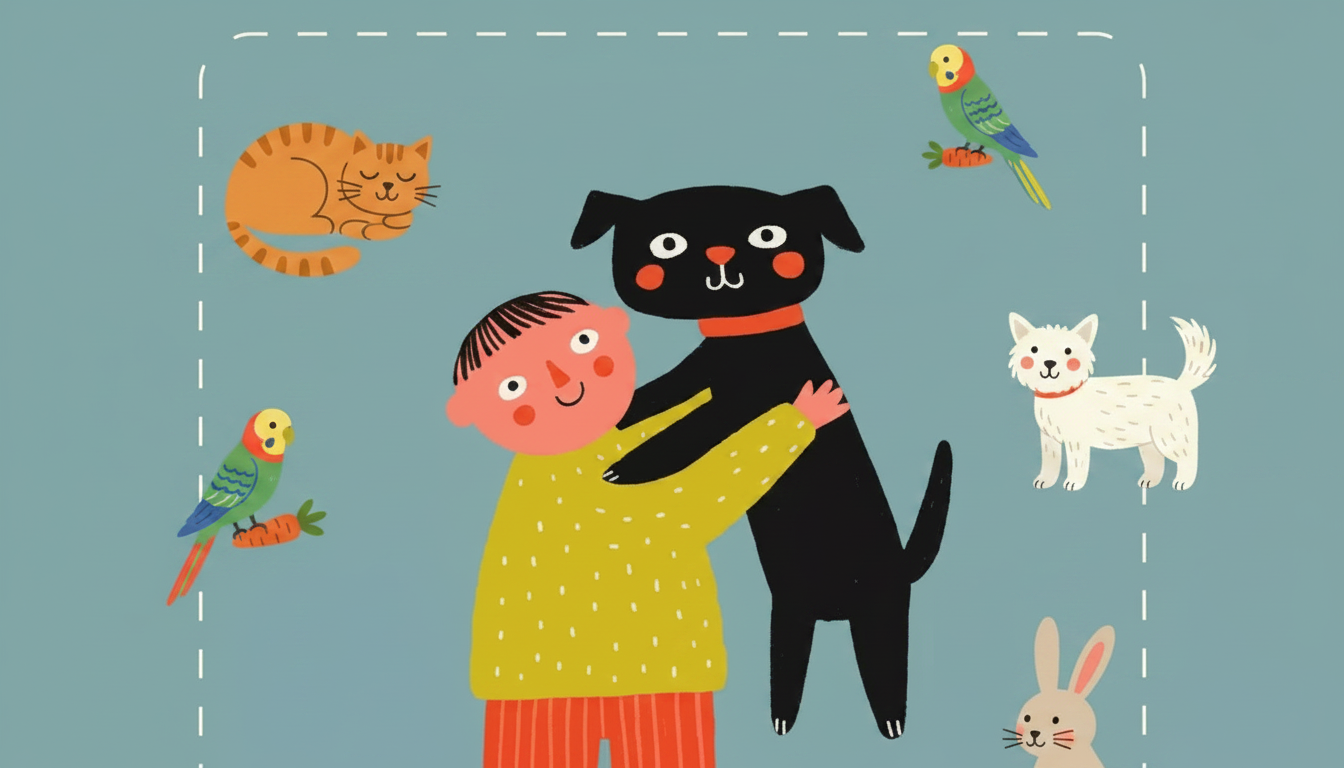
Affection can look like cuddling, following you room to room, greeting you at the door, or quietly choosing to be near you. The best match depends on lifestyle, sensory preferences, time at home, and how much hands-on interaction feels good day to day. Use the checklist below to compare common companion animals and narrow down a realistic, affectionate fit—before making a commitment.
Affection is species-specific: a cat’s slow blink and head bump isn’t “less loving” than a dog’s full-body wiggle, and both differ from a rabbit’s gentle nudge or flop nearby. Some pets show love through proximity rather than touch; expecting constant cuddles can create stress, avoidance, or “polite tolerance” that looks calm but isn’t.
Temperament matters as much as species. Early handling, socialization, past experiences, and individual personality all shape how a pet bonds. Healthy boundaries are also part of affection: a pet that can relax independently, then choose to reconnect, is often a steadier long-term companion than one that can’t settle unless you’re in sight.
Use the snapshot below to compare likely affection styles, handling expectations, and lifestyle fit. The goal isn’t to rank pets as universally “more loving,” but to find the kind of bond that matches your home and your nervous system.
| Pet type | Common affection style | Handling/cuddle likelihood | Care intensity | Best fit for |
|---|---|---|---|---|
| Dog (companion breeds) | Active engagement, greeting rituals, follows you | High (varies by breed and training) | High | Daily interaction, training, outdoor time |
| Cat | Proximity, head bumps, purring, lap time on their terms | Medium–High (individual) | Medium | People who like a mix of independence and bonding |
| Rabbit | Gentle nudges, relaxed flops, seeks calm company | Medium (often prefers floor-level interaction) | Medium–High | Quiet homes, patient bond-building, indoor setup |
| Guinea pig | Vocal greetings, learns routines, enjoys gentle petting | Medium | Medium | Families who want interactive but smaller pets (ideally in pairs) |
| Parrot (small/medium) | Social contact calls, shoulder time, learns cues | Medium–High (can be clingy) | High | High-interaction households with noise tolerance |
| Rat | Seeks contact, rides on shoulders, playful bonding | High | Medium | People who want a highly social small pet (in pairs/groups) |
For more guidance on responsible pet selection and care basics, consult the American Veterinary Medical Association (AVMA), the ASPCA pet care library, and AAHA’s pet owner resources.
If you want a structured, side-by-side way to compare options, the Affectionate Pet Compatibility Checklist (digital download) turns the questions above into a clear worksheet you can reuse for different species, rescues, or individual pets.
For households that expect lots of floor-level bonding (rabbits, guinea pigs, even puppy play sessions), a calm, easy-to-maintain “hangout zone” can help affection build on the pet’s terms. Options like the Botanical Floral Non-Slip Area Rug – Soft, Modern & Machine Washable or the Soft Velvet Plush Blue Rug for Living Room & Bedroom – Modern Fluffy Carpet can make daily handling and quiet together-time more inviting—especially for pets that prefer to be near you rather than on you.
There isn’t one universal “most affectionate” pet—affection depends on whether you want touch-heavy cuddling or calm proximity, how often you’re home, and the individual animal’s temperament. Dogs often show high-contact devotion, many cats offer consistent companionship on their terms, and rats and some parrots can bond intensely with daily interaction.
Look for willingness to approach, relaxed body language during brief touch, quick recovery after mild startles, and genuine interest in play or treats without fear. If possible, visit more than once or consider adult pets and foster-to-adopt trials so you can see whether affection stays consistent outside the first meeting.
Not always—strong bonding can mean higher time and attention needs, but it doesn’t automatically mean complicated physical care. Many people maintain a manageable routine by using predictable schedules, simple enrichment, and short daily training or handling sessions that keep the relationship steady.



Leave a comment
You must be logged in to post a comment.