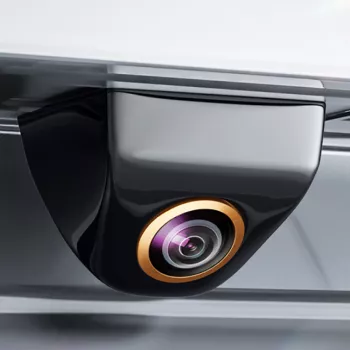
Yes—many 170° rear view cameras can introduce visible image distortion, especially toward the left and right edges. That’s the tradeoff for capturing a wider field of view: the camera lens often uses a wide-angle “fisheye” design that curves straight lines and makes objects near the edges look stretched or farther away than they really are.
For parking, a 170° camera is still very effective as long as the camera is positioned correctly and you understand what you’re seeing. The wide view can reduce blind spots and help you spot low obstacles, parking blocks, curbs, and cross-traffic sooner than a narrower camera would.
A wide-angle lens has to “fit” more of the scene into the same rectangular screen. The center of the image is usually the most accurate, while the edges can look bent or compressed. This is most noticeable when backing toward a straight garage door, parking lines, or a flat wall—those straight references make any curvature obvious.
Yes. For typical parking maneuvers, what matters most is seeing hazards and aligning your vehicle using the center portion of the image and the guide lines. Parking lines (when properly calibrated) help compensate for wide-angle perspective by giving a consistent reference for your vehicle’s path.
Best practice: use the camera for awareness and alignment, but rely on mirrors and shoulder checks for distance judgment. If your system offers selectable viewing angles (wide/normal/zoom), switching to a narrower view when you’re close to an obstacle can make distance cues feel more natural.
Higher-resolution sensors, good low-light performance, and accurate dynamic or static parking lines make a bigger difference than the number of degrees alone. A well-installed 170° camera aimed at the correct downward angle can minimize edge distortion in the areas you use most while parking.
For a deeper breakdown of 170° cameras, including 4K options, night vision, and parking line behavior, visit this 170° rear camera guide.
A 170° camera shows more side-to-side coverage, which can help with blind spots and cross-traffic, but it usually has more edge distortion. A 150° camera often looks more natural and can make distance easier to judge, while still providing a wide view for most parking situations.


Leave a comment
You must be logged in to post a comment.