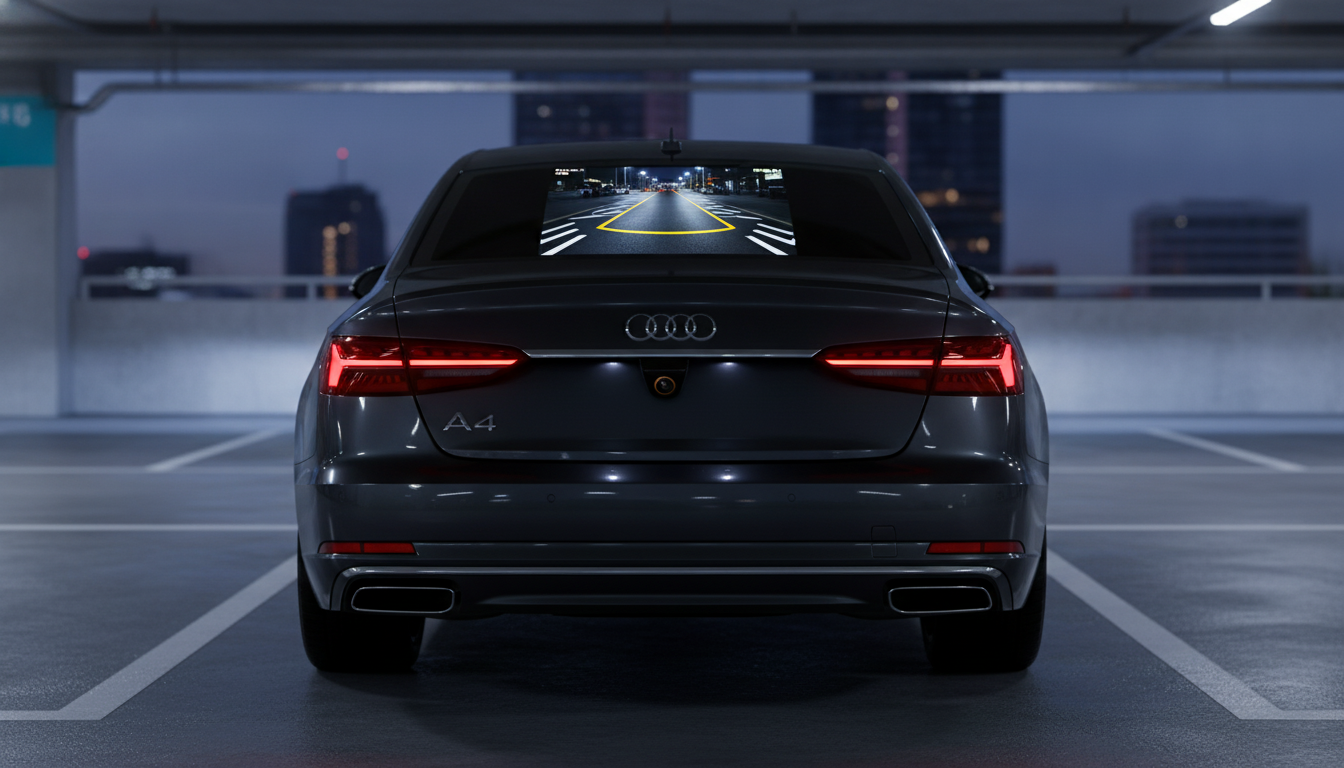
A wide-angle rear camera can make reversing and tight parking feel more predictable, especially in low light. This 170° 4K rear view camera adds night vision support and on-screen parking lines to help judge distance and alignment when backing up BMW, Audi, and Nissan vehicles (fitment depends on the vehicle’s video input and mounting location). If you’re upgrading a blurry factory image or adding a camera to a vehicle that didn’t come with one, a higher-clarity, wider-view option can reduce the “guesswork” moments around curbs, poles, and cross-traffic behind you.
Backing up is one of those routines that can go from simple to stressful depending on lighting, space, and distractions. A wide-angle, high-resolution rear camera is meant to turn those tight situations into a steadier, more readable view.
Rear visibility tech has become a major safety focus in the U.S., particularly for preventing backover incidents. For more background on the role of rear visibility systems, see NHTSA’s rear visibility information and safety education resources from the AAA Exchange.
The headline features are straightforward, but real-world results still depend on the display you’re connecting to and how cleanly the system is installed.
| Feature | What it means for parking |
|---|---|
| 170° viewing angle | Wider rear coverage to spot posts, curbs, and cross-traffic sooner |
| 4K-rated imaging | Sharper edges and improved detail on compatible screens |
| Night vision support | More usable image in low light or shadowy areas |
| Parking lines | Visual reference for centering and distance estimation |
“Fits BMW/Audi/Nissan” often means the camera is commonly installed on these brands, but the deciding factor is the video input type and where the camera can physically mount on your specific model/year.
A quick way to avoid surprises is to verify: (1) where you plan to mount the camera, (2) how the cable will route into the cabin, and (3) what your head unit requires for a camera signal.
Low light and wet weather are where many basic cameras struggle. Night vision support can help, but setup details still matter.
For the clearest image, a consistent routine helps: wipe the lens periodically, check the angle after any bumper/trunk work, and re-test the view when seasons change (salt, slush, and grime build up fast).
Installation can range from straightforward to complex depending on your vehicle and whether you’re integrating with a factory infotainment system. These practical steps reduce rework.
Compatibility depends on your vehicle’s head unit video input type, whether adapters are required, and where the camera can mount on your model/year. Confirm the expected camera signal format and mounting location before ordering, especially if you’re upgrading an OEM system.
Many rear cameras provide fixed guide lines that stay in place on the screen. Dynamic lines typically require integration with the vehicle’s steering angle data through the infotainment system or an interface module.
It can be, but visible detail is limited by the display resolution and the signal path from camera to screen. A 4K-rated camera may still look closer to standard HD if the factory input or display is lower resolution.


Leave a comment
You must be logged in to post a comment.