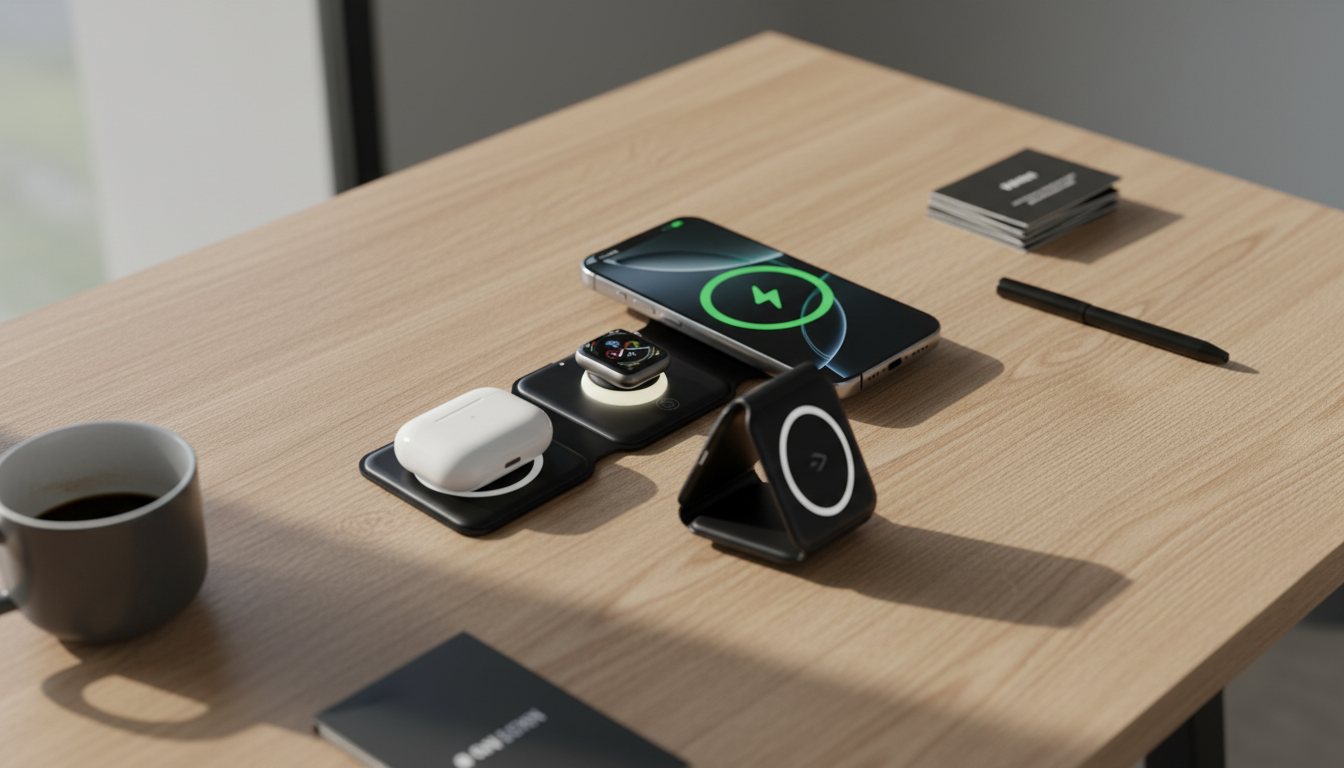
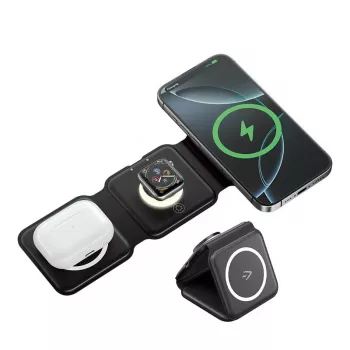
Most 3 in 1 wireless chargers are safe when they’re properly designed, certified, and used with compatible devices. These chargers combine a phone pad (Qi), a watch puck area, and an earbud pad into one dock, so safety comes down to heat control, power management, and build quality—more than the “3 in 1” concept itself.
Look for chargers that include basic protection features: overcurrent/overvoltage protection, foreign object detection (to stop charging if a key or coin is on the pad), and temperature monitoring. A stable magnetic alignment for the phone and watch also matters; poor alignment can cause extra heat and intermittent charging.
The biggest real-world issue is heat. Wireless charging is less efficient than wired charging, so warmth is normal, but it shouldn’t get hot to the touch. Avoid charging under pillows/blankets, remove thick cases or metal attachments that can trap heat, and use a quality USB-C wall adapter that matches the charger’s requirements. Cheap power bricks and no-name cables are frequent causes of overheating and inconsistent power delivery.
Choose a model that clearly lists wattage, supported devices, and certifications (such as UL, ETL, FCC, or Qi compliance). If you use a modern phone that supports faster wireless speeds, a dock with adequate input power (often via USB-C) helps maintain stable charging without running at its limit.
For a deeper breakdown of features to look for—like foldable travel designs, 15W phone charging, and how the watch/earbud sections are set up—see the main guide here: foldable 15W 3-in-1 wireless charger guide.
Battery damage is unlikely when the charger and device follow proper charging standards and manage heat well. The main risk comes from excessive heat over time, so use a reputable charger, keep the charging surfaces aligned, and avoid insulating the device while it charges.



Leave a comment
You must be logged in to post a comment.