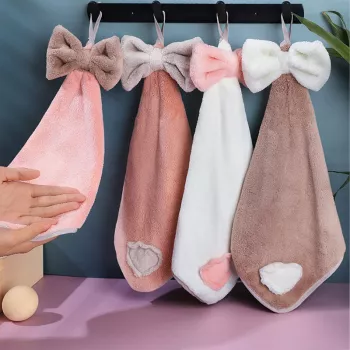
Yes—hand towels are great for embroidery, as long as you choose the right towel and stabilize it properly. The loops in terry cloth can swallow stitches, so the goal is to create a smooth, supported surface that keeps your design crisp and readable after repeated washing.
For the cleanest results, use a medium-to-high quality towel with a dense, even pile. Very fluffy towels look luxurious, but the taller loops can hide details and make small lettering harder to read. If the towel has a decorative band (a flatter woven strip), that area is often the easiest place to embroider.
Stabilizer is the difference between a neat design and a puckered towel. A cut-away stabilizer or a strong tear-away on the back helps prevent shifting, while a water-soluble topping on the front holds down loops so stitches don’t sink. After stitching, the topping rinses away, leaving the embroidery visible and smooth.
Bold shapes, simple florals, monograms, and thicker satin stitches show up best on towel fabric. Avoid ultra-thin lines and tiny text unless the towel has a flat band. If you want a refined, gift-ready look, consider placing the design a couple inches above the towel’s bottom edge so it stays visible when hung.
A fresh embroidery needle (often 75/11 or 80/12) and quality polyester embroidery thread hold up well to laundering. If you see looping, distortion, or gaps, slow down and adjust tension or density rather than forcing the towel through—terry cloth exaggerates small issues.
For a detailed walkthrough, including towel style ideas and an embroidery-ready look, visit this hand towel embroidery guide.
Use a firm stabilizer on the back (cut-away for best support or a strong tear-away) and add a water-soluble topping on the front to keep terry loops from covering the stitches.



Leave a comment
You must be logged in to post a comment.