Affiliate disclosure: ElevatdLife may earn a commission if you purchase through provider links on the linked store page, at no additional cost to you.
A larger package is not automatically the better grocery deal. To compare different sizes, divide the price by the quantity and use the same unit for both products. Then consider whether your household will use the amount you buy. The calculation answers which package costs less per unit; your shopping habits determine whether that package is the practical choice.
If one shelf label shows price per ounce and another shows price per pound, convert them before deciding. There are 16 ounces in a pound. You can divide a per-pound price by 16 to get a per-ounce price. For items sold by count, such as identical rolls or bags, check that the individual units are comparable. Two rolls can contain very different numbers of sheets.
Imagine a 16-ounce package costs $3.20 and a 24-ounce package costs $5.04. These are illustrative prices, not a store offer. The first costs $0.20 per ounce: $3.20 divided by 16. The second costs $0.21 per ounce: $5.04 divided by 24. Despite being larger, the second package costs more per ounce. Compare the displayed total as well as the unit-price number.
A shelf discount may require a membership, digital coupon, or minimum quantity. If you will not meet that condition, calculate using the regular price. If a discount does apply, use the discounted total. Check the package size in your cart against the qualifying size. A similar-looking product may not be part of the same offer.
Consider a hypothetical $6 package containing 30 ounces. Its listed cost is $0.20 per ounce. If your household uses only 20 ounces and discards the rest, the cost per ounce actually used becomes $0.30. That does not mean every large package creates waste. It means storage space, product instructions, and normal use matter alongside the shelf calculation.
Unit prices work best between products that meet the same need. An ingredient requiring extra preparation may be cheaper by weight but unsuitable for your busiest evening. Likewise, a food your household will not eat is a poor substitute even if its label shows a lower number. Decide which differences matter before choosing by price.
Ask: Are the units equivalent? Is this the price I qualify for? Will we use this quantity? If you can answer all three, the comparison is useful. Start with two products you buy regularly rather than calculating your entire cart. Combine this habit with a broader review of everyday spending to choose changes you can maintain.
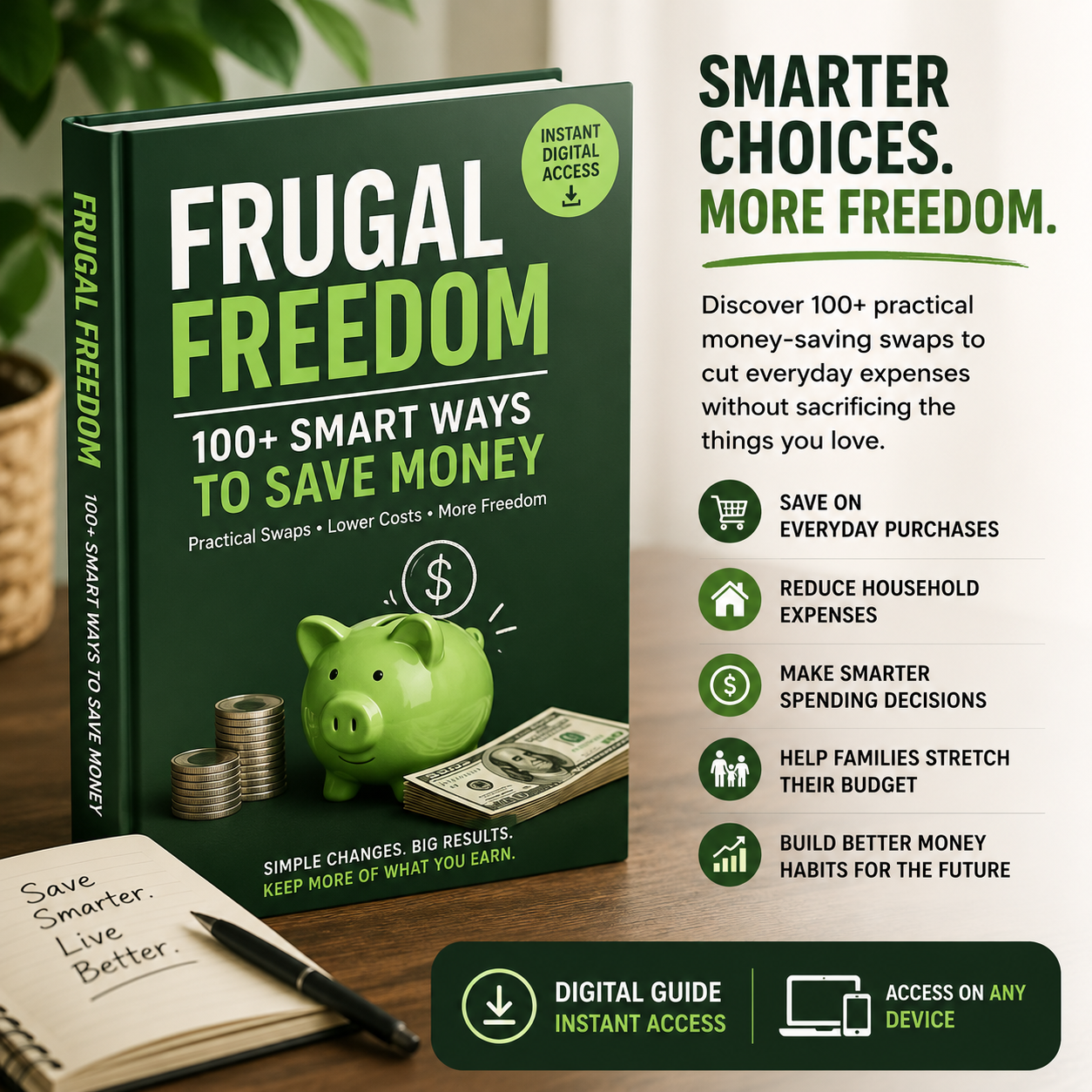
For more everyday spending ideas, explore the Frugal Freedom digital guide in our store. Its listing describes 100+ money-saving ideas. Check the provider’s current offer and delivery details before purchasing.

Leave a comment
You must be logged in to post a comment.