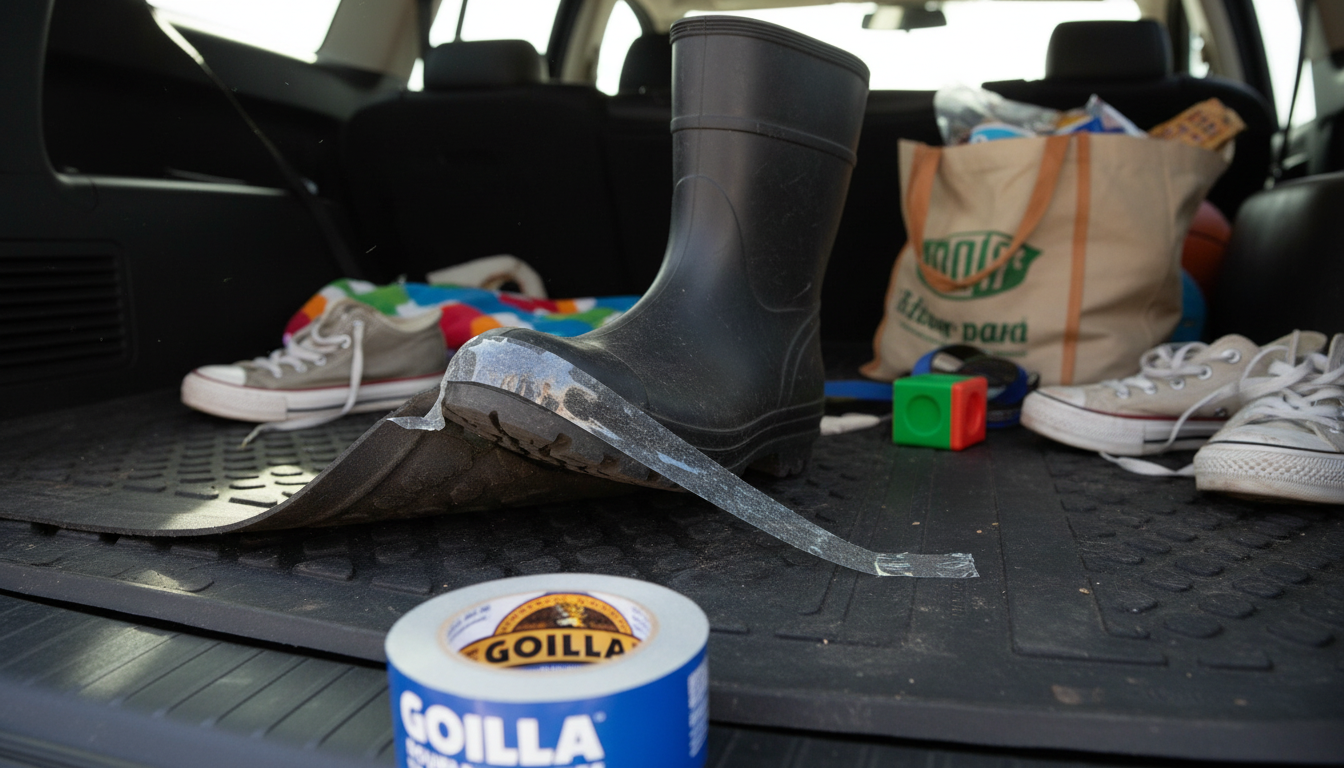
Yes—Gorilla double-sided tape can work on rubber, but the results depend heavily on the type of rubber and the conditions. Smooth, non-porous rubber (like many protective mats or trim pieces) usually bonds better than textured, dusty, oily, or highly flexible rubber. If the rubber bends a lot, the adhesive can gradually shear and release, even if it sticks well at first.
Soft or “grippy” rubber that compresses and flexes can challenge double-sided tape. The more the rubber moves, the more stress gets transferred to the adhesive layer. Firm rubber with a flatter surface tends to hold longer.
Rubber often carries mold-release agents from manufacturing, plus skin oils, dust, or tire-like residue. Any of that can reduce adhesion. Cleaning the area and letting it fully dry can make a noticeable difference in how well the tape grabs.
Heat can soften adhesive and make it creep under weight; cold can reduce initial tack. Outdoor moisture or frequent splashing can also shorten the bond life, especially at the edges. Heavy items or constant pulling forces are tougher than light, stationary mounting.
For the most reliable bond, prep the rubber, apply the tape with firm, even pressure, and give it time to set before stressing it. If you need a stronger or more permanent attachment (or the rubber is highly textured), an adhesive made specifically for rubber may be a better choice than tape alone.
For deeper prep tips, rubber-type considerations, and real-world use cases, see the full guide here: https://elevatdlife.com/does-gorilla-double-sided-tape-work-on-rubber/.
Peel slowly at a low angle, then roll remaining adhesive off with your thumb or a rubber-safe plastic scraper. If residue remains, use a small amount of rubbing alcohol on a cloth and test in an inconspicuous spot first.



Leave a comment
You must be logged in to post a comment.