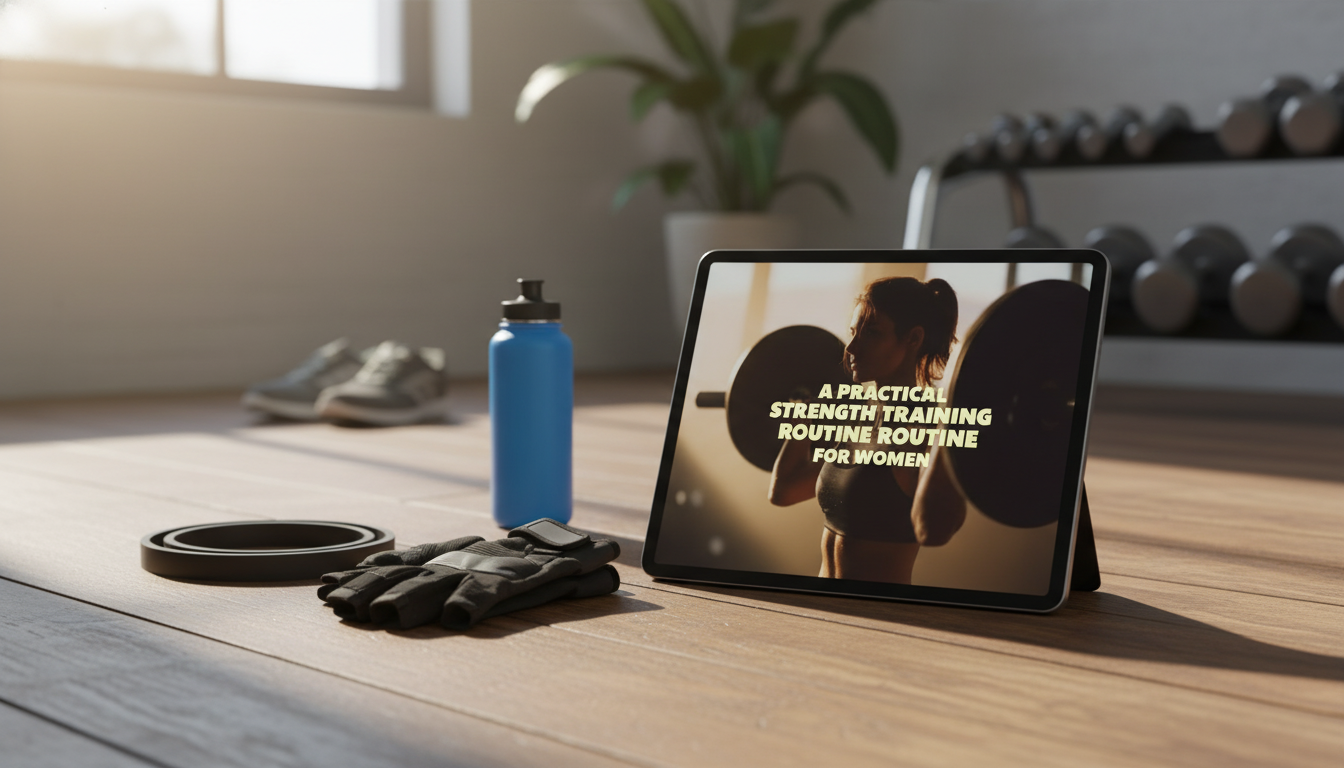
This plan is designed to be simple enough to repeat, but structured enough to drive measurable progress. It tends to work best for:
The routine below is built on a few principles that are easy to track and hard to outgrow.
| Lift type | Starting target | When to add reps | When to add weight | Typical pace |
|---|---|---|---|---|
| Main lift (squat, deadlift, bench/OHP) | 3–4 sets of 4–8 reps | Hit the top of the rep range on all sets | Add 2.5–10 lb next session (smallest possible jump) | Weekly or biweekly |
| Secondary lift (RDL, hip thrust, incline press) | 3 sets of 8–12 reps | Add 1–2 reps per set until the top range | Add 5–10 lb, then drop reps back to the low end | Weekly |
| Accessory (rows, lateral raises, curls, core) | 2–3 sets of 10–20 reps | Add reps until the top range with control | Add small load and keep strict form | As able |
A consistent warm-up improves training quality and makes progression feel smoother week to week. Keep it short and repeatable:
This schedule gives you enough frequency to build strength while still leaving room for real life. If possible, keep one day between Day 1 and Day 3 (for example: Mon/Wed/Fri), and use rest days for light walking and quick mobility.
| Day | Main lifts | Secondary lifts | Accessories | Notes |
|---|---|---|---|---|
| Day 1: Lower + Push | Back squat or goblet squat (4×4–8) | Bench press or dumbbell press (3×6–10); RDL (3×8–12) | Split squat (2–3×8–12/side); plank (2–3×30–60s) | Keep squat technique strict; add reps before load |
| Day 2: Upper + Pull | Barbell row or chest-supported row (4×6–10) | Overhead press (3×6–10); lat pulldown or assisted pull-up (3×8–12) | Face pulls (2–3×12–20); curls/triceps (2–3×10–15) | Prioritize full range and a controlled tempo |
| Day 3: Lower + Pull | Deadlift (conventional or trap bar) (3–5×3–6) | Hip thrust or glute bridge (3×8–12); incline dumbbell press (2–3×8–12) | Hamstring curl (2–3×10–15); dead bug (2–3×8–12/side) | Deadlift day is higher intensity; trim accessories if fatigue is high |
| If you can’t do… | Use… | Keep this focus |
|---|---|---|
| Back squat | Goblet squat / split squat | Knee tracking + full-foot pressure |
| Deadlift from floor | Trap bar / dumbbell RDL | Neutral spine + tight lats |
| Bench press | Dumbbell press / push-ups | Scapular stability + controlled depth |
| Pull-ups | Lat pulldown / band pulldown | Elbows drive down + full stretch |
For evidence-based guidelines on resistance training progression and weekly activity targets, see the ACSM progression models position stand and the CDC muscle-strengthening recommendations. Additional training context is also covered by the NSCA overview of resistance training for health and fitness.
Three days per week is a strong baseline for noticeable strength gains, especially when you’re progressing reps and load consistently. A fourth day can work well if your sleep, nutrition, and schedule support recovery.
Most main lifts are best done with 1–3 reps left in the tank so technique stays solid and fatigue doesn’t crush the next sessions. Accessories can be taken closer to failure more often since they’re lower skill and easier to recover from.
Most sessions land around 45–75 minutes depending on how many movements you include and how long you rest. Main lifts typically need longer rests (about 2–3+ minutes), while accessory work usually works well with 60–90 seconds.




Leave a comment
You must be logged in to post a comment.