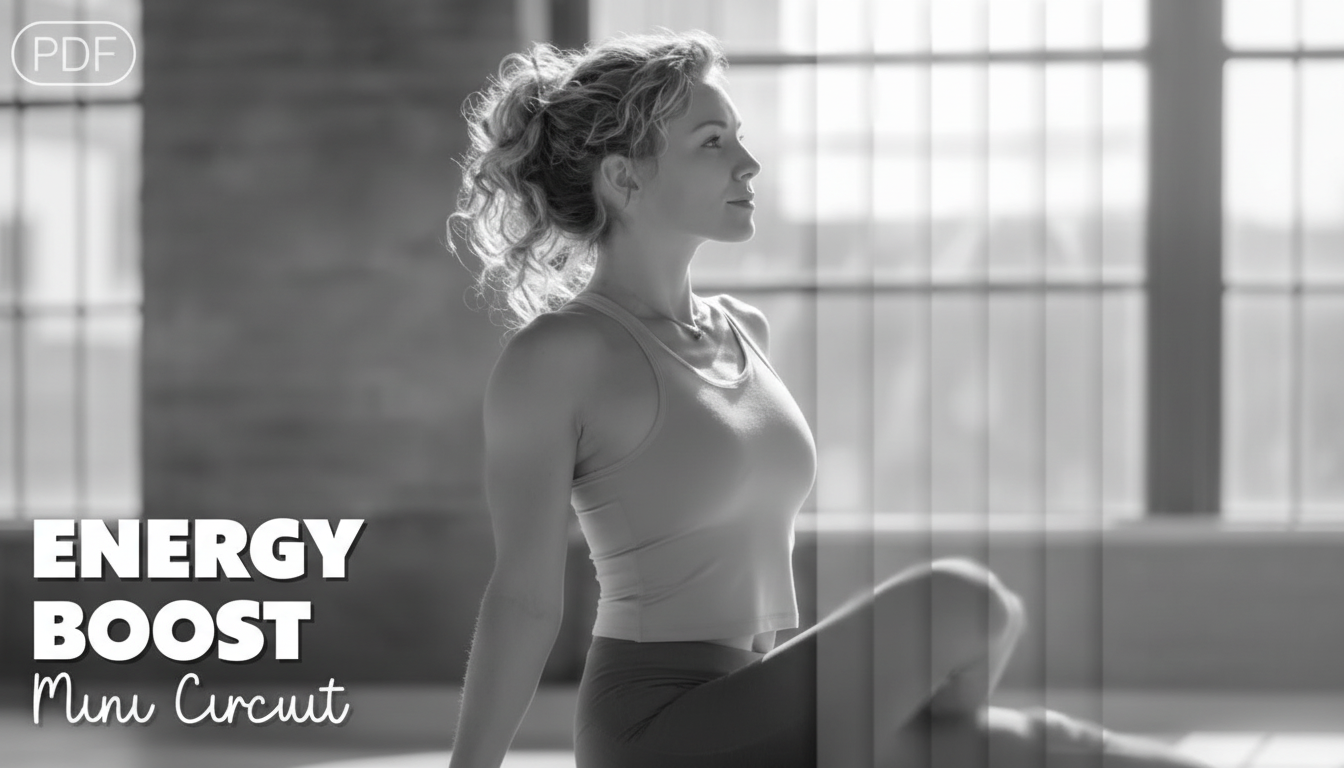
When energy dips mid-morning or late afternoon, a short, structured movement break can help the body feel more awake and the mind feel clearer. The goal isn’t a full workout—it’s a quick reset you can do at home in regular clothes, with no equipment. Below are simple 5–7 minute mini circuits plus a checklist-style format that makes it easier to start even on low-motivation days.
A brief circuit can change how you feel faster than expected because it nudges multiple “wake-up” systems at once—circulation, posture, breathing rhythm, and attention.
For baseline guidance on weekly activity, see the CDC Physical Activity Basics and the ACSM physical activity guidelines.
Think “warm and moving,” not max effort—especially if you’ve been sitting for a while. Most mini circuits should feel like a brisk reset you could repeat again later.
| Check | Yes | Adjust if needed |
|---|---|---|
| No sharp pain or concerning symptoms | Proceed | Choose gentle mobility or rest |
| Space is clear (no tripping hazards) | Proceed | Move obstacles, use a mat |
| Breathing feels normal at rest | Proceed | Start with slower pacing |
| Time window available (5–7 minutes) | Proceed | Do a 2–3 minute micro circuit |
If stress is driving the slump, movement can help “use up” tension and improve mood. The Mayo Clinic overview on exercise and stress explains why short bouts can still make a difference.
This option works well first thing in the morning or when you feel stiff from sitting. Keep it rhythmic and light.
| Segment | Work | Transition |
|---|---|---|
| Move 1: March + arms | 40s | 15s |
| Move 2: Sit-to-stand | 40s | 15s |
| Move 3: Incline push-up | 40s | 15s |
| Move 4: Hip hinge | 40s | 15s |
| Move 5: Breathing reset | 40s | — |
If you feel scattered, this circuit prioritizes posture and controlled core work—then finishes with calming breathwork so attention feels “aimed,” not jittery.
When the day feels tense, a steady pace can help you feel more grounded while still shifting energy quickly.
| Item | Done | Notes |
|---|---|---|
| Chose a circuit (A/B/C) | ☐ | Energy level: low/medium/high |
| Set timer for 6 minutes | ☐ | Round: 1 or 2 |
| Completed move 1–5 | ☐ | Hardest move: |
| 30–40s breathing reset | ☐ | Focus after: better/same/worse |
If you want a ready-made version you can reuse without planning, the Quick Energy Boost Mini Circuit Checklist is built for fast starts. It’s especially useful on days when motivation is low and you’d rather follow a simple sequence than decide what to do.
To make these breaks feel more consistent, a visible time cue helps—especially when you’re transitioning between tasks. The Irregular Beveled Mirror Wall Clock with Roman Numerals – Silent Quartz Movement is a quiet, at-a-glance option for timing circuits without phone distractions.
Most people can do one daily or a few times per week, keeping intensity moderate and adjusting based on soreness and sleep. Alternating lighter posture-focused circuits with slightly harder steady circuits helps you stay consistent without overdoing it.
Stick with low-impact swaps like marching, step jacks, sit-to-stand, and wall push-ups, and keep your range of motion comfortable. You can still increase intensity by moving with purpose, slowing the lowering phase, or shortening rest.
Many people notice a quick shift toward alertness, especially after sitting for a while. Finishing with slow breathing helps you feel steady rather than overstimulated, and posture/core + breath options like Circuit B tend to transition smoothly into deep work.



Leave a comment
You must be logged in to post a comment.