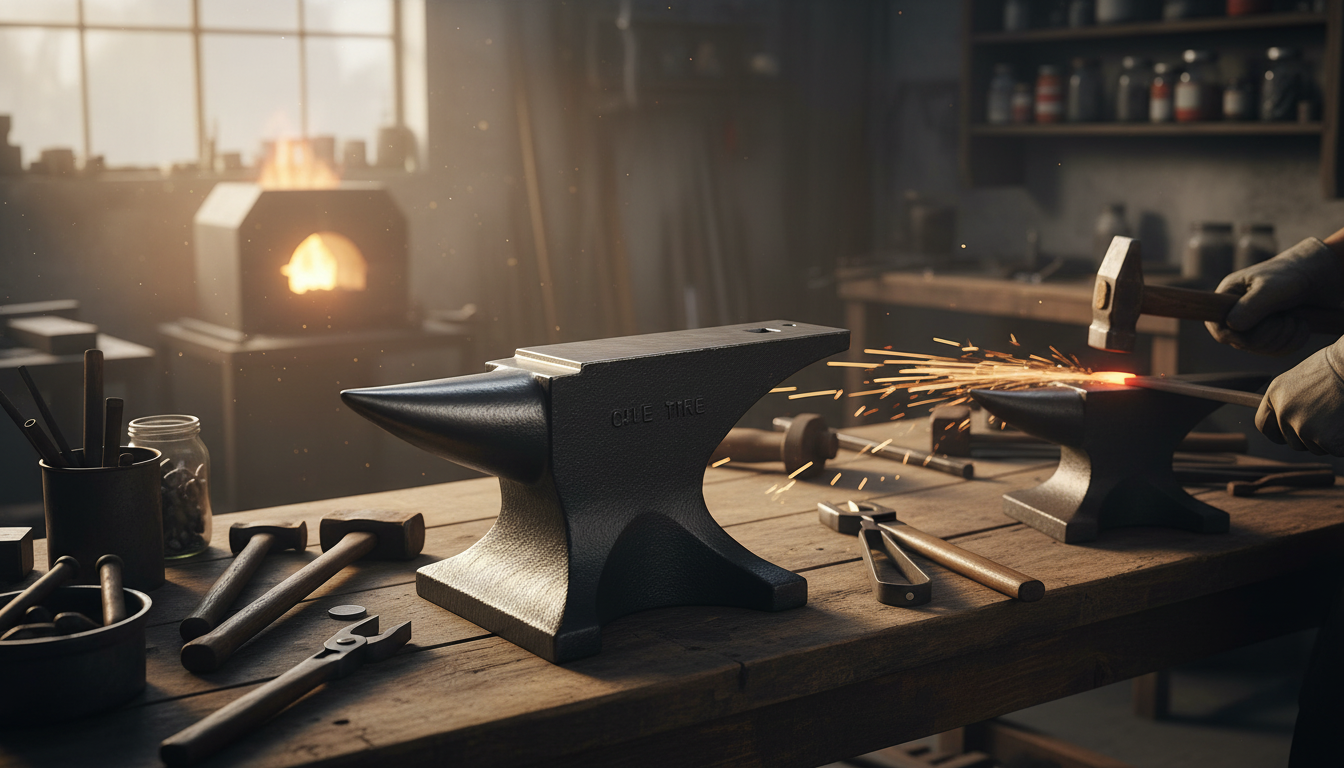
A dependable anvil is the center of many metalworking setups, shaping everything from simple bends to cleaner tapers and curves. This single horn cast steel anvil pairs a rounded horn for controlled forming with a stable base designed to stay put during repeated hammer strikes—making it a practical choice for small-shop blacksmithing, bladesmithing, and general fabrication tasks.
An anvil should feel like a reliable extension of your hands: steady under impact, predictable across the face, and versatile enough for day-to-day shaping. The Single Horn Cast Steel Anvil with Round Horn and Stable Base for Metal Work is built for common shop operations where consistent support matters.
Getting better results often comes down to using the right part of the anvil at the right moment—and striking over solid support.
Material choice affects how an anvil “feels” during use and how well it holds up over time. Cast steel is widely preferred for active hammering because it’s generally tougher than cast iron and less likely to dent from repeated forging blows.
A round horn gives you a controlled radius that helps stock move predictably as you bend and draw it. For brackets, hooks, rings, and decorative elements, the horn often becomes the “go-to” surface once the initial heat and placement are right.
If you want a simple way to add a bit more grip and floor protection around the stand area (especially on smooth concrete), a tough, non-slip rug can also help define a safer “work zone” and reduce small slips. The Botanical Floral Non-Slip Area Rug – Soft, Modern & Machine Washable can be repurposed as a general anti-slip surface near a bench or tool area (kept clear of sparks and hot scale).
Metalworking is rewarding, but impact, scale, and noise add up quickly. Build a routine that protects your eyes and ears, and keeps your striking zone predictable. For protective equipment guidance, OSHA outlines eye and face protection requirements and best practices (OSHA 1910.133), and NIOSH provides practical recommendations for managing noise exposure (NIOSH Noise and Hearing Loss Prevention).
For skill-building, demos, and community standards, ABANA is a helpful reference point for blacksmithing education and events (Artist-Blacksmith’s Association of North America).
| Item | Details |
|---|---|
| Product | Single Horn Cast Steel Anvil with Round Horn and Stable Base for Metal Work |
| Price | 68.51 USD |
| Availability | In stock |
| Primary feature | Round horn for bending and forming |
| Workshop focus | General metal shaping and light forging support |
The round horn is used for bending and forming smooth curves—like rings, loops, hooks, and gradual radii—without creating sharp kinks. Because the horn tapers, you can choose different effective bend sizes by moving the work along the horn.
Mount it on a heavy, rigid stand with a flat top, then bolt or strap the base down tightly using brackets or a chain-and-turnbuckle method. If ringing is an issue, add a thin rubber or silicone layer between the anvil and stand and re-check for rocking so the base stays fully supported.
Cast steel is typically more durable for repeated forging because it resists denting and often provides better rebound than cast iron. Real-world performance still depends on proper mounting, hammer control, and avoiding direct strikes from overly hard tools.


Leave a comment
You must be logged in to post a comment.