Mixing Baby Formula Bottles Safely and Easily: A Step-by-Step Routine for New Parents
Mixing formula can feel deceptively simple, yet small missteps—like the wrong water temperature, a packed scoop, or poor storage—can affect safety and consistency. A clear routine helps reduce guesswork during tired nights, keeps measurements accurate, and supports safe handling from the first scoop to the last sip.
Before You Start: What You Need and When Extra Caution Matters
Set yourself up for repeatable, low-stress prep by gathering everything first. That way, you’re not hunting for a cap or rinsing a scoop mid-feed.
- Gather supplies: clean bottles, nipples, rings/caps, formula container, the scoop that came with that specific formula, a safe water source, and a clean prep surface.
- Wash hands with soap and water, then dry with a clean towel or air-dry before handling bottles and formula.
- Use clean and sanitized items when recommended (especially for younger infants or higher-risk situations); follow local health guidance for sterilizing bottles and parts.
- Check the formula label for mixing directions and age guidance; scoop sizes and ratios vary by brand and type.
- Extra caution is often advised for premature infants, babies under 2 months, or infants with weakened immunity; a pediatric clinician can provide individualized guidance.
For additional safety details on preparation and storage, see the CDC’s infant formula preparation and storage guidance.
Step-by-Step: Mix a Bottle Correctly (Powdered Formula)
Use the same order every time to reduce errors when you’re tired: label → water → powder → mix → temp check.
- Read the label each time. Confirm the ratio (scoops per ounce/mL) and note any special instructions.
- Add water first. Pour the measured water into the bottle before adding powder to keep measurements accurate and reduce accidental over-concentration.
- Measure water precisely. Use bottle marks if they’re accurate and easy to read; otherwise, use a separate measuring tool for consistency.
- Level the scoop. Fill the scoop loosely and level it with a clean, flat edge. Avoid packing or heaping.
- Add the exact number of scoops. Follow the label ratio; don’t “eyeball” partial scoops unless the brand explicitly provides directions.
- Mix thoroughly. Cap and swirl or shake until fully dissolved. Check for clumps along the bottom and around the nipple base.
- Reduce bubbles if needed. If foam seems to bother your baby, try swirling instead of vigorous shaking and let the bottle rest briefly.
- Check temperature safely. Warm only if desired; test a few drops on the inner wrist—lukewarm is typically comfortable, hot is not.
Quick Mixing Checklist (Powdered Formula)
| Step |
Do this |
Avoid this |
| Measure water |
Add water to the bottle first, using the correct volume |
Adding powder first, then topping up water |
| Measure powder |
Use the provided scoop and level it |
Heaping scoops, packed scoops, or a different scoop |
| Mix |
Swirl/shake until fully dissolved |
Serving with clumps or unmixed powder |
| Warm |
Use warm water bath or bottle warmer; test temp |
Microwaving the bottle (hot spots) |
| Label/Store |
Date/time prepared bottles if batch-prepping |
Leaving bottles at room temperature for long periods |
Safe Water and Warming: Common Choices and Practical Tips
Water and warming choices are where families often hear conflicting advice. The safest approach is to follow your formula label and local/public-health guidance.
- Use a safe water source as recommended locally. If you’re unsure about tap water safety, ask your pediatric clinician or local health department.
- In higher-risk situations, some guidance recommends using hot water to reconstitute powdered formula to reduce potential contamination risk; follow official recommendations and your baby’s clinician.
- If boiling water is advised: boil, cool appropriately per guidance, then mix. Avoid handling water that’s too hot to prevent burns.
- Prefer warming methods that heat evenly: a warm water bath or bottle warmer. Avoid microwaving due to uneven heating and burn risk.
- If using pre-warmed water, store it only in clean containers and use within recommended timeframes.
For more background on formula-feeding basics, HealthyChildren.org (AAP) is a helpful reference.
Storage, Timing, and On-the-Go Preparation
Once formula is mixed, time and temperature matter. When in doubt, choose the more conservative option: refrigerate sooner, discard sooner, and don’t “stretch” a bottle.
Troubleshooting: Consistency, Clumps, Spit-Up, and Constipation Concerns
A Simple Routine to Make Nights Easier (Without Cutting Corners)
Step-by-Step Guide for Reference
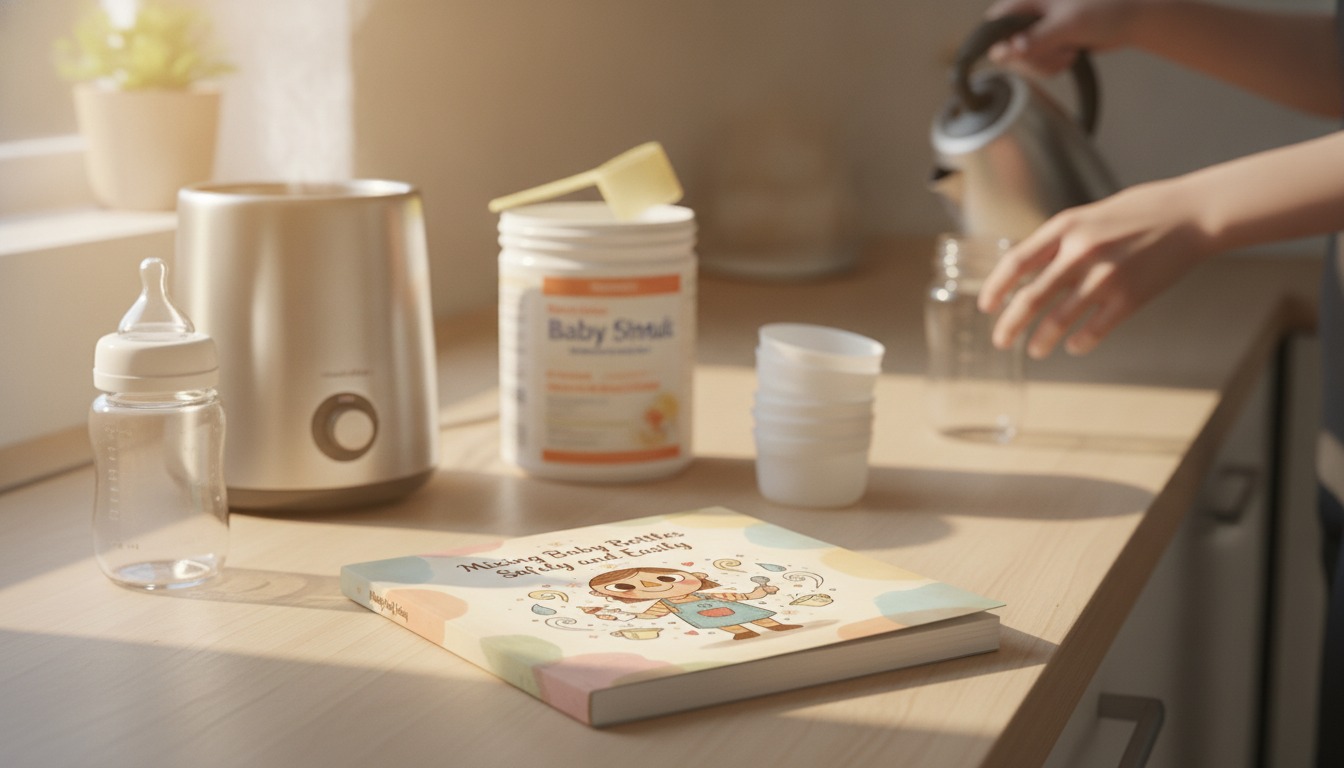
If multiple caregivers prepare bottles, a shared checklist reduces “small differences” that can add up (like a packed scoop or topping off water after powder). For a scan-friendly walkthrough, consider Mixing Baby Bottles Safely and Easily (Step-by-Step Formula Mixing eBook), designed to be easy to follow during overnight shifts.
FAQ
Should water go in the bottle before the formula powder?
Yes. Adding water first helps you measure the final volume accurately and reduces the chance of accidentally making the bottle too concentrated by topping up after powder is added.
Can a baby bottle be warmed in the microwave?
No. Microwaves can heat unevenly and create hot spots that can burn a baby’s mouth; use a warm water bath or bottle warmer instead and test a few drops on your wrist.
How long can prepared formula stay out or be stored?
Follow the formula label and your pediatric clinician’s guidance. When unsure, refrigerate prepared bottles promptly, use them within recommended time windows, and discard leftovers from a bottle after a feeding.
Recommended for you



Leave a comment
You must be logged in to post a comment.