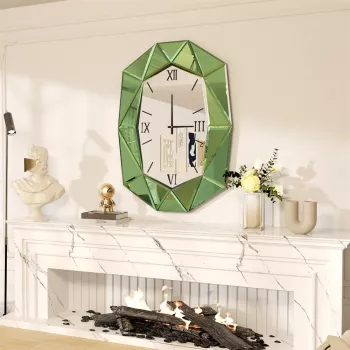
A sculptural wall clock that doubles as reflective décor can change the feel of a room instantly—adding light, dimension, and a clear focal point. This irregular beveled mirror wall clock pairs classic Roman numerals with a modern, asymmetric silhouette and a quiet quartz movement designed for calm spaces like bedrooms, home offices, and reading nooks.
What Makes This Clock Stand Out
- Irregular outline: An organic, asymmetric shape reads more like a design object than a standard round clock, giving walls a contemporary, gallery-like finish.
- Beveled mirrored face: The reflective surface adds depth and brightness, often doing the job of a mirror and wall art in one.
- Roman numerals: A timeless detail that feels at home in modern, transitional, and classic rooms—especially when paired with mixed materials.
- Silent quartz movement: Built for noise-sensitive spaces where a tick can be distracting.
Design Details That Affect the Room
Mirrored clocks don’t just tell time—they influence how a space looks and feels throughout the day. Beveled edges are especially impactful because they catch light differently than a flat mirror, creating a subtle prism effect as you move around the room.
- Beveled edges add dimension: The angled border can look more “architectural,” particularly near windows, table lamps, or wall sconces.
- Mirror finishes expand small spaces: By bouncing light across the wall, reflective décor can help compact rooms feel less boxed-in.
- Irregular shapes soften rigid layouts: If your room leans heavily on rectangles (grid shelving, square frames, straight-lined furniture), an organic outline provides a welcome counterbalance.
- Roman numerals shift the vibe: With warm woods, the look turns traditional; with black metal or marble, it becomes crisp and modern; with brass accents, it can feel slightly formal.
Silent Quartz Movement: What “Quiet” Usually Means
Quartz clocks are battery-powered and widely used for consistent timekeeping with low maintenance. For background on how quartz timekeeping works, see Encyclopaedia Britannica’s overview of quartz clocks. For time and frequency standards in the U.S., the National Institute of Standards and Technology (NIST) offers helpful resources.
- “Silent” usually means reduced ticking: Many silent movements use a smoother seconds motion or a design that minimizes the audible tick heard in typical step movements.
- Great for calm rooms: Bedrooms, nurseries, study areas, therapy spaces, and video-call setups benefit most.
- Mounting matters for noise: For the quietest result, hang on a solid surface, make sure the clock is level, and avoid loose hardware that can vibrate against the wall.
Where It Looks Best: Placement Ideas
- Entryway: Hang above a console table to create a bright, welcoming moment—and a practical “last glance” time check before heading out.
- Living room: Center it over a mantel, or place it slightly off-center above a sofa to let the irregular silhouette feel intentional and artful.
- Dining area: Position where it can catch overhead light without throwing harsh glare directly at seated eye level.
- Bedroom: Mount across from the bed rather than right beside it to reduce direct reflection at night.
- Home office: Place behind or adjacent to the desk so the numerals read cleanly on camera while the mirror adds depth to the background.
Sizing and Visual Balance Tips
- Match scale to furniture: For statement impact, aim for a clock that fills about 60–75% of the width of the furniture beneath it (console, sofa, sideboard).
- Leave breathing room: A gap of about 6–10 inches above furniture often looks balanced and avoids a cramped feel.
- Mix in matte textures: Pair mirrored décor with linen shades, wood grain, or plaster-like walls to keep the look warm and not overly sharp.
- Protect the silhouette: If the wall is busy (gallery wall, patterned wallpaper), give the clock open space so the irregular outline reads clearly.
Setup, Care, and Everyday Use
A mirrored clock looks best when it’s stable, level, and smudge-free. Small habits make a big difference—especially with beveled edges that highlight dust and fingerprints.
- Use the right wall hardware: Choose anchors appropriate for drywall or plugs for masonry so the clock stays secure and sits flush.
- Clean gently: Start with a microfiber cloth; use glass cleaner sparingly and avoid overspray near edges and backing. For mirror-care best practices, refer to Good Housekeeping’s mirror cleaning guide.
- Handle carefully: When moving or installing, hold by the frame/backing when possible to keep the mirror clear and the bevel crisp.
- Battery refresh: Replace the battery if timekeeping slows or hands hesitate; avoid mixing old and new batteries.
At-a-Glance Details
Quick Reference
| Feature |
Details |
| Style |
Irregular mirror wall clock with Roman numerals |
| Movement |
Silent quartz movement (battery-powered) |
| Best rooms |
Bedroom, living room, office, entryway |
| Finish |
Mirrored face with beveled edge |
| Mounting |
Wall-hung; hardware depends on wall type (check listing for specifics) |
| Care |
Microfiber cloth; gentle glass cleaner as needed |
Shop In-Stock Picks
Who It’s For
FAQ
Is a silent quartz wall clock completely noiseless?
“Silent” typically means reduced or no audible ticking at a normal distance, but sound perception varies by room acoustics and individual sensitivity. A secure, level mount on a solid surface also helps minimize any vibration-related noise.
Will a mirrored wall clock create glare?
It can, depending on where it’s placed and how direct the light source is. Testing the position before final mounting and avoiding a direct line with strong sunlight usually prevents harsh glare.
How should a beveled mirror clock be cleaned?
Use a microfiber cloth first, then apply a small amount of glass cleaner to the cloth (not directly on the mirror) for smudges. Avoid abrasive materials and heavy overspray near the edges to help protect the bevel and backing.
Recommended for you


Leave a comment
You must be logged in to post a comment.