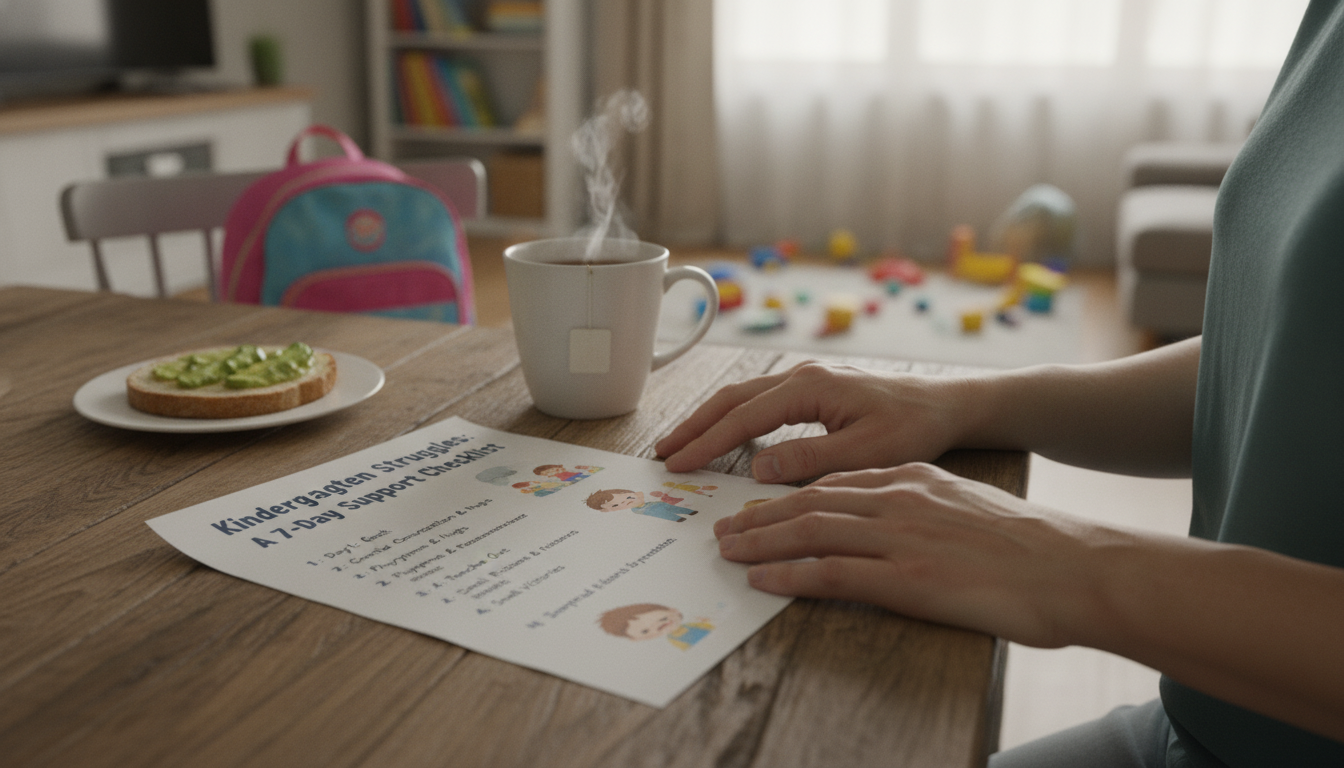
Kindergarten can look “fine” on paper while feeling overwhelming for a child (and stressful for parents). Big transitions, new routines, social pressure, and early academic expectations can show up as tears, shutdowns, behavior changes, or sudden reluctance to go to school. This guide offers a calm, step-by-step checklist to help identify what’s driving the struggle, support emotional regulation, and partner with the teacher—without escalating power struggles at home.
| What you notice | Possible underlying need | Try this first |
|---|---|---|
| Crying at drop-off for weeks | Separation support + predictable goodbye | Create a 30-second goodbye ritual and a comfort cue (phrase, object, or photo) |
| Aggression or big anger after school | Decompression + sensory reset | Offer snack + quiet activity before questions; aim for 20 minutes of “no demands” time |
| Refuses writing/works slowly | Skill gap, fatigue, or fear of mistakes | Ask teacher what task demands look like; practice 3–5 minutes with high success at home |
| Frequent tummyaches at school | Anxiety or bathroom/lunchroom stress | Track timing and triggers; coach coping plan with teacher (water, bathroom pass, calm corner) |
| Says “no one likes me” | Belonging + social coaching | Role-play 1–2 simple ways to join play; ask teacher for a buddy/support at recess |
Keep the goal modest: fewer tears, faster recovery, and a child who can take one next step—even if they still feel nervous.
If stress is showing up as frequent worry or physical symptoms, it can help to review family-friendly guidance on kids’ stress and anxiety from the CDC and the American Academy of Pediatrics.
Transitions are often the hardest part of the day; the NAEYC has practical insight on why transitions can be tough and how predictability helps.
If you’d like an organized, ready-to-use tool, see: Printable parent checklist for when kindergarten feels tough.
For some kids, a dedicated “calm corner” at home also supports recovery after school. A soft, defined space (even just one rug and a pillow) can signal, “You’re safe; you can decompress here.” One option for creating that cozy boundary is the Botanical Floral Non-Slip Area Rug – Soft, Modern & Machine Washable.
Many children settle more comfortably within a few weeks, but timing varies based on temperament, classroom fit, and life changes. Signs of improvement include faster recovery after drop-off and fewer “spillover” meltdowns at home; seek extra support if distress steadily worsens or blocks daily functioning.
Use a brief, predictable goodbye routine with a confident handoff to the teacher, and keep reassurance short so anxiety doesn’t grow. If allowed, send a small comfort cue (photo or note) and ask the teacher what helps your child re-engage once you leave.
When safety and health are okay, consistency usually helps more than avoidance—staying home can accidentally reinforce anxiety. Validate the feeling, then stick to the plan and work with the school on added supports for the hardest parts of the day.




Leave a comment
You must be logged in to post a comment.