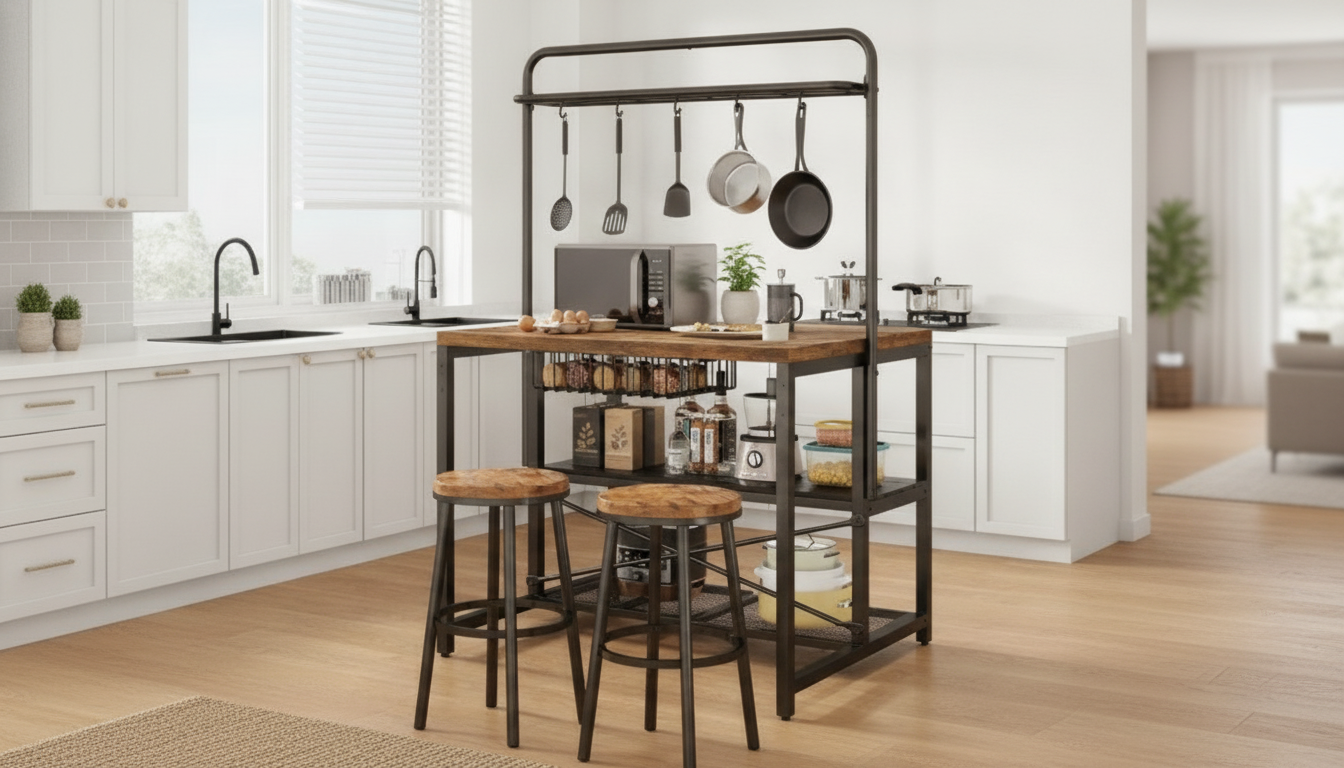
A well-designed kitchen island table can add everyday prep room, keep essentials organized, and create a natural gathering spot. The most satisfying setups come down to a few practical choices—right-size measurements, a storage plan that matches how cooking actually happens, durable materials, and (when needed) mobility that doesn’t feel wobbly. Below is a straightforward guide to help an island work smoothly with the way the kitchen is used.
A large island table with storage isn’t just extra countertop—it’s a workflow upgrade when the layout supports it.
If the main counters are constantly crowded, shifting “repeat-use” items—oils, salts, mixing bowls, cutting boards, towels—into the island can keep the perimeter counters clearer for cooking and cleanup.
Before falling in love with an island style, confirm the island will live comfortably in the room. Good spacing helps prevent traffic jams and makes the island feel intentional rather than squeezed in.
| Planning check | Why it matters | Simple way to test it |
|---|---|---|
| Walkway clearance | Prevents crowding and makes cooking safer | Tape the island outline on the floor and walk around it with another person |
| Door and drawer swing | Avoids collisions with appliances and cabinets | Open nearby doors fully and confirm the taped outline stays clear |
| Seating allowance | Improves comfort and reduces knee bumps | Place a chair or stool at the taped edge and sit/stand to test space |
| Storage access | Ensures drawers/shelves are actually usable | Mark where drawers/doors would open and check reach and clearance |
For additional planning references, the National Kitchen & Bath Association (NKBA) Kitchen Planning Guidelines and layout examples on Houzz are helpful starting points.
The best storage is the kind that’s easy to keep tidy. A kitchen island often becomes the “drop zone,” so the layout should encourage quick put-away.
A simple strategy is to assign “zones” based on frequency: daily tools up top, pantry overflow mid-level, and heavy items low. That keeps the island stable while making the most-used items fastest to reach.
Islands work hard. Choosing a finish that can take real-life use will save time and frustration later.
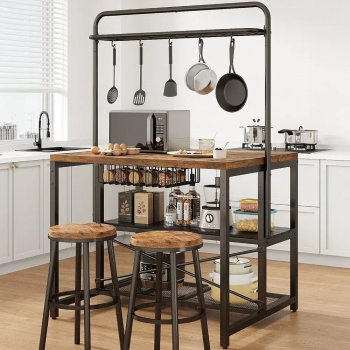
If the kitchen needs more surface area and a predictable home for essentials (without permanent remodeling), the Large Kitchen Island Table with Storage is built to function as a central station—prep when you’re cooking, serving when guests arrive, and a casual landing spot any time in between.
| Item | Details |
|---|---|
| Product | Large Kitchen Island Table with Storage |
| Price | 208.01 USD |
| Availability | In stock |
| Product page | View product |
Leave comfortable walking clearance on all sides so people can pass while someone is working. Measure appliance-door swings and nearby cabinet openings, then test the footprint by taping the island outline on the floor.
Yes—if the footprint and clearances are planned carefully. Narrow profiles, mobile designs with locking casters, and storage that goes vertical (shelves and drawers) can add function without blocking traffic.
Keep daily-use prep tools and linens in drawers for quick access, and place pantry overflow on shelves to free up counters. Store heavier appliances in lower compartments to improve stability and prevent the island from feeling top-heavy.


Leave a comment
You must be logged in to post a comment.