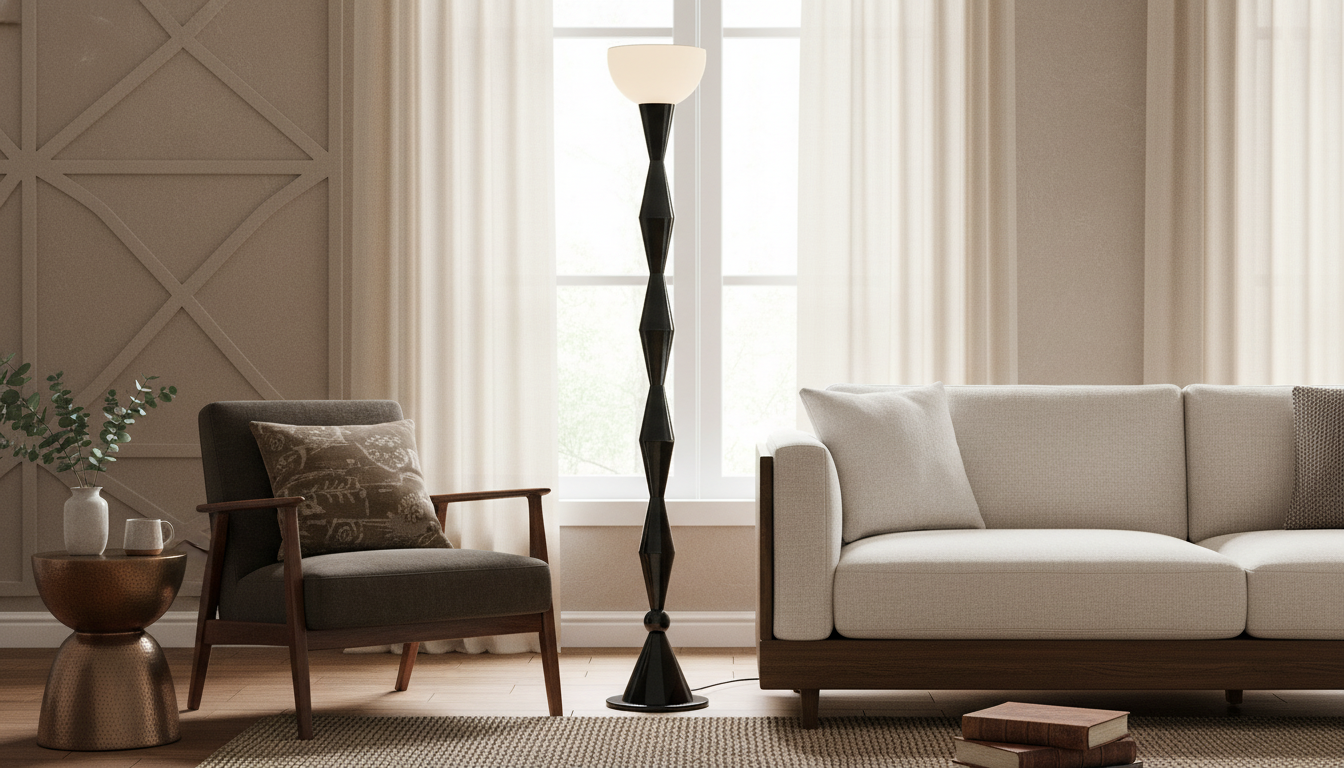
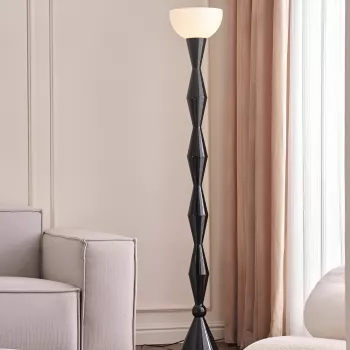
A diamond-shaped floor lamp with medieval-inspired geometry can turn an empty corner into a focal point. With an E27 bulb base and a sculptural black frame, this style balances statement décor with practical lighting—ideal for living rooms, reading nooks, entryways, and moody bedrooms that benefit from layered illumination. The result is lighting that feels intentional: part functional glow, part art object.
Unlike traditional shaded lamps, a diamond-frame floor lamp reads like architecture. Its open geometry gives the room a strong vertical line, while the dark finish keeps the look grounded and versatile.
This type of lamp is especially effective where a room needs height, depth, or a visual “anchor” without adding bulky furniture.
With an E27 socket, bulb choice is where this lamp becomes customizable. Brightness, color temperature, and bulb shape can shift the whole mood—from candle-warm drama to clean, practical illumination. For efficiency and cooler operation, LED bulbs are the go-to; both ENERGY STAR and the U.S. Department of Energy highlight LEDs as a strong option for longevity and lower energy use.
| Goal | Suggested bulb type | Color temperature | Notes |
|---|---|---|---|
| Moody ambience | Filament-style LED | 2700K | Highlights the frame; soft glow |
| Everyday living room | Standard LED A60/A19 | 3000K–3500K | Balanced comfort and visibility |
| Reading emphasis | High-lumen LED | 3000K–4000K | Aim placement to avoid glare |
| Statement look | Edison/ST64 LED | 2200K–2700K | Warmer “candle-like” vibe; lower brightness is common |
The medieval influence reads best when it’s supported by rich materials and tactile contrast. The goal isn’t a themed room—it’s a layered, collected feel where the lamp looks “meant to be there.”
If you like a “timeworn meets modern” mix, a reflective accent can balance the lamp’s matte black structure—consider pairing it with the Irregular Beveled Mirror Wall Clock with Roman Numerals – Silent Quartz Movement to echo old-world cues while brightening the wall.
For a deeper dive into how light is perceived and why brightness and distribution matter, the International Commission on Illumination (CIE) offers helpful lighting fundamentals.
LED bulbs are typically the best fit because they’re efficient and run cooler, which matters when the bulb is exposed. For visible-bulb designs, filament-style decorative LEDs in warm tones (around 2700K–3000K) look especially cohesive, and a dimmable bulb adds flexibility if your setup supports it.
It can cast more defined lines than a shaded lamp, especially with a bright bulb and a nearby blank wall. Warmer bulbs, lower brightness, dimming, and slightly angling the lamp away from flat surfaces help keep the effect softer.
Try a corner that needs height, beside an accent chair, or near a console in an entryway for a strong first impression. Keep safe clearance from walkways and curtains, and position it so seating areas don’t face directly into the bulb.



Leave a comment
You must be logged in to post a comment.