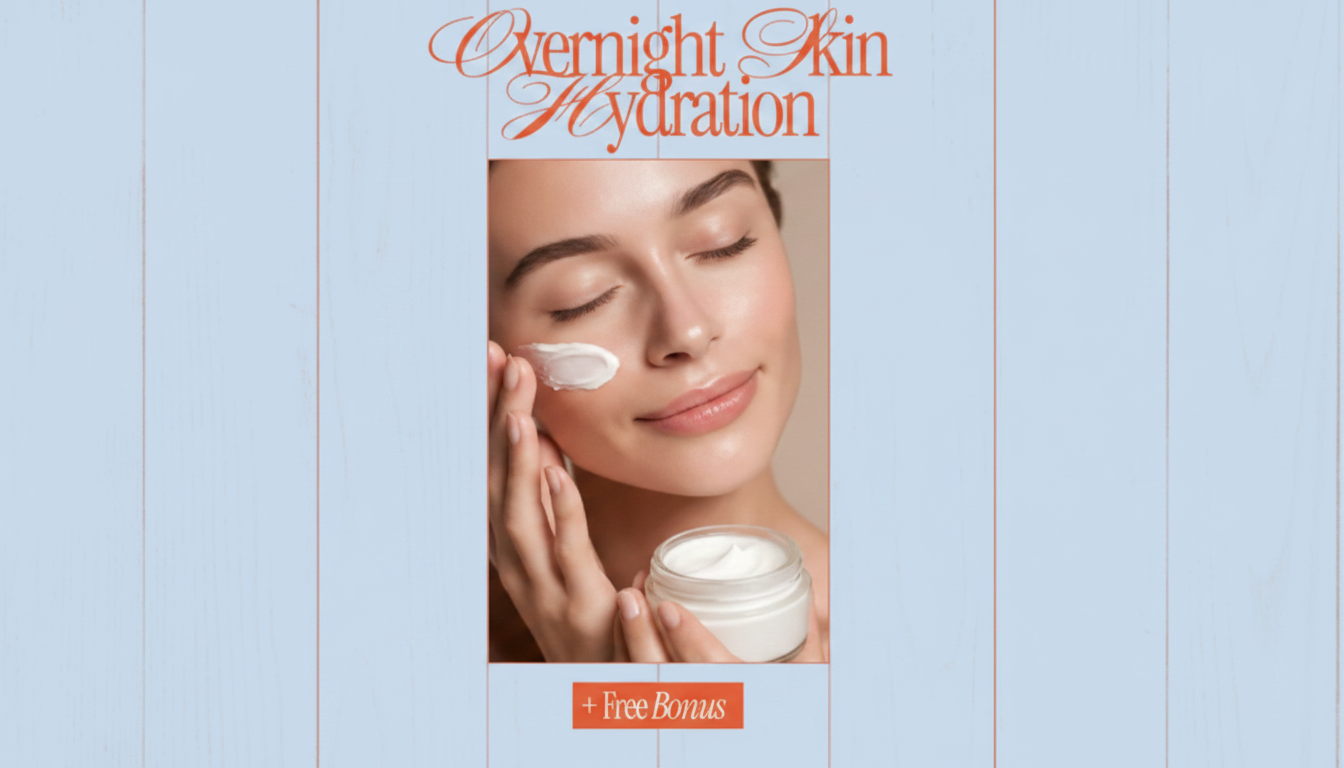
Nighttime is when skin shifts into repair mode—water loss rises, the barrier works harder, and the right routine can turn dryness into lasting softness by morning. This guide breaks down what drives overnight dehydration, which ingredients and habits make the biggest difference, and how to build a simple, repeatable routine for comfortable, healthy-looking glow.
Even if skin feels fine during the day, it can wake up tight, rough, or flaky. One major reason is that transepidermal water loss (TEWL) naturally increases at night, meaning more moisture escapes through the skin barrier while you sleep. If the barrier is already stressed, that moisture loss feels amplified by morning.
Common routine and lifestyle factors can make overnight dehydration worse:
Barrier stress often shows up as sensitivity, redness, dullness, and fine lines that look more noticeable when the surface is dehydrated. For practical dry-skin relief tips, the American Academy of Dermatology Association recommends gentle cleansing and immediate moisturizing—both especially useful at night.
Deep overnight comfort usually isn’t one product—it’s the right mix of water-binding, barrier-smoothing, and sealing layers.
| Role | What it does | Common examples | Best step |
|---|---|---|---|
| Humectant | Draws water into the outer skin layers | Glycerin, hyaluronic acid, urea, panthenol | After cleansing on slightly damp skin |
| Emollient | Smooths texture and supports the barrier lipids | Ceramides, squalane, fatty alcohols, cholesterol | Moisturizer/cream layer |
| Occlusive | Locks in moisture and reduces overnight water loss | Petrolatum, dimethicone, balm textures | Last step or spot treatment |
For many people, the most comfortable results come from layering: water-binding step first, sealing step last—especially when indoor air is dry.
Use lukewarm water and a low-foam cleanser. If you already removed makeup/sunscreen, avoid a second harsh cleanse that can strip protective lipids.
Humectants work best when skin isn’t fully dry. After cleansing, pat until skin is just slightly damp, then apply a hydrating serum or essence to bind that water to the surface layers.
Look for a comfortable blend of glycerin, ceramides, and soothing ingredients. Niacinamide can help support barrier function, but if you’re sensitive, start with lower percentages or use it every other night.
If you wake up with flaky patches around the nose, mouth, or cheeks, apply a thin layer of an occlusive as the final step in those areas. This “targeted seal” can boost comfort without making the whole face feel greasy.
Rotate stronger exfoliants and retinoids rather than stacking multiple irritating steps in one night. A compromised barrier increases TEWL and makes dehydration harder to fix.
For a deeper look at how the barrier regulates moisture and permeability, you can explore skin-barrier research through the National Center for Biotechnology Information (NCBI).
Sleep quality also matters for how refreshed skin looks. The Sleep Foundation details how sleep supports skin’s recovery and appearance.
| Skin type | Best cleanser feel | Hydration layer | Moisturizer finish | Optional last step |
|---|---|---|---|---|
| Dry | Creamy, non-foaming | Glycerin/HA + panthenol | Rich ceramide cream | Thin occlusive on dry areas |
| Oily + dehydrated | Gentle gel, low-foam | Lightweight humectant serum | Lotion/gel-cream | Occlusive only on flakes |
| Sensitive | Minimal-ingredient cleanser | Soothing hydration (panthenol, glycerin) | Barrier cream, fragrance-free | Skip unless irritated spots |
| Combination | Gentle gel or milk cleanser | Hydrating essence/serum | Medium cream | Targeted occlusion on cheeks |
If you prefer a structured plan you can follow night after night, Overnight Skin Hydration – Ultimate Nighttime Skincare Guide for Deep Moisture, Glowing Skin & Restorative Beauty Sleep lays out practical layering steps, texture matching (hydrate, soften, seal), and troubleshooting checkpoints for seasonal shifts and sensitivity.
To support a calmer sleep setup that can reduce tossing, friction, and bedroom discomfort, consider cozy flooring options like the Soft Velvet Plush Blue Rug for Living Room & Bedroom – Modern Fluffy Carpet or the Botanical Floral Non-Slip Area Rug – Soft, Modern & Machine Washable.
An occlusive is typically the most effective last step because it reduces overnight water loss. Use it all over only if you’re very dry; otherwise apply a thin layer just on flaky areas to avoid a heavy feel.
Apply hydrating serums to slightly damp skin so humectants can bind that surface water, then follow with moisturizer to lock it in. If a product contains potentially irritating actives, apply to fully dry skin to reduce sting.
Tightness often comes from a stripped barrier (harsh cleansing or over-exfoliation), low humidity, or using humectants without a sealing layer. Try switching to a gentler cleanser, pausing strong actives for a week, and adding a thin occlusive over your moisturizer on the driest zones.




Leave a comment
You must be logged in to post a comment.